
By María José Calderón
Leer en español: “Archivos Contra la Impunidad“
INTRODUCTION
The work of Chile’s Vicaría de la Solidaridad (Vicariate of Solidarity) is historic, as John Dinges, who reported in Chile for The Washington Post and other news organizations in the 1970s, has pointed out:
In the history of human rights this is a monumental event. It’s the first time that you had a systematic effort to take the testimonies of victims as the repression is going on. The great thing is that they not only documented those who disappeared and were killed, but did it in ways that kept everyone who gave them information safe. The evidence was gathered in a way that ensured that the identity of those who gave information to the lawyers was not revealed.[1]

Within weeks of General Augusto Pinochet’s violent 1973 military coup,[2] Chile’s Cardinal, Raúl Silva Henríquez, courageously denounced widespread human rights violations and created the Comité Pro Paz (Pro-Peace Committee) to support victims of the repression. Later the Comité would become the Vicaría de la Soladaridad.

The subject of the following interview, Álvaro Varela Walker, was an early member of the legal team. He was recruited by José Zalaquett,[3] who was the leader of the team’s attorneys. Their work inspired the fictional series “Los Archivos del Cardenal,” which aired on Chile’s National TV Station (TVN) in 2001.[4] The main character in the series is an attorney named Ramón Sarmiento, and actor Benjamin Vicuña said that his inspiration for the character was Álvaro Varela.
Varela and his colleagues at the Comité, and subsequently the Vicaría, laboriously recorded the harrowing details offered by relatives and witnesses about the moment when a person was kidnaped and taken away by secret police or the military. Where and when did the arrest occur? What was the victim wearing? What was their last word? What insignia could you see on the uniforms of those who did the kidnapping, if they were in uniform?
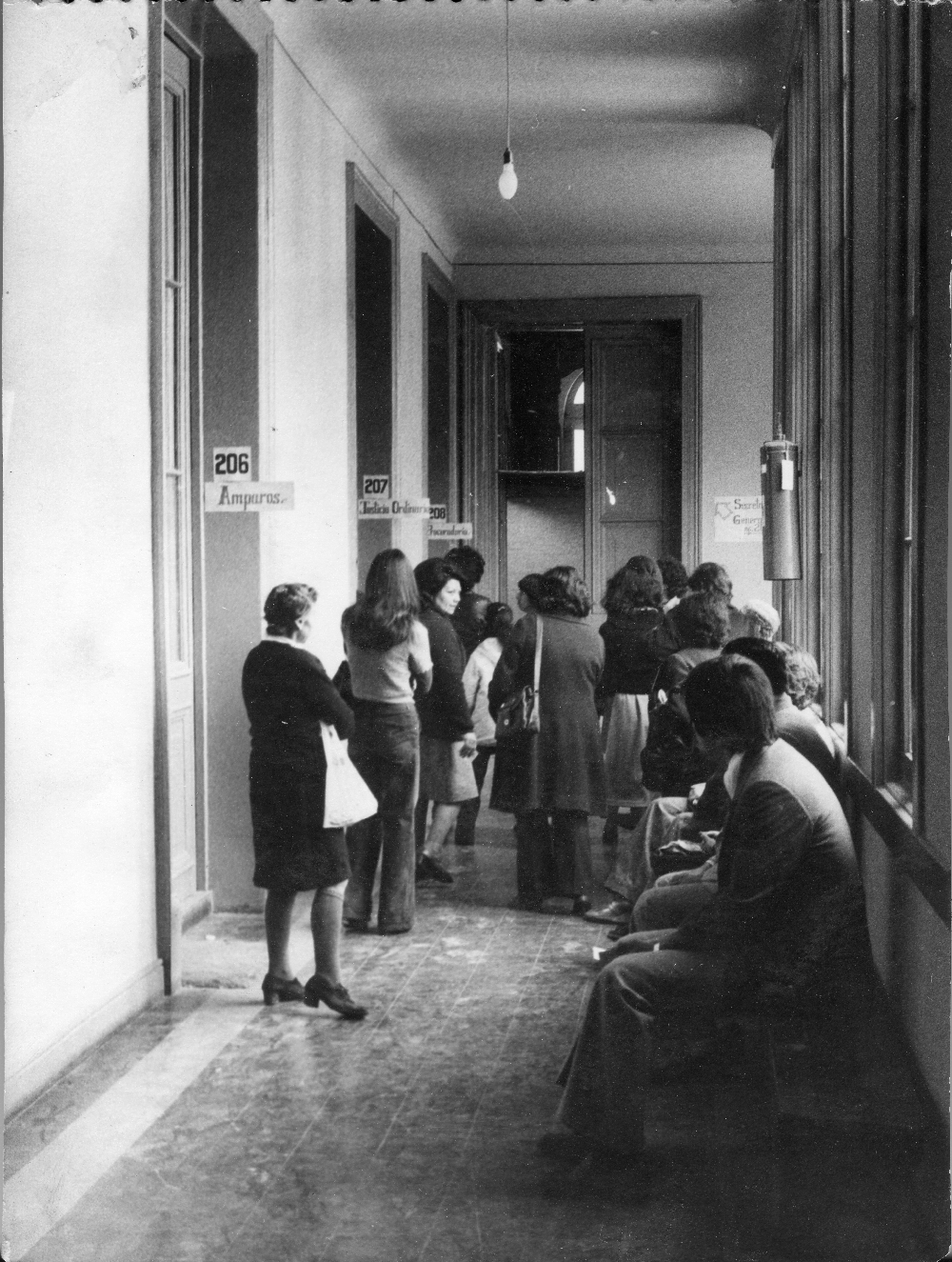
They also filed thousands of habeas corpus petitions in court in an effort to discover where prisoners, often kidnapped at night from their homes, had been taken. Many never appeared again.
As Varela relates in the following interview, he and others working to document the repression often became targets themselves. Some, including priests, were arrested, tortured, and exiled.[5] Varela was taken from his home in the middle of the night, tortured and briefly imprisoned but never stopped working on behalf of the victims of General Pinochet’s repression.
Among many other people, Varela filed habeas corpus petitions for his close friend and law school classmate Cecilia Castro Salvadores and her husband Juan Carlos Rodríguez, whose cases were featured in the documentary film The Judge and the General. Their bodies have never been found, but the information gathered by Varela and his co-workers helped imprison those found guilty for their deaths.
The Comité Pro Paz and the Vicaría de la Solidaridad created an unprecedented public archive of photographs and written materials that have provided crucial evidence for most of the human rights cases filed in Chilean courts before and after the return to democracy. The archive has played a crucial role in putting Pinochet’s torturers and murderers in prison. The documentation gathered was also an important source in the National Commission on Political Imprisonment and Torture Report. The commission was a Chilean organization that was formed in 2003 and was chaired by a former vicar of the Vicaría de la Solidaridad, Monsignor Sergio Valech. It investigated and compiled a report on the magnitude of human rights violations and the identity of victims of political detentions and torture by the state between 1973 and the return to democracy in 1990. [6]
In 2017, the Archive Foundation was declared a Historical Monument (MH) by the Consejo de Monumentos Nacionales[7] (National Monument Council) making it an especially notable historical source documenting human rights violations committed in Chile.
In May 2006, Chilean journalist and documentary producer Nancy Guzmán interviewed Álvaro Varela for Elizabeth Farnsworth and Patricio Lanfranco’s film, The Judge and the General. The film opened at the San Francisco Film Festival in May 2008, and then played widely around the world, winning many awards. Nancy Guzmán is a renowned investigative journalist who has specialized in covering human rights violations in Chile under the dictatorship. In 1994-1995 she did several interviews with Osvaldo Romo, the torture agent of the Dirección de Inteligencia Nacional (DINA, Directorate of National Intelligence) while he was in prison. Her research concluded with the publication of the book Romo: Confessions of a Torturer.
Consulting with Farnsworth and Lanfranco, María José Calderón, associate producer of The Judge and the General, introduced, translated, footnoted, and updated (by speaking with Varela herself) the interview below. This is the third historically important interview from the film to be published by CLACS.

Elizabeth Farnsworth, co-producer/director of The Judge and the General, is a filmmaker and former chief correspondent and principal substitute anchor of the PBS NewsHour. She has reported from Chile, Peru, Cambodia, Vietnam, Haiti, Iraq, Iran, and Saudi Arabia, among other countries, and has received three Emmy nominations and the Alfred I. duPont-Columbia Award for her work.

Patricio Lanfranco, co-producer/director of The Judge and the General, produced the live television coverage in Chile of the 1995 trial of Manuel Contreras, former chief of Pinochet’s secret police, for the 1976 murder in Washington, D.C. of Orlando Letelier, former Chilean Ambassador to the United States. Because of the broadcast, for the first time Chileans were able to watch attorneys present evidence in an official setting of human rights crimes committed by the secret police. In 2003, he was awarded the Chilean National Television Council Prize.

María José Calderón is a Chilean documentary filmmaker based in Oakland, California. In 2009, she received her master’s degree from the UC Berkeley Graduate School of Journalism. She was associate producer of The Judge and the General, and most recently has produced films for PBS, Latino Public Broadcasting, Netflix, Univision, and other networks. In 2020 she co-produced a FRONTLINE documentary that was recognized by the Scripps Howard Awards and the Ursula and Gilbert Farfel Prize for excellence in investigative reporting. Most recently, she produced and edited the feature documentary Water for Life, about Indigenous activists in Central and South America fighting to stop multinational corporations from privatizing and polluting their waters.
NOTES
[1] North American journalist John Dinges reported extensively in Chile before and during the dictatorship. This quote came from an interview in the documentary film The Judge and the General and a recent follow-up interview.
[2] On September 11, 1973, a military coup led by General Augusto Pinochet overthrew Chile’s democratically elected president, Dr. Salvador Allende. A military junta took political power, closed down the National Congress, declared a state of siege, and banned political parties and trade unions. Pinochet’s regime lasted 17 years. During that period, his military and secret police persecuted and eliminated political opponents, killing and making “disappear” several thousand people and torturing and imprisoning more than 40,000.
[3] José Zalaquett was the director of the legal department at the Comité for two and a half years until he was imprisoned by the military junta and forced to leave the country.
[4] “Los Archivos del Cardenal”: https://cntvplay.cl/series/los-archivos-del-cardenal/
[5] One of the most well-known cases was Michael Woodward, a Chilean British priest who lived and worked in Valparaiso, practicing liberation theology. He was arrested 10 days after the coup and tortured to death. His body was buried in a mass grave.
[6] After the death of Monsignor Valech, the National Commission was led by Maria Luisa Sepulveda, who had worked as a social worker in the Comité and later in the Vicariate. In 2010, they presented a second report (Valech Commission II) which recognized a total of 40,018 victims of detention and torture, 3,065 of them dead or disappeared: https://www.derechoshumanos.net/paises/America/derechos-humanos-Chile/informes-comisiones/Informe-Comision-Valech.pdf
[7] https://www.monumentos.gob.cl/monumentos/monumentos-monumentos/archivo-vicaria-solidaridad
Álvaro Varela Walker | Human Rights Lawyer
Interview by Nancy Guzmán
Santiago, Chile, May 04, 2006
(With updates from a follow-up interview by María José Calderón, January, 2024)


What was your activity before the coup d’état? What was life like?
In 1973, before the coup, I was a law student at the University of Chile. I was also a student leader. I was a member of the MAPU[1] Party and president of the student association at the Law School of the University of Chile. I was also a member of the University Council at the Law and Social Studies School and member of the University Senate. All those were democratically elected positions.
Until 1972, the university had vigorous, energetic, political activity. The confrontations were political. Beginning in 1973, violence broke out very quickly. In the particular case of the University of Chile Law School, there was a very powerful group called Patria y Libertad,[2] and that violence, for example, led to a serious incident in April 1973 at the opening ceremony of the academic year of the Faculty of Law.
As President of the Student Association, I was onstage at the auditorium when I was attacked in the middle of the ceremony in the presence of the president of the Chilean Supreme Court, the president of the Lawyers’ Guild, and law school authorities…I was assaulted by a group that came onstage. They hit me with an iron club and took me behind the curtains.
I remained unconscious for several hours and was taken away in an ambulance by hospital workers. I was in a very delicate condition for several weeks. That was a shocking act of violence, and the surprising thing was that it was done right in front of the eyes of the president of the Supreme Court and the president of the Lawyer’s Guild. And they simply decided to take me behind the curtains and continue on with the ceremony.
It was an atmosphere of great violence. For the rest of the year, there were many times I wasn’t able to attend my classes because I was being threatened and followed and was a victim of very violent actions. Political activity had stopped being a matter of exchanging opinions and debating.
What happened on the day of the coup, on September 11th, 1973? What did you see, what did you experience, what did you perceive about what was to come?
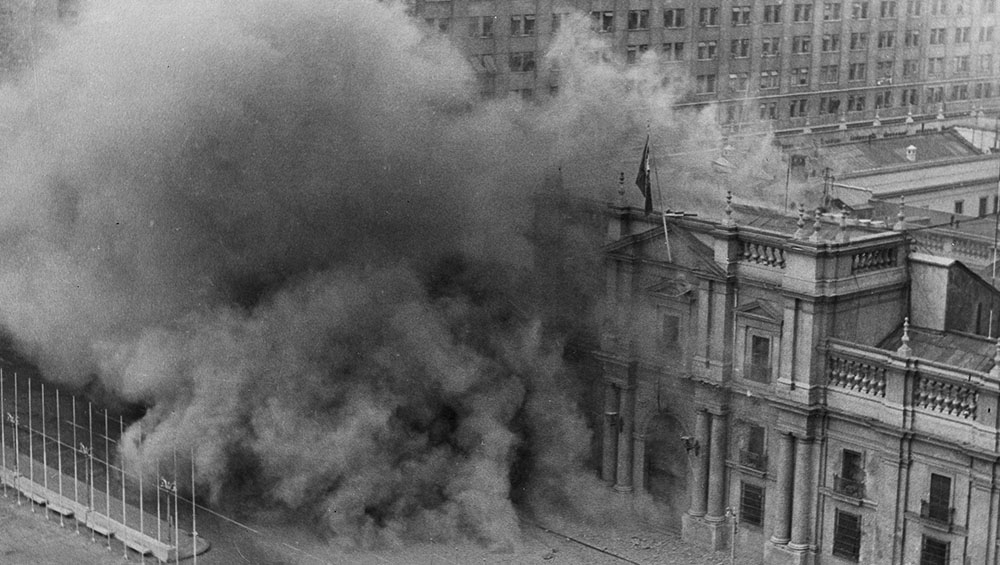
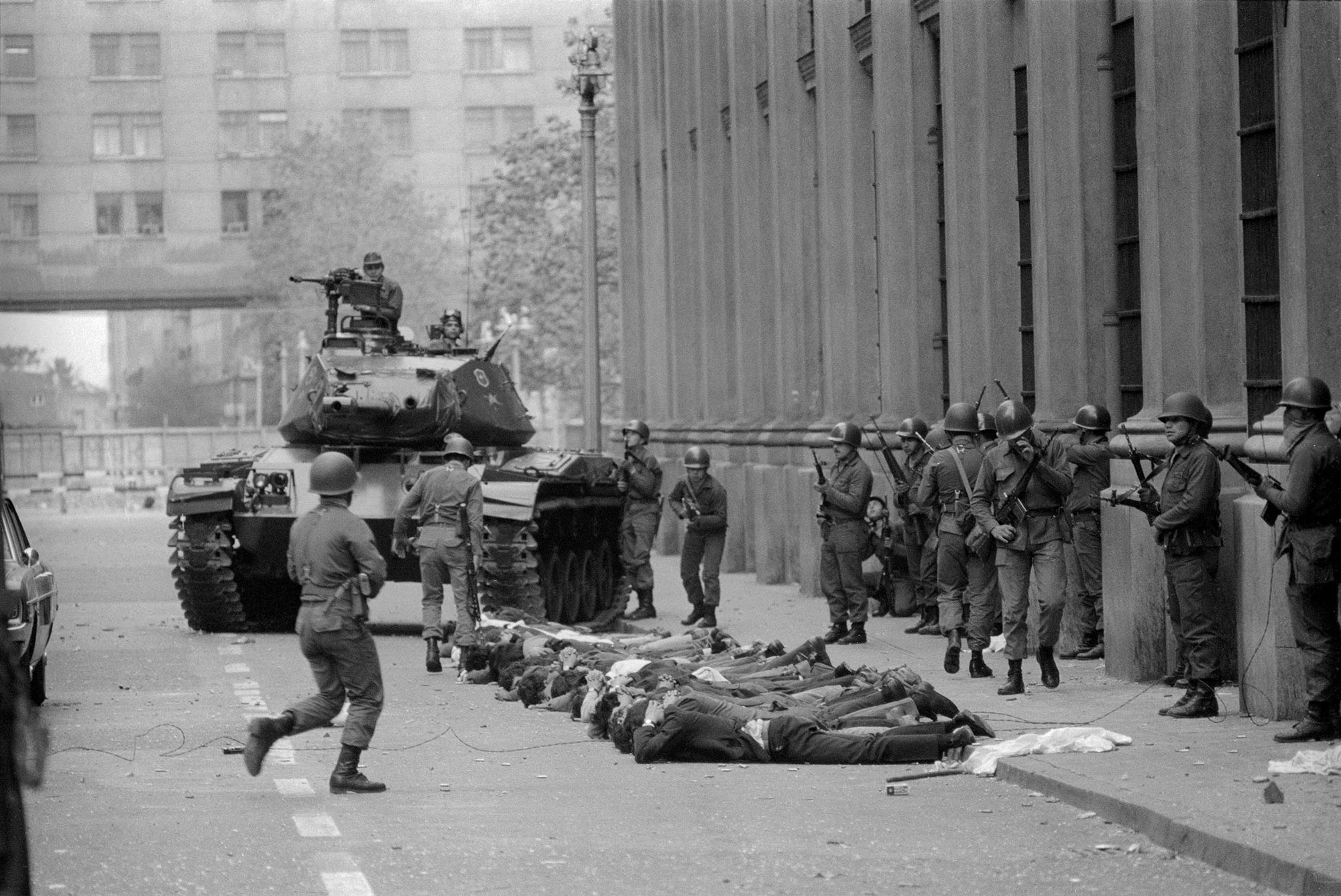
The day of the coup, my father woke me up very early in the morning. I lived in the house with my parents, and we immediately began to perceive that the situation was going to be very violent, while listening to the military announcements. A few hours later, we saw the airplanes flying over the city, bombing La Moneda [the presidential palace]. It was immediately clear that the coup d’état was violent, merciless, and that all those who had participated in politics in support of Salvador Allende’s constitutional government were to undergo a very cruel repression.
What activities did you carry out immediately after the coup?
On the third day, I traveled to the South of the country, in order to be as far away from the repression as possible. After some days –10 to 15 days — the law school reopened. The Dean of the Law School, Mr. Maximo Pacheco, contacted my father and recommended that I return and take the exams so that I could graduate. I was close to finishing my law studies. I only had four more exams before I graduated. So I returned, and I went to the Law School in a very tense climate (I received a lot of threats and was being followed) to take the tests I was missing.
One of the four exams was “aeronautical law,” for which there was only one professor, Mr. Jacinto Pino,[3] and I wasn’t able to locate him because he was a Socialist Party leader and had gone into hiding after the coup. It was very hard to locate him, but I found him through different political contacts. I needed him to write up a certificate that I’d taken the exam so I could obtain my graduation certificate. It was a race against time, because they were preparing a list of those under indictment in the university, and they’d announced that from the moment those lists were published, those people wouldn’t be allowed to continue with their academic activities.
And so I found Professor Pino, and I hoped that he would immediately give me the certificate and a grade so I could graduate. But when I explained the situation to him, he told me: “So, Álvaro, when shall I give you your exam?” And I told him: “Well, if you want me to do it, we’ll have to figure out how, because you’re clandestine, and I’m sort of hiding, too.”
He responded, “I understand, but I can’t give you a grade without your exam.” And so he told me to meet him at the Estación Mapocho (which at that time was still the station for trains going towards Valparaiso). He told me: “I’ll be there at eleven o’clock in the morning. Buy a train ticket to Valparaiso, we’ll meet at the platform, and you can take your exam there. There’s a train that leaves at 11:30, so if anything happens, you’ll take that train, and I’ll disappear.”
So we did just that. I studied intensely all that afternoon and night, and I arrived at the Estación Mapocho platform the next day, and Professor Pino gave me the exam and it was very demanding. He gave me my grade, wrote a certificate, and I ran to the Law School, handed in my certificate, and spoke to Dean Máximo Pacheco. He registered the grades for each subject, gave me my graduation certificate, and I took it to the Law School secretary, who was the person in charge of signing it. The Law School secretary, Mr. Vergara, refused to sign it, because, he said, I was an “extremist,” and he couldn’t certify the university graduation of an extremist. The dean forced him to sign it, and Mr. Vergara told him: “I’ll sign it as long as you sign it.” The dean wasn’t the person in charge of signing graduation certificates. Administratively, it was the Law School secretary. But Máximo Pacheco took the certificate, signed it, handed it over to Vergara, and he signed it. And that allowed me to certify my graduation, because two or three days later, the list of those who’d been indicted came out, and I was indicted, and I was very quickly (in a trial that was very short, because there was no chance to defend yourself) expelled from the university.
What was the human rights situation like in the country when you began to work in the Comité Pro Paz (Pro-Peace Committee)?
I became interested in taking advantage of the fact that I was a law graduate and that I had a profession that allowed me to defend people, to do something for so many people who were in such a terrible and painful situation at the time. And besides, it was very difficult to find people willing to assume the defense of these cases. And so when I heard about the creation of the Pro-Peace Committee (because several of my friends worked there), [4] I spoke to Mr. Fernando Castillo Velasco, who had been the head of the Catholic University, a man very close to Cardinal Raúl Silva Henríquez, and I asked him to connect me with the sector of the Church working in defense of human rights. And he connected me with the Committee, specifically with lawyer José Zalaquett, who was the great organizer of this institution in all its practical and judicial aspects. After speaking to Zalaquett, I was accepted at the judicial department of the Pro-Peace Committee, beginning in April 1974.

My knowledge of what was happening was very limited. Obviously, one knew some things (especially from one’s closest circle), but that was limited, because we were all afraid and were being careful. We were all scared that we might be arrested, tortured (or any other of the repressive measures which were common at that time) just for meeting and speaking. After all, I had been a student leader, a MAPU militant, and the people I knew who were like me had suffered repression, or were hiding, or fleeing in order to escape arrest.
My first task was to read the folders with testimonies of the people who’d spoken with the committee, in order to understand what the work was about. This was a two or three day nightmare, because to read those folders and those testimonies was something far beyond what one knew and what one could have imagined from the outside, that is, before joining the Pro-Peace Committee.
Besides this professional, humanitarian activity, did you continue your political activities?
No, I didn’t continue within any political party, because I decided to take this job at the judicial department of the committee, and they asked us to abandon our political activity. Our work was very visible. We went to police stations, concentration camps, and the courts using our names, our true identities. We faced the human rights situation every day in defense of people: looking for missing persons, denouncing crimes, trying to get people out of jail, trying to spread the news in Chile, and mainly outside the country.
And so I chose to accept what was asked of me when I joined the Committee, which was a requirement that Cardenal Raúl Silva Henríquez stressed often when he visited us: to perform this task he would say, we must sacrifice many things and dedicate ourselves completely to what we were doing.
We were very young. I turned 23 years old in 1974, and for many years we were dedicated to this work day and night, in body and soul, because this job had no schedule. The people who received our services felt a tremendous amount of support; it was the only place where they were welcomed. And so we represented something very important to them, and that meant we never stopped. Very few of us were parents. I was single and had no children, and that was a very important and decisive factor in one’s dedication.
Those of us who worked on these issues were practically isolated, because obviously we spoke mainly among ourselves. Many times, you couldn’t tell your family and friends that you were doing this work. We had to cover it up because it was dangerous if people found out we were doing this. But on the other hand, we were doing it face-to-face and with our own identity, in the courts, in the police stations, on the street, etc.
And how were you treated in the police stations and detention centers?
We were treated like dogs. I do not remember ever being treated as a human being, as a person, or as someone representing the Church, the Committee, or as a person who’d graduated from law school. There was no human gesture, not a trace of humanity, in the people we had to deal with, whether it was the police force, the prison guards, or even the female prison guards or the nuns who cared for one of the detention places, assumed the same inhuman attitude.
A great, great “achievement” was when the Ministry of the Interior agreed to respect those doing this work if we had an official ID card issued by the committee with the seal of the Archbishopric. The Ministry of the Interior of the dictatorship, through General Bonilla, had assured the higher authorities of the committee that if we carried the ID, we would be cared for.
Because what would we do before that? We’d mingle among the relatives in their line during visiting hours. But it was very limited, and sometimes they’d discover that we weren’t actually relatives, and they’d throw us out.
So I went with my ID card to visit a prisoner at Tres Álamos.[5] There was a big black gate. I knocked on the gate, and after a while a peephole opened, and a military voice in a military tone asked me what I was looking for. I explained to him: “I’m a member of the judicial department of the Pro-Peace Committee. We’ve been authorized by the Ministry of the Interior to visit political prisoners.”
I saw his expression of surprise through the peephole. He asked for my ID card, and then he closed the peephole. I waited for a long time, and while waiting I saw a young girl, Marcela, whom I’d seen at the Committee because her mother was under arrest, and who’d come to bring her sick mother some medicine. I spoke to her for a while, and after a long time the peephole opened, and they gave me five minutes to disappear, or else I’d be arrested. My ID card wasn’t returned.
Those were the “guarantees” given us. Those were the documents that the Santiago Archbishop had issued with so much hope, and that was the final destiny. I left it there, and I fled. The girl I spoke to disappeared. Her name was Marcela Troncoso.[6]
How did you find out about the arrest of your college friend Cecilia Castro and her husband Juan Carlos Rodríguez ?
We were very good friends with Cecilia.[7] She had been a classmate of mine ever since my first year in law school at the university. While Cecilia and Juan Carlos were still students, they lived with Cecilia’s parents, about four or five blocks away. Her house was a great meeting-place, a very welcoming place where a lot of students would meet. Then later, Cecilia and Juan Carlos moved into a house on the same street where I lived. They had a baby, but since they were clandestine, doing political work, the baby was staying with her grandparents, who lived nearby. On the Saturday before my arrest, I was washing my dad’s car on the street, and Cecilia passed by. We spoke for a while, and then she kept going.

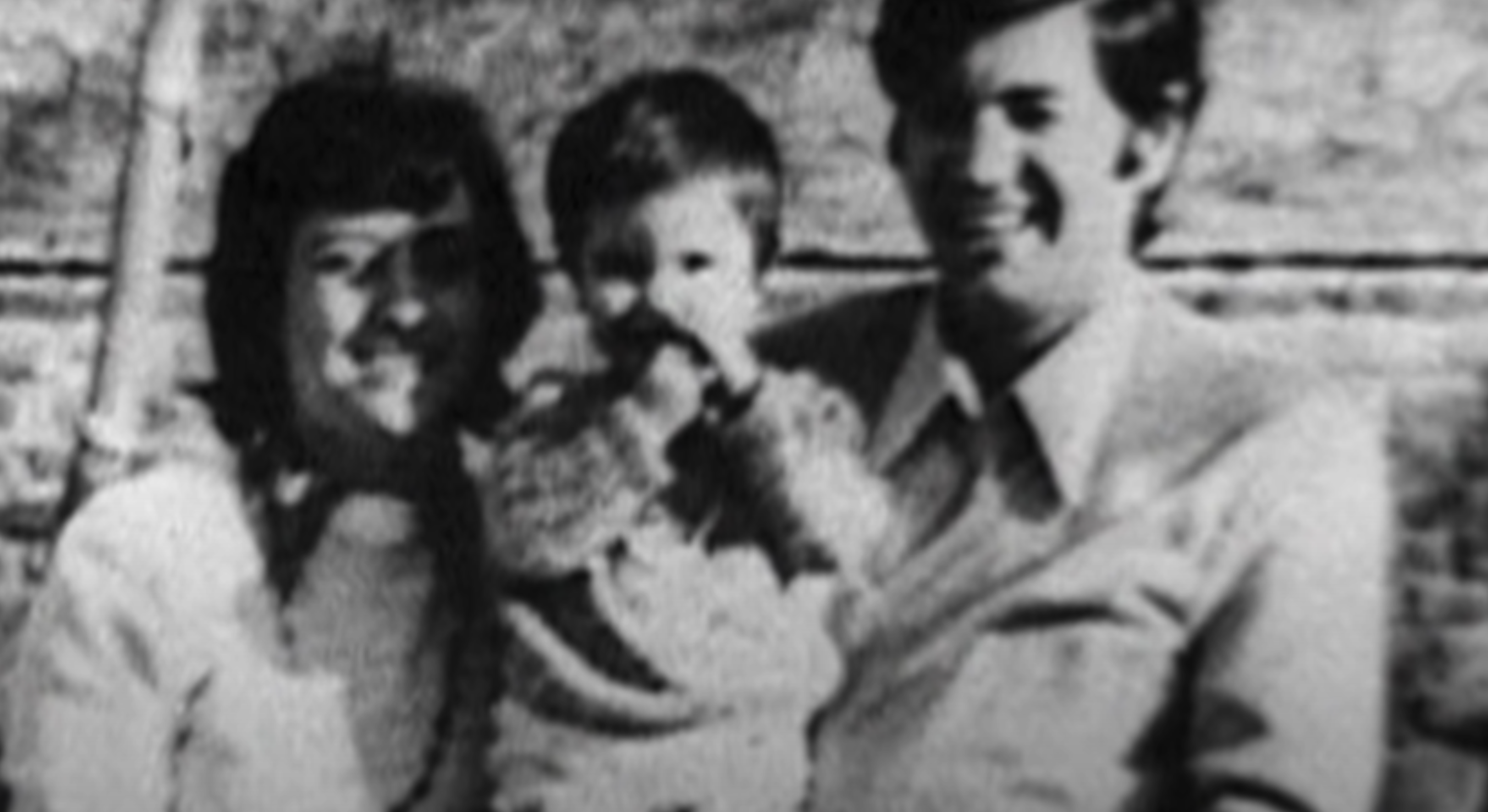
Cecilia Castro and Juan Carlos Rodríguez at their wedding, October 25, 1972. (Photo from the Villa Grimaldi Archive.)

Cecilia and Juan Carlos were arrested that Saturday night (November 17, 1974) at their apartment, and their parents called me to let me know. On Monday, we presented an appeal for legal protection (habeas corpus[8]), and since we knew that a house on José Domingo Cañas was being used as a torture center, we went to take a look, naively thinking we might see something. We were obviously unable to discover anything, but it was very useful for me to have that exact knowledge of the place.
Under what circumstances were you arrested? On what day?
I was detained on Monday November 19, 1974, two days after Cecilia and Juan Carlos, and the same day I wrote a petition for habeas corpus on their behalf. It was a Monday night, and the curfew began at 1:00 A.M. I lived with my parents, and we had finished dinner and were talking. At that dinner, I mentioned Cecilia Castro and Juan Carlos Rodríguez. I told my parents how worried I was about them, and this conversation turned into a discussion. My parents asked who had arrested them, and I explained that they were civilian police, the DINA. My father also asked where they’d taken her and what charges had been presented. My parents naively thought that when one was arrested, it was just like arrests had always been before: uniformed police, an arrest warrant, taking them to a police station, presenting them before a court.
We ended up discussing very heatedly, because they couldn’t understand, even though they knew Cecilia. This case was so close to them, and yet they couldn’t understand what I was telling them. We ended up arguing, and they told me that I was confused, that things couldn’t be as I was saying. I went to bed and I was sleeping when I felt my father come upstairs (I slept on the second floor, and my parents, downstairs). I heard a lot of noise; he was very flustered. He opened a second-floor window overlooking the street and shouted: “Who is it?” And they said: “The police. We’ve come to arrest Álvaro Varela.”
My father turned around, entered my room, and said: “Álvaro, they’ve come to arrest you.” I chose to remain in bed. and in a few seconds my room was full of a group of people dressed in civilian clothes, armed with machine-guns. My father desperately asked what was happening. In an irrational act — something one wouldn’t normally do in that situation but because I worked in that field — I asked them to identify themselves and show me the arrest warrant. The answer was harsh. I said I wouldn’t get up until they showed it to me, but I was forced to get up between blows. I got up, dressed, and said I worked in the Pro-Peace Committee, and wouldn’t leave the house until they alerted the bishop, and we had the telephone of Bishop Carlos Camus, so we could call him at any time in case of emergency. I pulled out the paper with his name and phone number. “I’m not leaving here without calling the bishop.” And between blows, I was forced to leave the house without calling the bishop.
And when I went outside, I saw a tremendous police operation.
The curfew had already begun; it was past one o’clock. There were several vehicles, Chevrolet C-10s, with the cargo bed covered with cloth, with powerful lights that lit the whole place up and with a large number of people, all armed with machine-guns, all pointing at me. I went out and came face-to-face with the chief of the operation, whom I immediately recognized because I was working on a complaint against him: Osvaldo Romo.[9] I knew Romo very well by sight due to the investigations we were conducting regarding his involvement with Pinochet’s secret police (DINA) and because he was a person who gained notoriety during the Allende government for leading ultra-left movements and who called himself “comandante Raúl” (commander Raúl.)
As chief of the judicial Department of the Comité Pro Paz, I had begun judicial action against him in the Santiago criminal court for torture and rape in August of that year. We’d identified him and denounced him in the court (without results). But now I met him face-to-face. He was standing in front of his truck, and with that same cold blood that I had [at that moment] (not because one is brave or strong, but out of an essential survival instinct); and I asked him, “Should I get in front?” He told me: “Get in back, motherfucker, we’ll see each other soon enough!”
And so they took me and threw me inside the truck, but I was able to grab onto something, and didn’t fall into the truck, but outside. I did that on purpose to read the license plate, to shout it out to my father, but to my surprise, it was a falsified Argentinian license plate. I knew that meant that one was to disappear, because the “disappearing” was being done carefully in order to eliminate any trace of evidence. And although I resisted, that was futile next to a bunch of people with machine-guns beating on me, and so finally I got into the truck and they put tape on my eyes and then blindfolded me and the vehicle left.
The vehicle went around in a lot of circles, but I recognized the place they took me because, curiously enough, that same day (Monday, November 19, 1974 at 1:30 pm), we had identified a DINA torture center on José Domingo Cañas Street with a priest who worked with us, Father Daniel Panchot. We walked around that place, hoping to find some evidence of Cecilia and Juan Carlos. We walked by and we drove by in an automobile; and so I identified the place very well, because at that time, José Domingo Cañas Street didn’t have pavement. The street was made out of cobblestones, and so the noise when driving over it was very particular. And because I’d been there just hours earlier with Father Daniel, on foot and in a car, I recognized those cobblestones and figured out where I was.

What was it like to arrive at a torture center? What happened with prisoners when they set foot in the torture center?
The truck went in, and they made you get out. As I said, I was totally blindfolded, so I wasn’t able to move around on my own but was pushed and shoved — beaten in a direction. And I remember I got to a place where they left me standing alone, and I felt some heat. So I imagine there were powerful lamps. And that’s where I was given my first, basic interrogation: name, surname, birthdate, nickname, all my basic information. All that information was registered. All my clothes were registered. That was a registration area, and then they pushed and shoved me to a room, opened a door, threw me inside, and I fell to the ground. There were a lot of people in that room, all blindfolded and tied up and sitting on the floor. Everybody was almost piled on top of each other, packed in tight. There was a lot of moaning and complaining. There were people who had been tortured and who were suffering, and we were all in the same condition.
Tell us about your interrogation
The interrogation was basically about my work at the Comité. They wanted me to give details about my activities. During the interrogation, I found out that Cecilia Castro was in that same torture center.[10] I found out she was there because they told me in the interrogation that they were holding her there, and they told me that my name was in her notebook.
And so they questioned me very harshly, trying to get me to sign a statement confessing that I was the liaison between the MIR and Cardinal Silva Henríquez. And all because my name was in Cecilia Castro’s notebook (she was a militant of MIR). And so this was to build a fake story aimed at discrediting the Cardinal.
Did you perceive the possibility of death in that place?
Absolutely. There are psychological factors that begin to function. Rationally, I knew or I had the consciousness that I was going to die. I knew very well what would happen. I knew how they tortured, how they killed, and how they made people disappear. I had been working on it a full year; I dedicated myself day and night, body and soul. We did nothing but this, because there weren’t a lot of us, and there was so much to do. And so, rationally, I gave myself up for dead. I had no doubt about that.
But there’s also a psychological aspect that helps you survive, and that gives you strength that you would never imagine under normal circumstances. And so I realized that I had to be very rational, keep a very cool head, be very careful with what I said in the interrogations, and develop a great ability to resist torture.
I’d already proven that being a member of the Committee was no guarantee. It made me no different from any of those there. And so there I was on the floor, listening to the moans, the complaints and the screams. Sometimes the door would open and more prisoners would be dropped in. Some were coming back from torture; others had just been arrested. Many were crying. I imagine there were men and women of different ages; I don’t know who they were, I never found out.
The next day, during the afternoon, they took me to a different room. In addition to the guards whose voices we were able to hear, I sensed that there was one more person in that room with me. We weren’t speaking, because they’d warned us not to speak. For example, if your blindfold came off and you saw any of your captors, they’d kill you. If you spoke to anybody else, you’d be killed.
But at some point, we perceived that we were alone, and we spoke. And what one would do was give your name, so that if one got out, the other could tell people about you. He told me his name and told me that what worried him most were his wife and kids. He thought his wife was probably completely overwhelmed and unable to do anything; but, to my great surprise, I’d written up his habeas corpus petition on Monday (he’d been detained during the weekend). I told him I’d been with his wife and kids. I said, “Stay calm because your wife went to the committee, and we filed your habeas corpus petition yesterday.”
I explained to him what a habeas corpus was and what we were doing at the Committee. He was the only person I was able to speak to. That information helped him calm down.
I imagined that I had presented petitions for habeas corpus for almost everybody who was there. There were very few of us presenting petitions; we knew all the names.
For how long were you held?
I was arrested Monday night and questioned very harshly all of Tuesday morning, but for many hours in the afternoon I had a machine gun pointing at me, preparing to execute me, according to what they told me. But something happened during those hours, because I noticed a relaxed attitude towards me during the afternoon, and at night, while I was on the floor, the door opened and they asked: “Who’s Álvaro Varela?” I said, “Me.” And they took me away and told me I was going home.
I didn’t believe it. I thought it was just another step in this process, but they actually put me in the same vehicle (I recognized it by touch) they had used to arrest me and take me there, with the same voice of the main guard who took me in the vehicle. We left, and I didn’t know exactly what time it was. I knew it was nighttime, but I didn’t know exactly what time, because during the day, they had made us listen to the radio, and the radio gave us the time. But I also noticed that they changed the hour to make us lose our sense of time. The vehicle took a long route, and then suddenly it stopped, and they told me to get out. I refused, because I didn’t know where I was or what was going to happen, but after the usual blows, I got out. I didn’t have another choice.
And they told me to take off my blindfold, with the warning that if I looked at them, they’d kill me. I obviously refused to take off the blindfold. After several blows, I took off the blindfold, and the first thing I saw was a neon sign in a store on the corner of Irrarazaval and Infante, and Osvaldo Romo was standing next to me. I asked him what was going on, and he said: “We’re taking you home, but we forgot how to get there. So come in the front seat with us.” So I went up front with the driver, an assistant, Romo and me. It was a large truck, but we were crammed in. And we headed down Infante, towards my house.
On the way, I told Romo: “You ruined my life.” And he asked me why. And I said: “Because I work in the Comité. That’s my activity, I defend political prisoners, and you arrested me for that, and you beat me up for that. So now, if I go back to it, you’re going to do the same thing to me again.”
He told me: “No, you can’t abandon your work, because your work is very important; you have to continue on.” This statement left me speechless; it was worthy of a psychopath. After a while, we arrived at my parents’ house, where I lived. It was three or four in the morning, and they rang the doorbell, but nobody answered. They were about to leave, but I said, “No, you can’t leave!” Because I lived not far from the Italian Embassy, where there were a lot of people asking for asylum and a lot of police surveillance, and also we were under curfew. I told them, “If you leave, and a military patrol comes by, they’ll arrest me for standing here on the street. At least help me jump the fence.” And so Romo helped me jump the fence, I knocked on the door, someone opened up, and then they left.
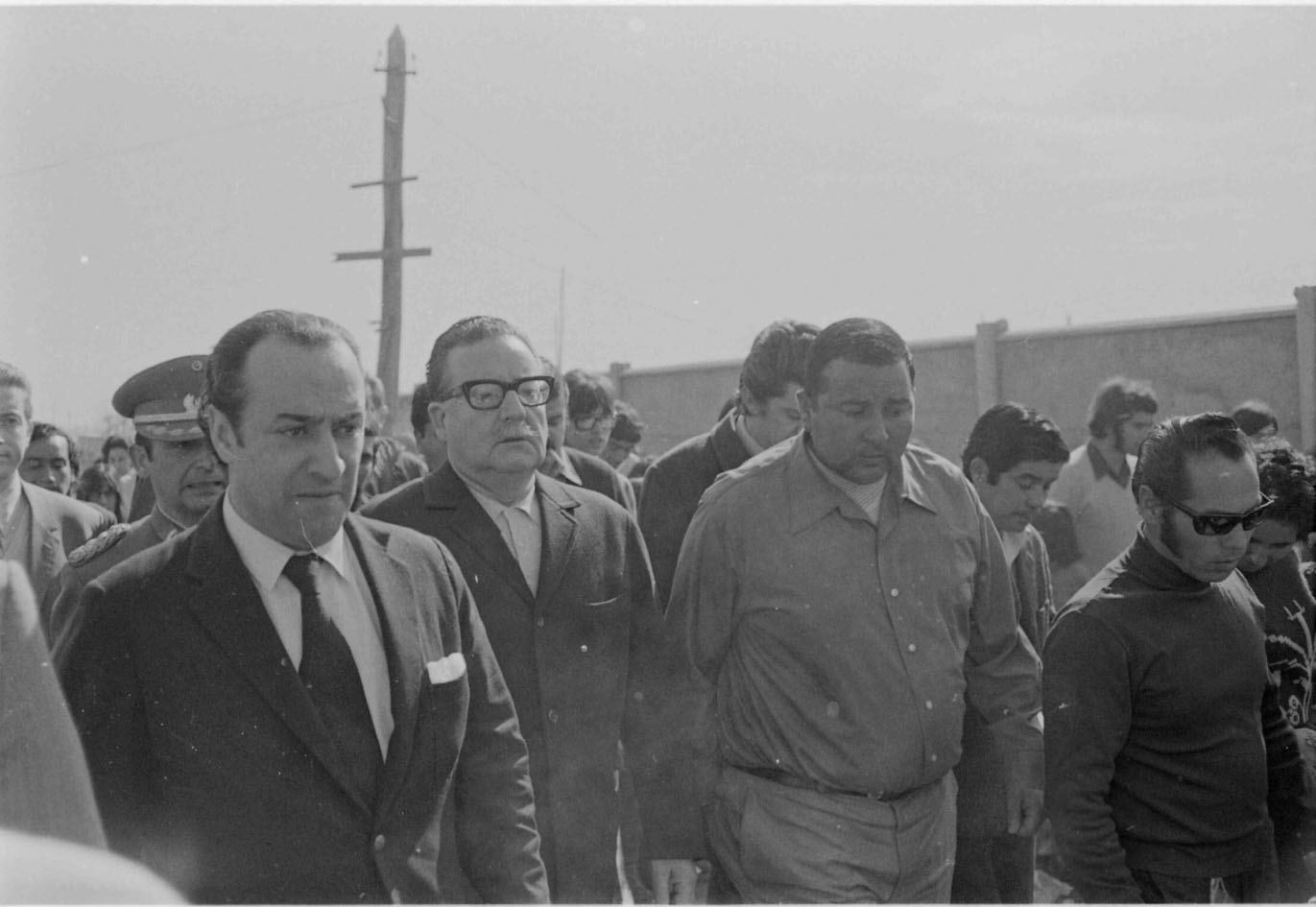
Tell us about Osvaldo Romo. Your personal impression when you saw him during your arrest? And what did other prisoners say about him in their testimonies when they described him?
I saw Osvaldo Romo two times. First, when I was arrested, I saw that he was the chief of the operation. I recognized him immediately because I had presented a legal action against him. We had photographs, press clippings; we’d been following him. There were several clippings where he appeared as “comandante Raúl” (commander Raúl) in the Peñalolén land occupation. We did a complete follow up on him, so we knew him very well.
Romo was terror itself. Romo was labeled one of the worst torturers in the world by the General Assembly of the United Nations, in 1975 or 1976. There’s a UN resolution specifically about him.[11]
He knew many of the people he arrested, the young people from MIR with whom he had worked very much. [After the coup] Romo patrolled the area of La Reina, Macul, Penalolén and Irrarázaval. He patrolled these streets day and night, and he found people on the street to arrest. Romo was terrifying, and everybody knew about his brutality, because they knew him from before, and so they recognized him. He was very cruel with the people he had known and with whom he’d done his political work.
At what moment did you and others in society or those working on human rights begin to use the term “detenido desaparecido” (detained and disappeared)?
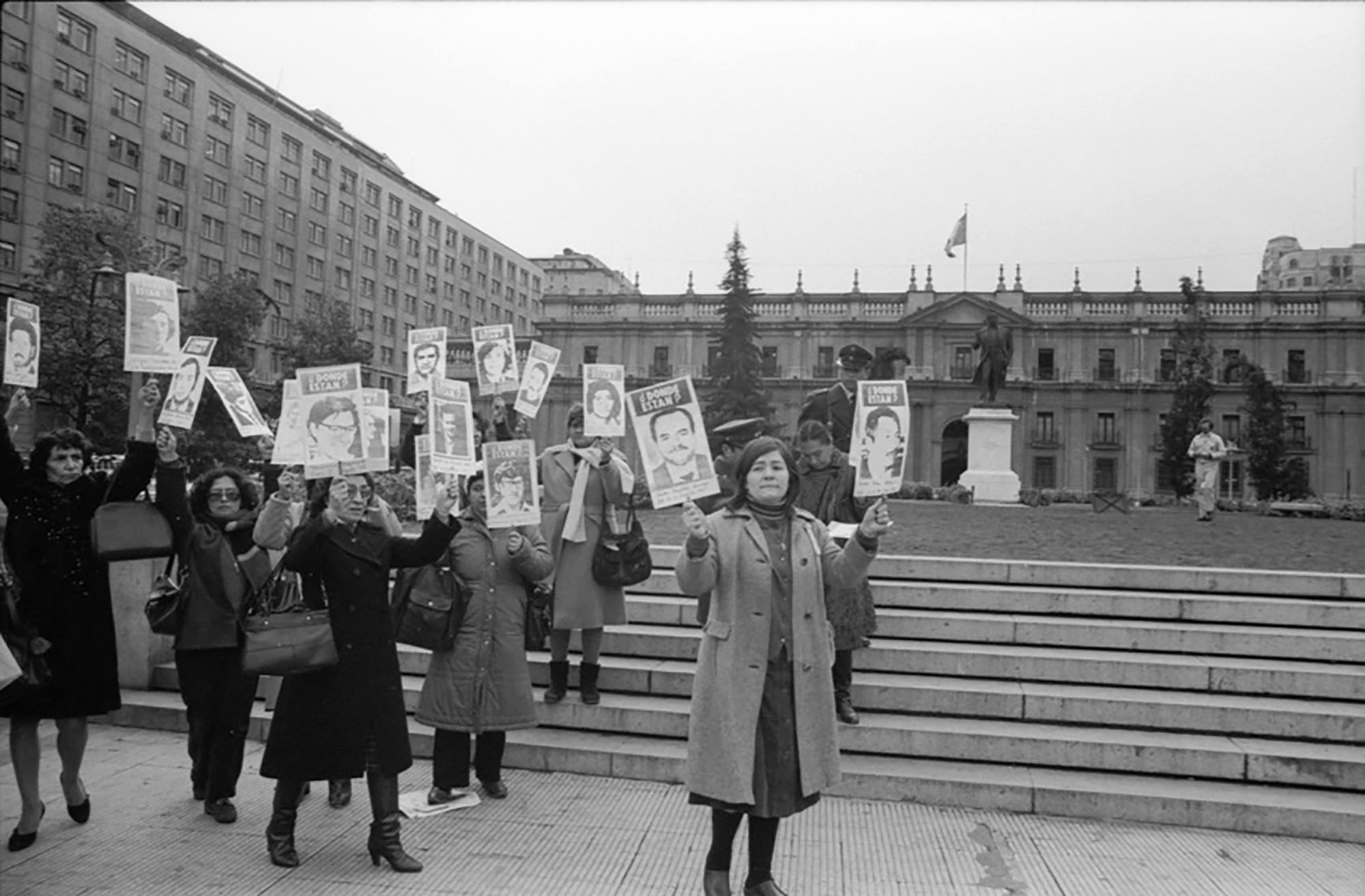
At the end of 1974. We had been working for many months on the cases of people who hadn’t appeared in any detention center after being arrested and there was no news about them. It was the common and similar situation of a large group of people, and so we began to organize the family members, and that’s when the first association of relatives of the “disappeared” was created. We began to openly use the term in 1975, at the inauguration of the judicial year, in which we spoke openly about the “disappeared.” That’s the moment when the term “disappeared” began to be used.
Let’s talk about Operation Colombo. What was Colombo?
Colombo was an operation designed by the dictatorship at a moment when the issue of the disappeared in Chile caught the world’s attention because of its brutality. The DINA designed a plan to claim that the disappeared had died outside Chile.[12] The dictatorship used two magazines that had previously gone out of print, one in Argentina and the other one in Brazil, and returned [them to print] just for these “special issues.” They [articles in the magazines] claimed that the missing people we were trying to find after their arrest in Chile were actually outside the country, and moreover, that they had killed each other.
What happened when Cecilia Castro’s name appeared on this list of people supposedly killed outside Chile?
When the list of 119 Chileans [supposedly] killed outside Chile came out, it was a very tragic and dramatic moment. It was one of the most difficult moments at the Committee. You have to remember an article that appeared in “La Segunda” newspaper that set everything off, with a barbaric headline.[13] It was surely invented by Mr. Mario Carneiro, a very cruel person who was the director of that newspaper and well-known for publishing this type of news and information in a way that not only harmed the families whose relatives had been arrested and tortured, but also made them suffer this public punishment.
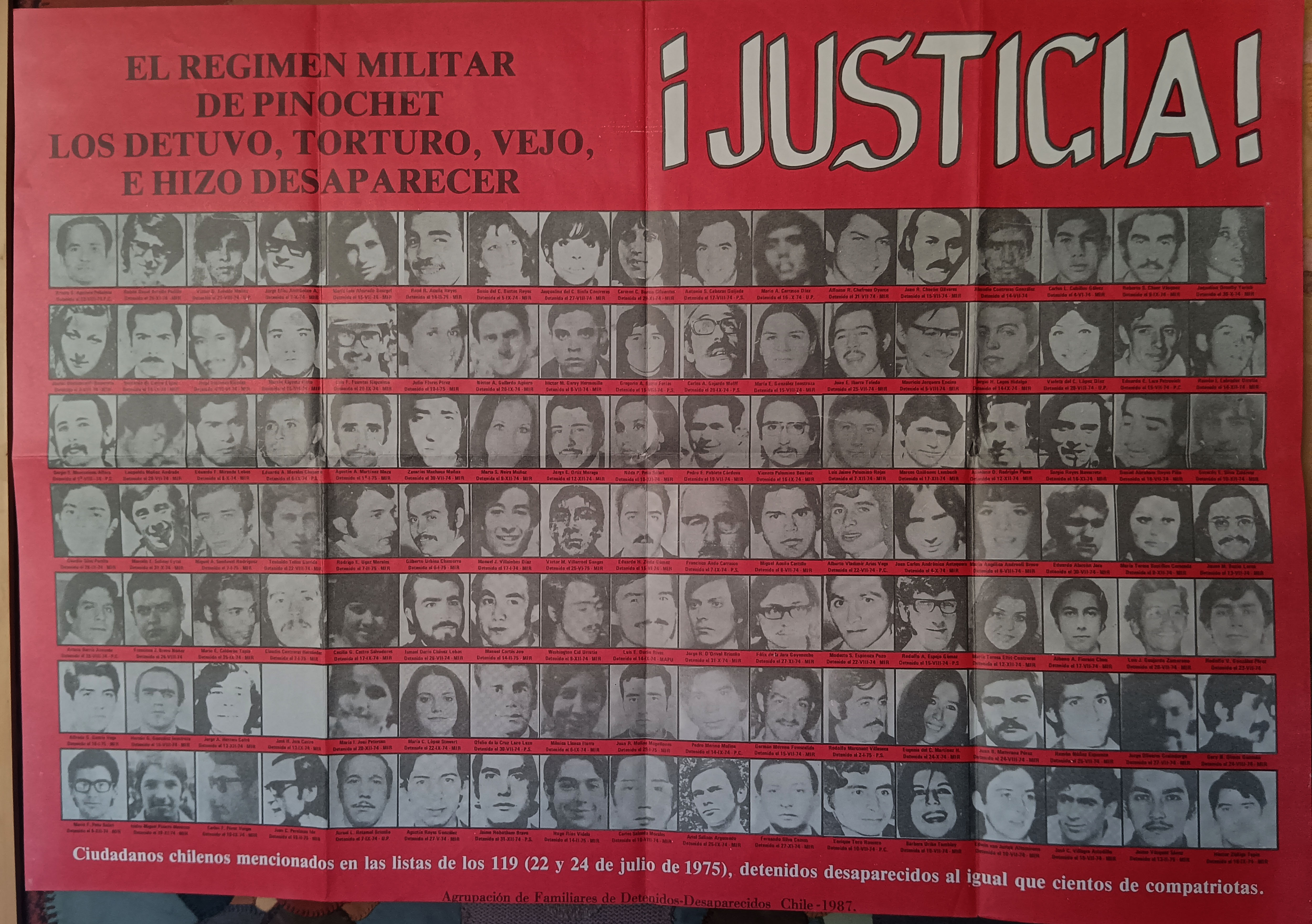
The word began to spread about this article, and very soon the Pro-Peace Committee’s office was filled with family members, friends, people who had understood the message behind all that. It hadn’t been very long since the arrests, and so there was still hope of finding the disappeared, but this message was the notification of death, and so it was a moment of much pain and anguish. The pain took over, and we had to ask for assistance from all the medical teams, nurses and paramedics that we knew. We had to ask for help from all the Pro-Peace Committee’s territorial organizations through the Vicariate of the Santiago Archdiocese.
On a personal level, I saw Cecilia’s name there among the 119.[14] Cecilia was very close to me, but so were the other 118 because I’d been sharing with their families for many months, participating in the efforts to find them. And I remember that at the time, personally, I was absolutely convinced that we were facing brutally fake news because all the publicity had been so evident.
Personally, as a member of the Committee’s judicial team, the first thing we’d done was to file the habeas corpus petitions (recursos de amparo). So I’d taken all these cases to court, I knew all their stories; and I remember what I did with a team of lawyers amidst the pain, anguish, blackouts, and loss of blood pressure. We said, “We’re going to immediately start working to clear this thing up.”
And we took all the information and went away and began analyzing and studying the situation. Meanwhile, the social workers, assistants, personnel, priests and nuns, were all assisting the family members. And so, imagine, these were 119 names, and so there were many, many relatives: mothers, children, spouses, parents. It was a Dantesque image, because it was like breaking the news of a tragedy which had killed 119 people, all at once. The resulting convulsion and pain are immense.
We (lawyers) went away. We locked ourselves in a room and began working on the answer immediately. We sent a lawyer to Argentina and Brazil, to find out exactly what these magazines were and we were able to set the record straight internationally, proving that this information was all a lie. That work has continued producing results, especially with the trials in the last few years. At that moment, it wasn’t of any direct use for those affected, but it was useful because the international pressure and public opinion forced the dictatorship to be somewhat more cautious when arresting, torturing or disappearing prisoners.
What judicial actions were carried out on behalf of these 119 people?
Up until the day when the “List of the 119” appeared, we’d presented habeas corpus petitions, for each of these cases. And they [the DINA] built their list based on our legal actions (because we’d also presented some joint actions). We observed that some of the mistakes we had made writing down the names also appeared on the list. That is, they chose precisely the people we were making most visible, the ones we were looking for, because the dictatorship’s idea was to discredit our actions and make it appear as if this were all an invention of ours.
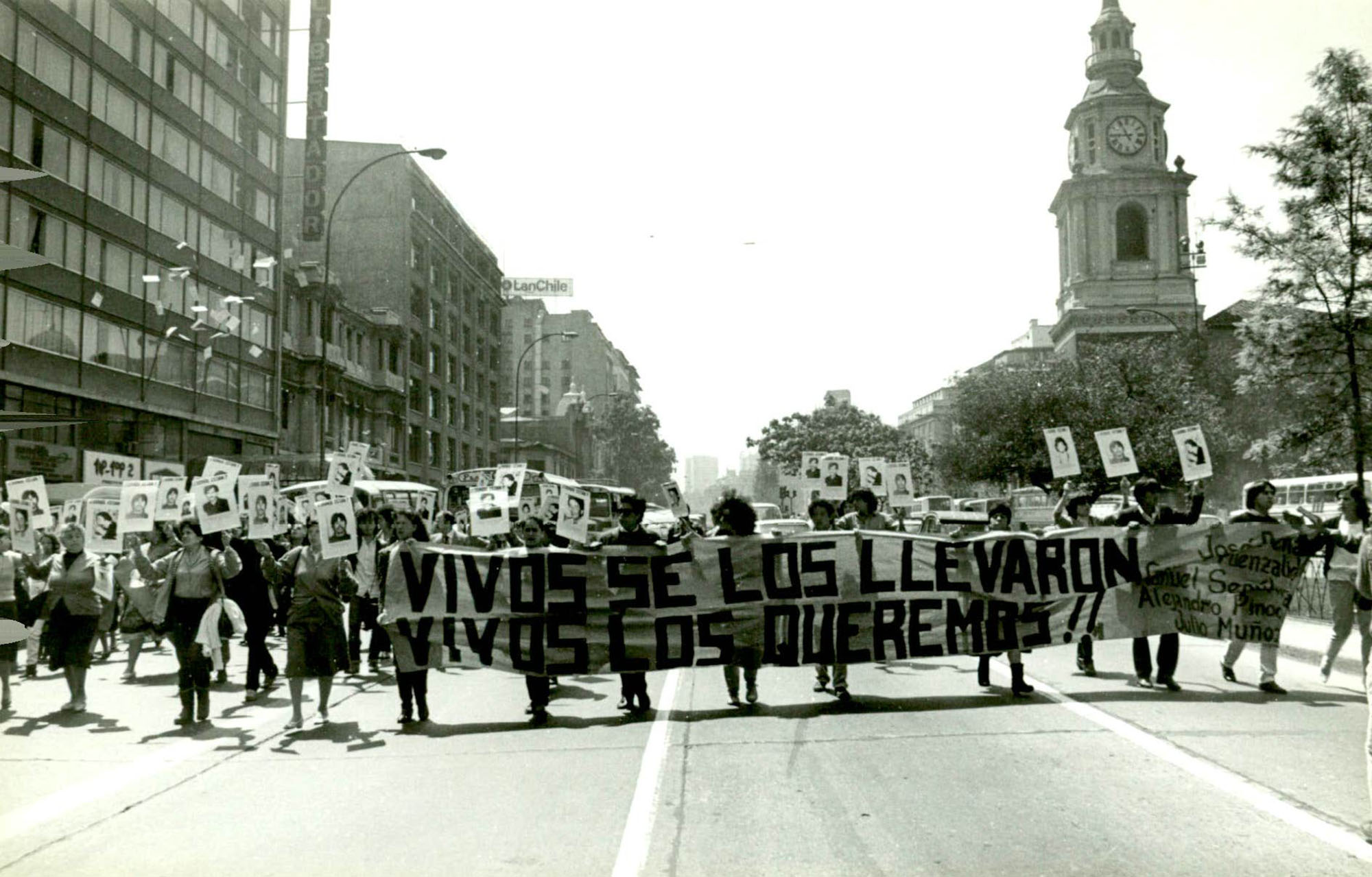
Remember that they were saying: “The human rights people are making this all up!” I went to court every day. In the Appeals Court, there was an office where they presented the habeas corpus petitions and Mrs. Emma Mazuela, a very cruel person, was in charge (she was a judicial employee until very recently). She was a very cruel woman because she treated the relatives who went to ask for information and those of us presenting appeals very badly.
She was a very disturbed person, so just imagine how she greeted me when I had to go back to court after this list appeared. Because the first news was that they had killed each other, and the second piece of news was that we had denounced that they had been arrested and we had presented appeals for their protection. In Cecilia Castro’s case, she’d been arrested by Romo, the same person who arrested me; her torturer had told me that she’d been in the same place I’d been, and so I was absolutely certain that what I was doing was the right thing.
But you can’t imagine the amount of pressure if you didn’t have that practical experience, because you didn’t have any arguments to sustain a truth different from the “official truth” being announced at the time. And they treated us very badly in the courts; they were openly aggressive and offensive towards us.
What did you do with the information you were gathering?
We were gathering all this information, and we realized that we had to create a system to be able to store the documents beyond paper files, and this was especially critical around 1986 when the dictatorship wanted to seize the files and imprison two of our workers, accusing them of providing assistance to someone who had participated in an armed robbery.[15] They used the [supposed] involvement of a physician and lawyer of the Vicaría for political purposes and tried to raid the headquarters of the Vicariate. We had information about around 45,000 victims, thousands of pages and microfilms. At that time Sergio Valech was the Bishop, and when a military prosecutor arrived to raid the Vicarage, Monsignor Valech stood at the door, standing tall. He was a big man and said,“If you want to enter, you have to go over my body.” Luckily, someone had told us that we would be raided and by the time the military came we had already stored the files elsewhere.
How would you define the role of the justice system during those 17 years of military dictatorship, and the years afterwards, before General Pinochet’s arrest in London?
As a general rule, our judges acted like cowards, very cowardly, and their objectivity was compromised. There were Supreme Court judges who had a very strong ideological bias, who forgot their mission. Clearly, Enrique Urrutia Manzano (1972 – 1975) is one of them, and José María Eyzaguirre (1975-1978) is another. I was once able to see this personally, when on behalf of the cardinal, I took José María Eyzaguirre, President of the Supreme Court, a complaint describing a very serious crime. After reading the documents, Eyzaguirre told me: “I can’t do anything because they could disappear me, too.” And I was a young lawyer, sitting before the President of the Supreme Court, who was giving me this type of answer.
The President of the Supreme Court, Israel Bórquez (1978-1983), said that he was “sick and tired of the disappeared.” This clearly had an effect on the great majority of the Supreme Court, Appeals Court and regular court judges, and judicial bureaucrats.
You had to have tough skin to go to court every day like we did, filing these complaints, and being rejected by the justice system every day. There were also judges, very few, of course, but there were also judges who acted very bravely, with great integrity, and who made important decisions in order to save these people’s lives, and of course these decisions led to serious consequences for them in terms of their judicial career.
During Ricardo Lagos’ government, you were a member of a very important commission he created in order to recognize torture as a human rights violation and to quantify how much it had affected our society during the military regime. What was your participation in the Valech Commission?
I was named to participate in the Valech Commission[16] by the President of the Republic. There were eight of us on the Commission, several of whom had worked in the Peace Committee and the Vicariate; Monsignor Valech himself was Vicar of Solidarity during one period. We knew each other very well, and we knew the issue. Torture was one of the human rights violations which hadn’t been considered during the dictatorship or afterward from the point of view of support, defense or reparations.
In the Committee and the Vicariate, we had a lot of work, a lot of demand on our time, and so for us, those who had been tortured and released were “closed cases.” We were happy when prisoners were released. We hugged each other, but we had to immediately continue on and worry about the new arrests, about the disappeared. And so whoever suffered torture and was liberated was basically on their own.
The truth is that we didn’t have the capacity to do anything else. The most we did was create some psychological support teams, but they were very limited and absolutely insufficient for the existing needs. We didn’t have enough time to take massive legal action in torture cases, because the most urgent thing was to save people’s lives, those who were under arrest or in concentration camps.
So, when the National Commission on Political Imprisonment and Torture was formed, I was glad that after so many years since the dictatorship ended, we were finally looking in that direction.
There were many expressions of torture, both physical and psychological. I’m sure there are many thousands more who were tortured, or who felt physical or psychological torture, during the dictatorship, many more than what we identified. But this was an intense work with a deadline and a necessary ending. We felt that it wasn’t good to maintain this line of investigation open eternally: we had to close this Commission and give answers to those who had approached us. To this day, I’m convinced (and our work on the Commission proved this) that torture is still a taboo issue in Chile. But when we presented our report, a space was created to discuss this with the Chilean people.
On the day we presented this report, we walked two or three blocks from the office of the Commission towards La Moneda [the Presidential Palace], and we felt the people’s appreciation. People peeked out of their windows, came out onto the street, shouted their support for us, and applauded us. But it wasn’t us they were cheering: it was the power of what had been produced, which was able to shed some light on this terrible situation. I believe it was a very important job, because 30,000people is an important number, with all the impact that that has on society., with all the impact this has on society. [17]
All these people were heard, and many of them spoke out for the first time. I saw very strong men, who have been able to do great things with their lives, who have good jobs, a good family, men who are solid, but when the time came for them to sit down and talk about this, one could see how they cried and broke down, because they’d never done it before. Torture is something which shall continue damaging our society for many years, even beyond those who suffered the torture itself, because their children and relatives have been affected by it.
Did you ever imagine how instrumental those archives would become?
The great value of those documents is that they were collected at the very moment when things were happening; they were fresh. That is to say, when we filed a habeas corpus petition, we knew that the night before they had gone to kidnap the person and there we were, with his father, mother or his wife who had been witnesses. They gave us their testimonies and we wrote down all the events as they happened.
At the time that we were doing this work, when we presented those petitions for habeas corpus or when we made notes in a folder, we were not thinking that these were historic documents. We were diligent about them because we knew that Chile is essentially a legalistic country. So, if we presented a habeas corpus petition it had to be a very powerful judicial document. When you look at the archives, when you review the files, it is very impressive how thorough they are. We had to prove the facts very well before the court, even though the judges had no ears, eyes or mouth.
When did the Vicariate of Solidarity stop working?
The Vicariate stopped operating in 1990 — once the dictatorship ended and democracy was restored. But years before that we had begun planning ahead, how to archive and preserve the valuable documentation that had been collected since the Committee’s inception in 1973.
And from there arose the idea of creating a foundation. We called it The Vicariate of Solidarity Archive Foundation. The archive is located in a former convent of Trinitarian nuns. But it is not just an archive with all the documentation of the work of the Vicariate of Solidarity; we also provide different educational activities and exhibits.
The Board of Directors is made up of people who were on the Comité Pro Paz and also in the Vicariate, as well as a priest who represents the institution of the Church itself. And this archive was declared a National Monument in Chile and is among the documents within the UNESCO Historical Heritage Archive.
We also receive Chilean and foreign university students and academics who are conducting research and come to the source, which is this archive.
It is a very lively, very active institution and has been essential in human rights investigations, given that it has fresh, timely antecedents. So, every time a court begins an investigation into a specific case, one of the first resolutions that the judge adopts is to request documentation from us to learn more about the case. Sometimes people like me, who wrote those petitions for habeas corpus, are called to testify.
Some time ago a lawyer contacted me who had heard that her grandfather had suffered repression. She wanted to know if there was any information about his case. She was very surprised when she saw the files, because she found the complete story, things that she had heard as a child but she was not sure about. The archives allowed her to build that part of her family history that was missing.
Has there been justice for the victims of disappearance?
There have been many Human Rights investigations in Chile, and there are many convicted people like in few other parts of the world. The Punta Peuco prison[18] is full, so much so that they have had to take the condemned to other prisons. But although it has been possible to determine judicially what happened, in no case has it been possible to determine what happened to the victims [the disappeared] because all these sentences are achieved against the testimonies of the accused. I mean, there are thousands of pieces of evidence, but they keep denying; they keep denying. Yes, they continue to deny and that is a very impressive thing. In the face of evidence, they maintain denial, they are like automatons who have had something infiltrated into their brains and hearts to maintain their version.
So that is why convictions are obtained based on the presumptions that are met with the different means of evidence. And that is the reason why it is effectively possible to determine that the person was kidnapped and made to disappear in the hands of a specific unit. And there are people who are perfectly recognized from a unit, but even so it is impossible to know the whereabouts of the victims’ bodies.
Regarding the case of Cecilia and Juan Carlos, there has been no further progress to know what may have happened to them. But three of those responsible for their arrests are serving sentences. What we know is that Cecilia might be among the people whose bodies were thrown into the sea in Quintero.[19]
Notes
[1] Movimiento de Acción Popular Universitario (MAPU, University Popular Action Movement), part of the Popular Unity Coalition that backed Salvador Allende in 1970.
[2] The Frente Nacionalista Patria y Libertad (The Fatherland and Liberty Nationalist Front) was a Chilean far right paramilitary group that formed in 1971 and used violence and terrorism to oppose the government of the democratically elected socialist Salvador Allende.
[3] Soon after the coup Professor Pino applied for asylum status in Guatemala and then moved to México where he taught aeronautical law at the Universidad Nacional Autónoma de México. Álvaro Varela never saw him again. In 2023 he tried to contact him but learned that he had recently passed away.
[4] On October 4, 1973, as a result of the violation of human rights being committed in Chile after the military coup, Chile’s Cardinal Raúl Silva Henríquez signed a decree creating the Comité Por Paz (Committee for Peace, 1973-1975) to support the victims of repression. The Committee was supported by representatives of the Catholic Church; the evangelical churches; the Jewish community and the World Council of Churches. The institution operated until November 11, 1975, when General Augusto Pinochet ordered Cardinal Silva Henríquez to dissolve the Committee. The next day the Cardinal created the Vicariate of Solidarity (1975-1992).
[5] Tres Álamos was a detention center for political prisoners in Santiago.
[6] Marcela Soledad Sepúlveda Troncoso was arrested by agents of Pinochet’s secret police, the Dirección de Inteligencia Nacional (DINA, National Intelligence Directorate), in 1974 when she was 18 years old. Surviving former detainees report having seen her in Tres Álamos. She is still missing.
[7]Cecilia Castro Salvadores was a law student at the University of Chile and a member of Movimiento de Izquierda Revolucionaria (MIR, Movement of the Revolutionary Left.) The MIR was a radical leftist extra parliamentary group that believed in revolution and the seizure of power through armed struggle. During the military regime, both its members and those of parties that supported the government of Salvador Allende were harshly persecuted, imprisoned, tortured, executed, forcibly disappeared, or exiled. Cecilia Castro Salvadores was arrested by DINA agents on November 17, 1974. She was 23 years old, and married to Juan Carlos Rodríguez, an engineering student at the Universidad Católica and also a member of MIR. They had a 10-month-old baby.
[8] Habeas corpus is a fundamental right in the Constitution that protects against unlawful and indefinite imprisonment. Translated from Latin, it means “show me the body.” Habeas corpus has historically been an important instrument to safeguard individual freedom against arbitrary executive power.
[9] Osvaldo Romo was one of the most cruel and brutal torturers of the DINA. He was part of the Halcón I group of the Caupolicán Brigade. They were in charge of exterminating the MIR (Movement of the Revolutionary Left). He arrested Cecilia Castro Salvadores and her husband and, two days later, Álvaro Varela. The DINA was directly dependent on General Pinochet. Before becoming a DINA agent, Romo or “Comandante Raúl,” was a member of the Popular Socialist Union (USOPO) and was a leader in Lo Hermida, a working-class neighborhood in Santiago. He knew a lot of the victims because they were also doing political work. He personally looked for, arrested, and tortured them. Many of them are still missing.
[10] Cecilia Castro and Juan Carlos Rodríguez were taken to Jose Domingo Cañas. Juan Carlos was badly beaten and tortured and had to be taken to a clinic, and disappeared from there. Cecilia was taken to the infamous detention center Villa Grimaldi, where she was tortured. She disappeared from there 8 months later.
[11] In 1975, a special resolution from the United Nations tasked with investigating the human rights situation in Chile requested that Osvaldo Romo be prosecuted for crimes against humanity. “Osvaldo Romo is the leader of a gang of torturers… Some of his acts, according to information received by the Working Group, are totally inhuman, atrocious, and repugnant. They shake the collective conscience of humanity to its core.” After that, Romo was sent by Pinochet’s regime to Brazil where he was protected by the local dictatorship. He was arrested in Brazil in 1992 and extradited to Chile. He was convicted, imprisoned and sentenced to 92 years for hundreds of cases involving killing, rape and forced disappearance. He died in jail.
[12] Colombo was a 1975 DINA operation aimed at covering up the murder of more than 119 of the disappeared at a time when Pinochet’s government was under scrutiny for human rights violations by the United Nations, Amnesty International, and other international organizations.
[13] “Exterminated like Rats”, La Segunda newspaper, July 24,1975.

[14] Cecilia Castro is one of the 119 victims of forced disappearance of “Operation Colombo.” In March 2023, Miguel Krassnoff and 58 other agents of the DINA were convicted for the aggravated kidnapping of Cecilia Castro and 15 other victims of “Operation Colombo.”
[15]In 1986, the Frente Patriótico Manuel Rodríguez (FPMR, Manuel Rodríguez Patriotic Front), a military appendage created in 1983 by the Communist Party of Chile and aimed at militarily resisting the dictatorship, became involved in an assault on a neighborhood bakery, leading to a confrontation with the police. As a result of the confrontation, a police officer and an assailant were killed, and there were injuries on both sides. One of the wounded assailants went to the vicarage seeking help, claiming he had been injured “by chance” in a shootout, hiding his involvement in the assault. This event led to relentless legal persecution against the Vicaría de la Solidaridad by the dictatorship.
[16] In 2004, Bishop Valech directed the National Commission on Political Imprisonment and Torture, which created the Valech Report I, a record of human right violations during Augusto Pinochet’s military regime. According to the National Commission on Political Imprisonment and Torture Report (Valech Report I and II), between 1973 and 1990 more than 40,000 people were tortured and/or imprisoned by Pinochet’s regime.
[17] Comisión Nacional sobre Prisión Política y Tortura (Informe Valech 1 y Comisión Valech 1 (2003-2010), Comisión Valech 2 (2010-2011).
[18] Punta Peuco is a prison where military officers and former State agents convicted of crimes against humanity during the dictatorship of Augusto Pinochet are detained.
[19] For more on this, see “Legacies of Intervention: Until the Sea Shall Give Up Her Dead…”

