
On September 11, 2023, it will have been 50 years since a violent coup overthrew the democratically elected government of President Salvador Allende in Chile. Augusto Pinochet, with backing from the U.S. government, established a dictatorship that engaged in terroristic repression of its own country.
One theme that the Center for Latin American Studies will be exploring through this blog is legacies of intervention – how interference by outside forces into Latin American and Caribbean countries has led to decades and centuries of unforeseen and often deadly consequences.
The following is the second part of an interview conducted with a helicopter crewman in Chile‘s armed forces who witnessed the violence conducted by the Pinochet regime against its own people. The first article and part of the interview can be found here – “Legacies of Intervention: Chile – Until the Sea Shall Give Up Her Dead…“
Interview with Juan Carlos Molina Herrera
By Patricio Lanfranco (Part 2 of 2)
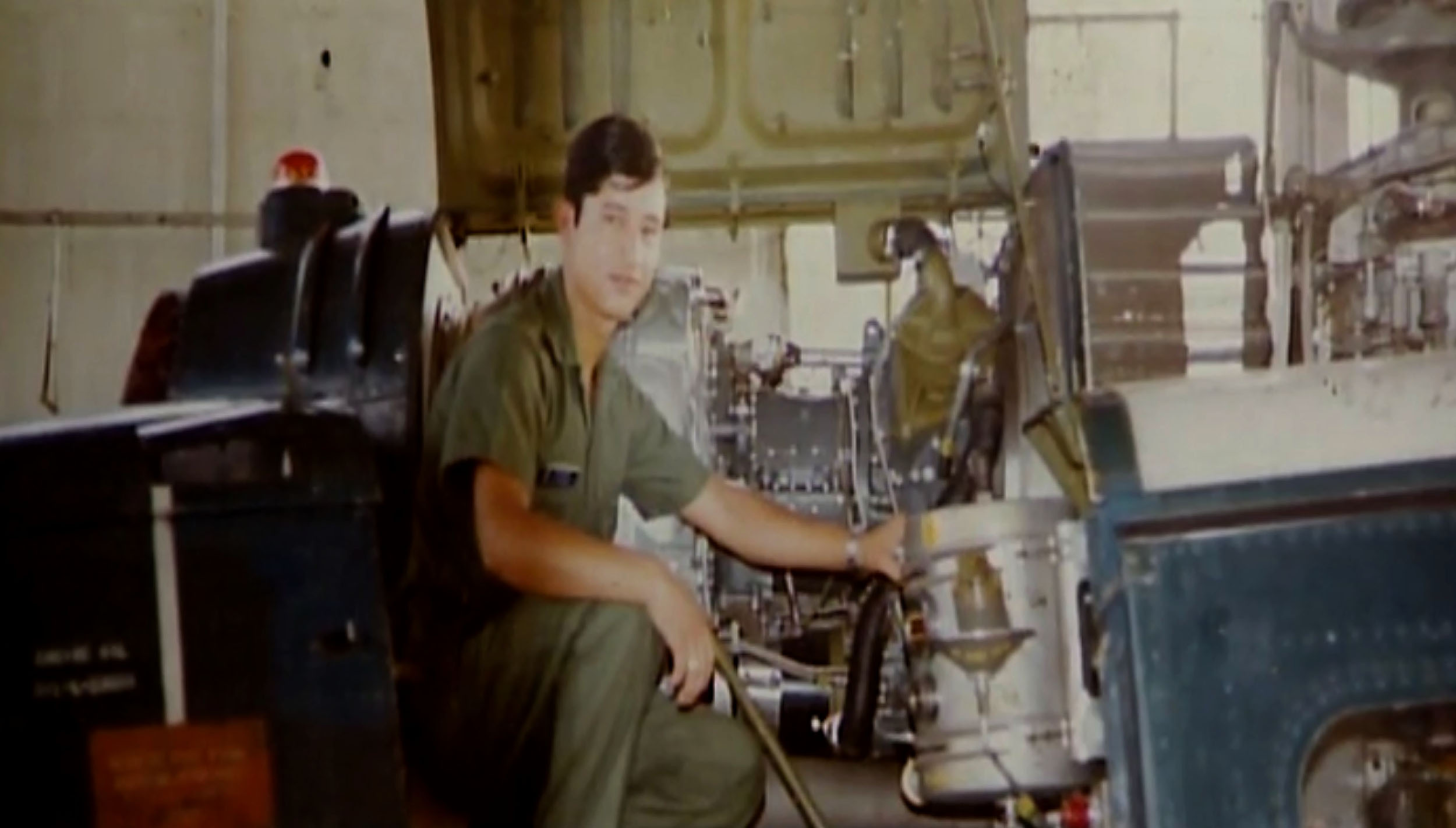
(Image from The Judge and the General.)
What happened after you returned from that second trip to throw bodies into the ocean and you refused to clean up the blood?
The trip was on a Friday. On Saturday and Sunday we didn’t work. On Monday I returned early in the morning. We lined up at quarter after eight like every day and saw that the captain had already observed that I hadn’t cleaned up. He got very upset and screamed at me, “Who do you think you are? Can’t you see you’re leaving evidence that we’re doing this kind of operation? You shouldn’t care about those people; they are like dogs …” I said, “My captain, for me they’re not dogs.” And he said, “You know what? You’re a Communist!”
The unit doctor, Dr. Soroya, defended me somewhat. He gave me a week’s leave and said, “You know what, Molina? Go home, you have tonsillitis!” I’ve never had tonsillitis, but he realized I was very depressed. And the captain told me: “Oh, so you’re on leave?” And the doctor asked him to let me go home and take it easy, without problems. So I went home. I didn’t tell anybody, not my father or mother. I couldn’t tell them. It was such a strong experience, something so personal. I felt guilty of something. A week went by, and the captain asked me if I was going to continue… “No,” I said, “Not If you send me on these operations…” He said: “Well then, I’m not giving you your weapon back. From now on you’re on cleaning duty.” And this captain demoted me to this state: from being a flight mechanic to doing that type of work. But I preferred that to being a witness to this type of action again. And unfortunately for me, in May 1981, a son of mine drowned in a water tub, on a Sunday. And when I examined my conscience, I concluded that I was holding back such a strong secret that the death was a warning, a punishment from God. And that’s how I took it. Someone was telling me that I had to tell the truth.
After that, they asked me once again if I was going to continue with my career. I told them I would do anything but that type of operation. “Oh, so you’re still with your same nonsense! Fine! Keep doing the same work!” And the next day, they put me on a truck, and I arrived at the Military Hospital. A doctor examined me and told me I didn’t have anything. And then he looked at the orders that said I had to be under arrest at the psychiatric hospital. I had no mental problems or anything. The doctor was very honest with me. I told him my story, and he told me to stay there. He said they had sent me there to see if I changed my mind. I said: “Then I’m under arrest?” He said, “Take it however you want, but I can’t give you any medicine because you’re just depressed due to what you’ve been through. You lost your son…you are depressed, stay here, stay calm.” He helped me, and one month later the Army asked me if I wanted to forget what had happened and go back. I could continue my military career and not work in those kinds of operations anymore. I thought that the Army had spent so much money on me, to study and everything, and I was a good mechanic. I always reminded them of that, and I know they didn’t want to lose me.And I said “no.” When they came to get me, they put me on the “list 4” of the Army, the worst list. 1 In 1983, they kidnapped me and took me to a house, tied me up, and told me that if I ever spoke one word of this, they would kill me and my family. That same day, I told this to the Human Rights people and the Vicariate 2: “I’m receiving death threats,” and that’s when I told the entire truth.
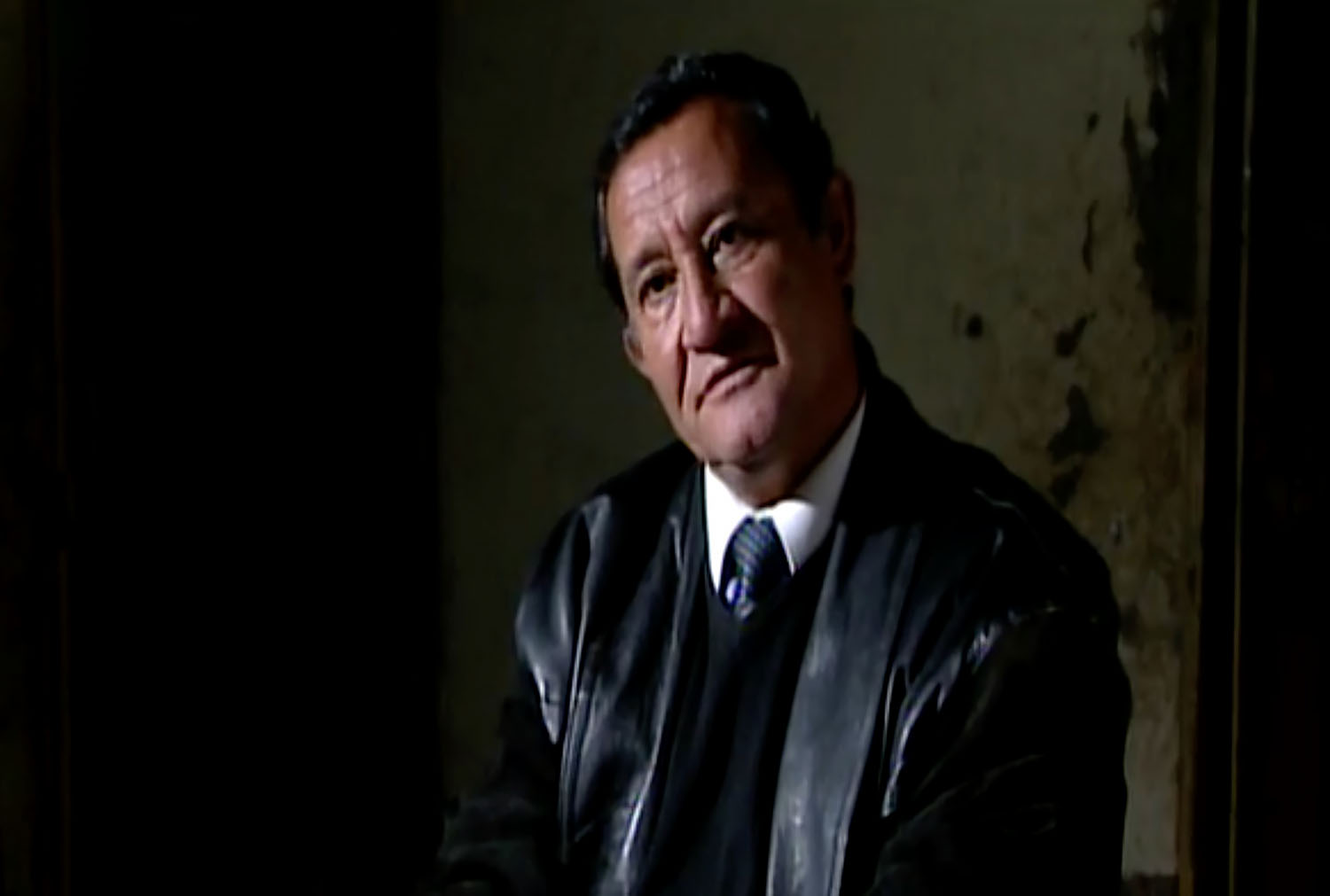
(Image from The Judge and the General.)
Going back to the flights, what had you thought when the light went off and it was clear that they had thrown the bodies into the ocean, and that you had another half-hour flight back?
That’s hard to describe. One’s mind is so fragile at that moment. You even think, “That could have been a relative of mine!” The first thing that went through my mind was to realize that the families of these people had no idea what was happening. They really had no idea. I would go home and not be able to tell my wife what I was going through. I had to keep it to myself, to live with the knowledge that we were doing this. My colleagues didn’t care if they participated or not. But that wasn’t my case, I didn’t think the victims were dogs. For me they were human beings, people who had families, people who could even have been innocent, and I thought: “I’m a witness to this serious crime.”
How many pilots participated in these operations, all the pilots?
All of them participated 3 and it caused me great sadness to see their cowardice. Those people were officers, even coronels, who had taught us that if we made a mistake as soldiers, we had to face the truth no matter how painful it may be. And then much later to see those same people declare in court that they never saw anything or participated in anything. That’s a tremendous pain I have in my heart and soul and thoughts, to see that these people who said they were officers and pilots in the Chilean Army weren’t able to face a reality, a situation where they might have been responsible, maybe not; it’s very probable that they were responsible. And they say, “No, I didn’t participate in this” even though many of their friends know that they were very involved in cases where people disappeared. And they’re direct witnesses, because they were the pilots and had to know where they were heading. They would tell us only that we were going on a “local flight,” but they wouldn’t tell us where. When it was a two or three-day flight we’d take our things and were prepared, but if it was a local flight, we didn’t know where we were going. But they did.
I never knew if the people we were throwing into the ocean were alive or dead. But nobody can say (and I’ve insisted about this in court) that they [the pilots] didn’t know what we were doing. A pilot always knows in what direction he is going to go. They knew that we were going to fly over the sea and hover for ten minutes over a place and dump the bodies. I saw statements by different pilots where they denied everything. That’s obstruction of justice. It’s very serious. But the judges didn’t believe them.
Who specifically gave you the death threat?
I was walking down Brazil Street on the corner with Alameda, and two guys intercepted me. They took my hand and said, “Walk slowly, take it easy, man, nothing’s going to happen.” The first thing I did was to look around and see what was happening. They told me to look straight ahead. We turned the corner, and there was a white Peugeot 504 with dark windows and I saw that a man was covering up the license plate. They opened the door, threw me inside, put a blindfold on me, and started driving. They didn’t say a word, and for a half hour we drove, twisting and turning. I never knew where they took me, but I do know it was on the first floor of a house. They opened a gate. I counted 3 or 4 steps. They opened another door. I felt a floor that wasn’t ceramic or wood, but carpeted. I walked 2 or 3 more steps. They were holding me. They put me in a chair and tied my legs and arms to the chair. I think maybe two hours went by. That’s how they torture you. You imagine every scenario: your mother, your children, they’re going to kill me, torture me with electricity. Everything you can think of with all that time. And suddenly from behind they ask me, “You’re Juan Molina, right?” Since they had taken my wallet, I knew that wasn’t hard to discover. “Yes, we know you. We know where you live in Padre Hurtado. We know your people, your children. Have you spoken anything of what you know?” I said, “I only know what everybody knows. “No, no, you know a lot. Look, we’re going to tell you something: if you open your mouth or say anything, we know where you are; we know every step you make. First, we’re going to kill your people, and then we’ll come after you if you keep talking.”
“Here I am,” I said, and I’ve also said this through the press: “If someone wants to do something to me, do it. If you want to harm me, do it, but don’t threaten me; I don’t believe you. That would be better than all this torture.” But they’re satisfied with everything they’ve already done to me because they know I’m destroyed, defeated, in the worst misery. And they know the Chilean government is never going to give me an opportunity.
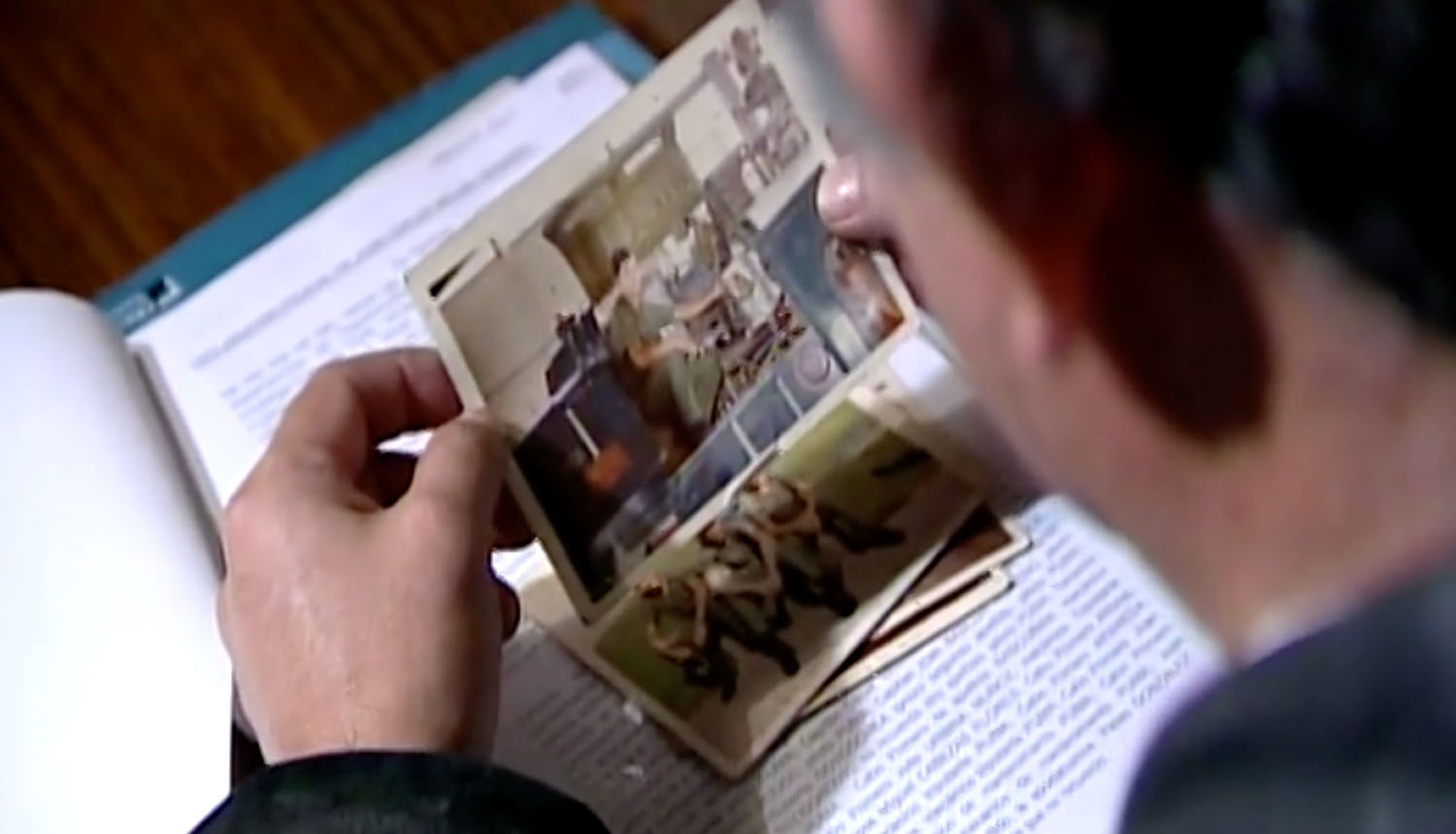
(Image from The Judge and the General.)
I feel great sadness, a total disappointment. Just imagine: to cut short a career when you’ve done everything the best you can, and it’s been proven that my career was excellent until the moment I had to go through this. And look how I’m living now! Because I was denied any possibility of developing professionally. I applied for work at LAN Chile 4 and they told me: “no, you’re crazy! No, you were disloyal!” I didn’t have the resources to leave the country, because with my diploma and my curriculum and everything I’ve studied, I could have done it, but I never was able to. And so I’ve lost everything.
I once ran into a colleague of mine, a sergeant major, and he asked me, “Wouldn’t it have been better just to keep quiet? Look at me, I have everything: I have my house, my children, a good pension. Wouldn’t you have preferred to keep quiet?” And I asked him, “But how could you live with yourself all this time? Acting like we were just throwing dogs into the sea?” He said: “But how much can these people [human rights groups] pay you?Have you thought about that?”
I responded, “I don’t care… You know what I need? I need to have my conscience clean.”
Many colleagues have never told their families what they did. Many of us were called in to give statements to the police. And those who had said they never participated were charged with obstruction of justice and are now serving a sentence where they have to sign in every month.
Your family, your wife, your children, your parents: do they support you?
Yes, of course. My wife works nearby in the Municipality building, serving lunch. If it weren’t for her earning, I couldn’t survive. I talked to one of the council members asking for help. I needed a job, even cleaning to support my family. I’ve been waiting since 2002 for my pension. I have documents that prove that I was exonerated. I still haven’t received one dollar. I was tortured, I was imprisoned, I was robbed of all my things, I was threatened, my son had to leave the country [because of threats], and the Valech Report left me off the list. 5
Do your neighbors know what happened to you?
Look, I have neighbors on both sides. There are neighbors who, when they saw this on TV for the first time, reached out to me and told me to be very careful, and others, when I go to buy something at a store or something, start to yell, “Assassin, assassin!” At school someone asked my ten-year -old son if his father was an assassin and had killed people.
If I had known this country wasn’t prepared for this, I wouldn’t have done it. I would have asked for asylum in any other country and done this [my confession] somewhere else.
Do you think that the people who are being tried for these crimes are the ones responsible, or are there more people?
General Pinochet should have been put on trial. Because he knew too much. He knew everything. We know he’s a very good actor, and we knew he was going to invent anything later on to cover it all up. He never said anything, and what’s worse, he became a millionaire by stealing from the entire country and that hurts me because for me, he was the best, unattainable. We saw him as a God. And then all of that collapses. And because of him, many of our lives were ruined.
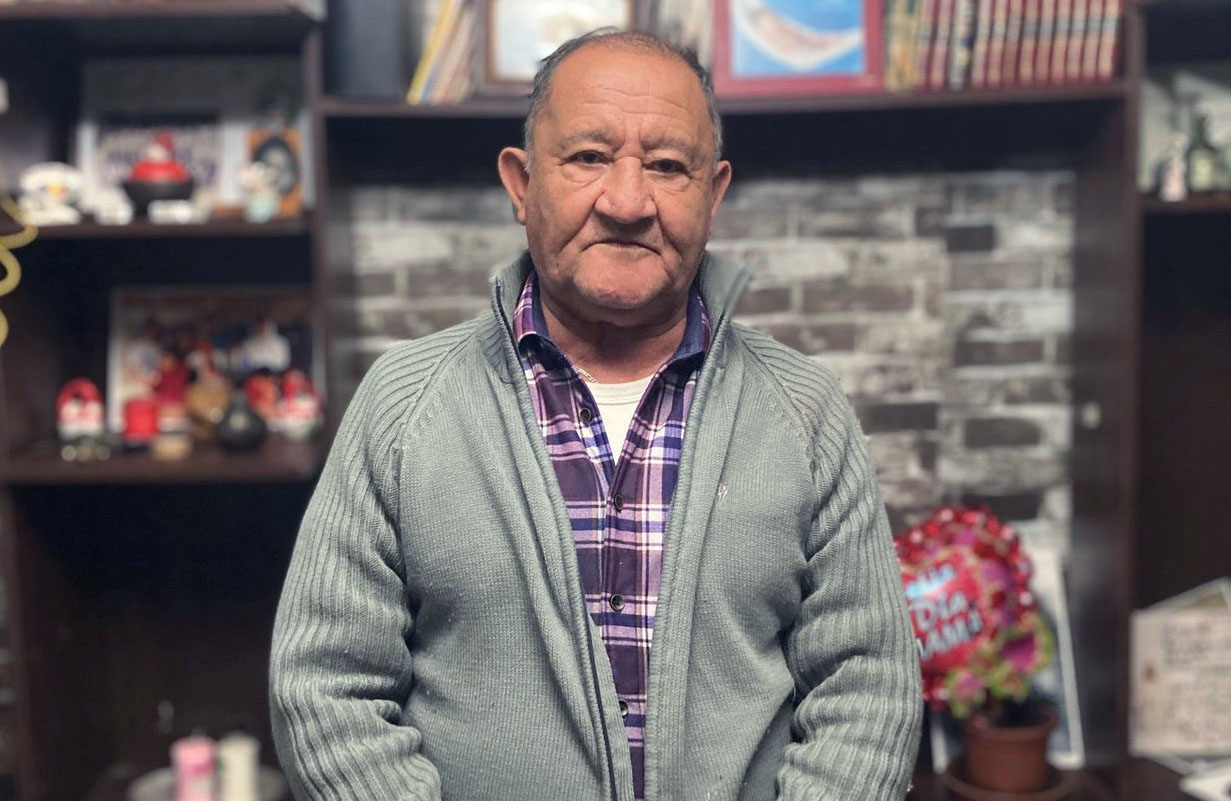
(Photo by Paullete Desormeaux.)
For Part I of the interview and an introductory article, go to “Legacies of Intervention: Chile – Until the Sea Shall Give Up Her Dead…“

Elizabeth Farnsworth, co-producer/director of The Judge and the General, is a filmmaker and former chief correspondent and principal substitute anchor of the PBS NewsHour. She has reported from Chile, Peru, Cambodia, Vietnam, Haiti, Iraq, Iran, and Saudi Arabia, among other countries, and has received three Emmy nominations and the Alfred I. duPont-Columbia Award for her work.

Patricio Lanfranco, co-producer/director of The Judge and the General, produced the live television coverage in Chile of the 1995 trial of Manuel Contreras, former chief of Pinochet’s secret police, for the 1976 murder in Washington, D.C. of Orlando Letelier, former Chilean Ambassador to the United States. Because of the broadcast, for the first time Chileans were able to watch attorneys present evidence in an official setting of human rights crimes committed by the secret police. In 2003, he was awarded the Chilean National Television Council Prize.

Maria Jose Calderón is a Chilean documentary filmmaker based in Oakland, California. In 2009, she received her master’s degree from the UC Berkeley Graduate School of Journalism. She was associate producer of The Judge and the General, and most recently has produced films for PBS, Latino Public Broadcasting, Netflix, Univision, and other networks. In 2020 she co-produced a FRONTLINE documentary that was recognized by the Scripps Howard Awards and the Ursula and Gilbert Farfel Prize for excellence in investigative reporting.
References
- According to Juan Carlos Molina Herrera, he was discharged and placed on a list that prevented him from working for the State and complains of not receiving any kind of help, despite having been expelled from the armed forces, and helping in the judicial process. Strictly speaking, Molina should have filed a complaint against the State, for political (or ethical) exoneration, but he has not known how to do it, and he went -wrongly- to human rights lawyers who were not available to defend repentant soldiers in that era. http://chitita.uta.cl/contraloria/documentos/bol-77-1.PDF
- The Vicariate of Solidarity (La Vicaría de la Solidaridad) was a human rights organization in Chile during the military dictatorship of Augusto Pinochet. It was created on January 1, 1976, by Cardinal Raúl Silva Henríquez. The Vicariate was made up of a task force of lawyers, members of social organizations, Catholic clergy and lay people, who for years dedicated themselves to collecting testimonies of victims of human rights violations and also of relatives of those who had been arrested, disappeared and tortured. They created a unique archive that has been instrumental in the investigation of human rights cases. http://www.vicariadelasolidaridad.cl/node/7
- Only a few pilots and copilots have been convicted for the crimes of aggravated homicide and accomplice to murder of victims of “Death flights” that occurred between 1973 and 1980. The sentences range from 3 to 12 years in prison. Some of those convicted were granted the benefit of house arrest.
https://expedientesdelarepresion.cl
- LAN, Chile’s first National Airline was privatized in 1989 during the last year of Augusto Pinochet’s regime.
- The report of the National Commission on Political Imprisonment and Torture — also known as the Valech Report — is a record of abuses committed in Chile between 1973 and 1990 by agents of Augusto Pinochet‘s military regime. The commission found that 38,254 people had been imprisoned for political reasons and that most had been tortured. Testimony has been classified, and will be kept secret until the year 2054.
http://www.bibliotecanacionaldigital.gob.cl/visor/BND:85804

Leave a Reply