
By Lydia Millhon
As my research continues to evolve, I would like to firstly acknowledge that this work would not be possible without the ongoing support from international and local institutions across Cuba, Brazil, and the U.S., or without the remarkable mentorship from current advisors at UC Berkeley and former professors in the earlier days of my academic career. In addition to the exceptional specialists and colleagues I have been grateful to work with, my family and friends are quintessential to these processes at home and abroad. My experiences with the Tinker Grant prove that archival work lives beyond institutions and borders and throughout relationships. As such, researchers must take part in a collective effort of recognition to avoid any further harm in an already complicated encounter.
From my undergraduate studies of Cuban art history to my master’s thesis on contemporary art practices in the Caribbean, Concrete Art has predominantly driven my analytical and thematic interests. This part of my scholarship pertains to the decade of the 1950s and legacies of Concretism in Cuba and Brazil. Many scholars classify Europe as the origin of Concrete Art, particularly Paris, France for their schools of painting, Germany with foundational philosophies of Concrete poetry, and vanguard artists of Soviet Constructivism. Similarly, Dutch artist Theo Van Doesburg is credited for introducing the word concrète in 1930 to describe an artistic process based in mathematical forms of structural and conceptual detail in painting. In Latin America, Concretismo involves geometric abstraction and constructivism from movements across Argentina, Brazil, Venezuela, and Cuba. I focus mainly on the first group of Brazilian painters, Grupo Ruptura and poets, Grupo Noigandres from São Paulo in 1952 as well as the Cuban contexts of Los Diez Pintores Concretos in 1959 and earlier explorations of Los Once from 1953 to 1955. Rooted in graphic and cognitive innovation, Concrete aesthetics become fluid vehicles of visuality, sonority, and materiality where semantic experimentation remains constant.1 I noticed these characteristics in the work of Afro-Cuban poet Nicolás Guillén.2 The experimental poetics of Motivos de son, Guillén’s first publication of poems found in “Ideales de una Raza” of the national newspaper Diario de la Marina in 1930, precede reconfigurations of materiality and sound expressed in Brazilian Concrete poetry from the 1950s. Guillén’s poems rely more on rhythm and speech for shaping meaning and image that challenge traditional and avant-garde patterns of poetry, especially when considering the disparate yet coinciding movements of “Poesia negrista” or “Negrismo” in Cuba and Brazil.3 By analyzing Guillén’s earlier work as part of a Latin American Concrete history, Eurocentric dominance of Concretism becomes displaced as these expressions are more intercultural and establish further ties between Cuba and Brazil. In this way, my approach of the Concrete intertwines studies of race and cultural production within and beyond the movement, namely earlier in the twentieth-century through my comparative analysis of Brazilian and Cuban “Negrismos” and Black authorship in these countries. Surveying literary and artistic trends from the 1920s-1950s, I also incorporate adjacent fields of ethnography and sociology to consider more interdisciplinary paradigms of cultural belonging. Although the majority of my research grapples with poetry produced by Afro-Brazilian and Afro-Cuban authors to investigate shared aesthetic procedures and political trajectories, this comparative project largely seeks to remap linkages among experimental vanguards from the Global South and Afro-diasporic expressions of identity. Moreover, I aim to address the gaps in scholarship on Guillén’s initial trip to Brazil from 1947 to 1948, marking formative years of his political and intellectual evolution. Accordingly, these findings propelled my archival work in 2024 and in the field in 2025.

My trip in 2025 began with a team of experts at Cuba’s Instituto de Literatura y Lingüística in Centro Habana. I sifted through volumes of correspondences between Guillén and prominent figures from Brazil, such as Cândido Portinari and Jorge Amado, and his countless invitations from organizations like Associação Brasileira de Escritores. Their interactions demonstrate a persistent network of intellectual and professional solidarity as well as personal admiration and affection. Guillén’s involvement stresses the integral role of Afro-descendant thinkers and critical interventions of race in the formation of these artistic and sociopolitical movements. At Fundación Nicolás Guillén, the grandson of Guillén, Nicolasito Hernández Guillén, and directors Martina, Orlando, and África provided photo albums filled with images of Portinari, Amado, and Guillén. In the foundation’s 1936 to 1939 editions of Mediodia, a newspaper directed by Guillén in Havana, he accentuates transnational concerns through literature and art to build solidarity across the region among the global rise of war and fascism. Arriving later in Camagüey, the incredible team at Casa Natal de Nicolás Guillén gave me access to a plethora of books and digital archives, including Guillén’s recordings of his own poetry, and welcomed me to the international symposium “Los días de Guillén,” held annually in his hometown as an homage to his life and work. The combination of reading handwritten and typed letters, holding saved polaroids, speaking with family members, and navigating the streets of Camagüey enriched my research through lived experiences and a variety of material histories.

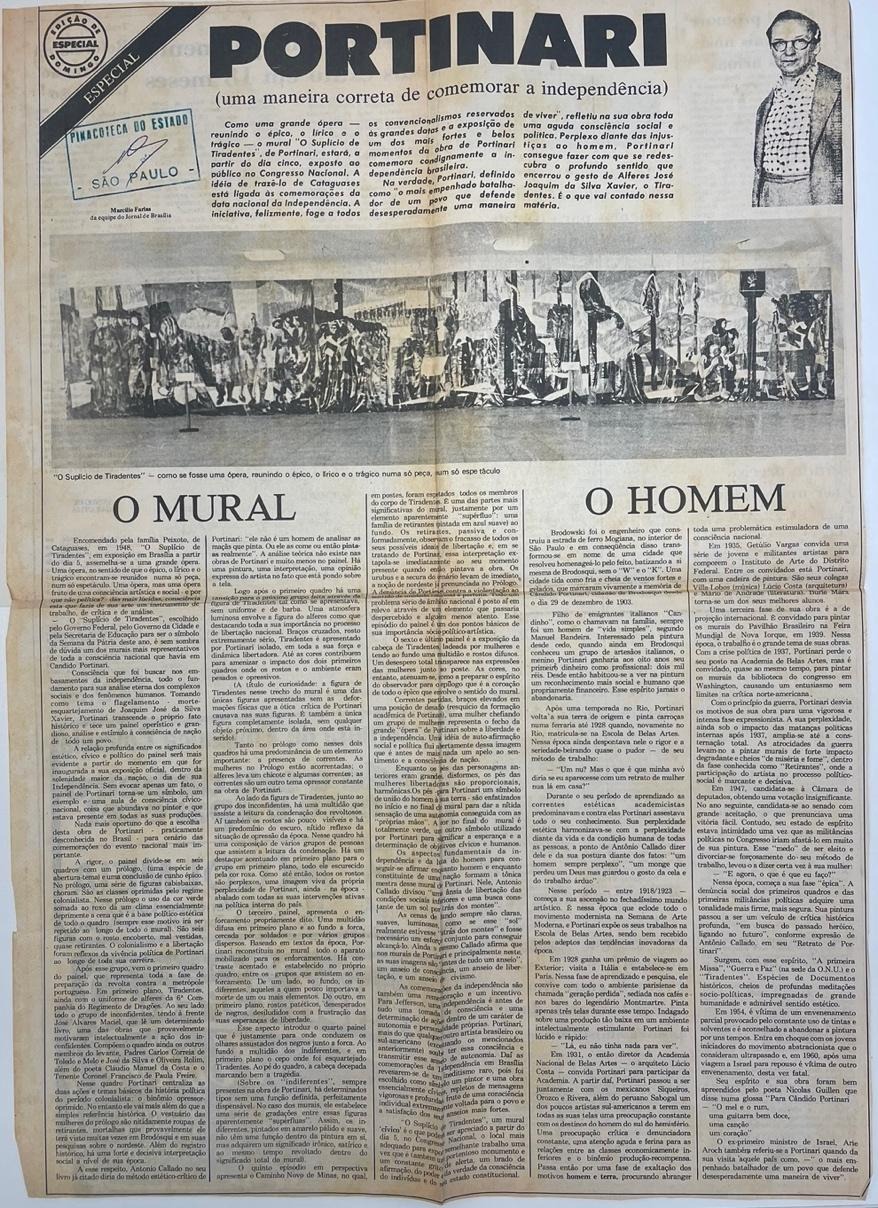
Once I arrived in Brazil and visited the Fundação Bienal and Pinacoteca in São Paulo, their collections of cultural criticism from the mid-twentieth century reaffirmed affinities between Cuba and Brazil and their political and aesthetic concerns. For example, the writings by renowned Brazilian art critic Sérgio Milliet underscore the ethical responsibility of art to reflect and connect popular society through transnational solidarity built on cultural exchange. As international art exhibitions occurring twice a year with the Venice Biennale in 1895 the most famous and historic example, biennales occurred for the first time in São Paulo by 1951. Strongly advocating for the importance of these events amidst postwar tensions, Milliet directed the biennales in Brazil from 1953 to 1958 in search for a more universal artworld different from bourgeois hierarchies of fine arts. In Pinacoteca, affiliations between Guillén and Portinari were reinforced as I came across a tribute to the life and civic duty of Portinari where Guillén, accompanied by a small poem, is cited for knowing his spirit and achievements: “Para Cândido Portinari: “O mel e o rum, uma guitarra bem doce, uma canção, um coração” (see image below).
Further connections resurfaced at the Fundação Pierre Verger, the home and archive of French ethnographer Pierre Verger, who moved to Brazil in the 1940s to study Afro-Brazilian religion and culture. Guillén and Verger met during the poet’s trip to Bahia in 1948 and maintained close contact into the 1950s. Verger’s first trip to Cuba was to Havana in the 1930s, whereas his second excursion in 1957 began in Guillén’s hometown of Camagüey, and incorporated cities from the eastern tip to the western provinces. Although his photo collection from 1957 fixates on industrial development and modernization throughout the island, Verger includes various shots of influential figures such as Fernando Ortiz and Lydia Cabrera in environments from relaxed hangouts to field research. By retracing underexplored associations formed between Cuba and Brazil, this project retraces formations of an Afro-diasporic consciousness throughout cultural expressions across the Americas.
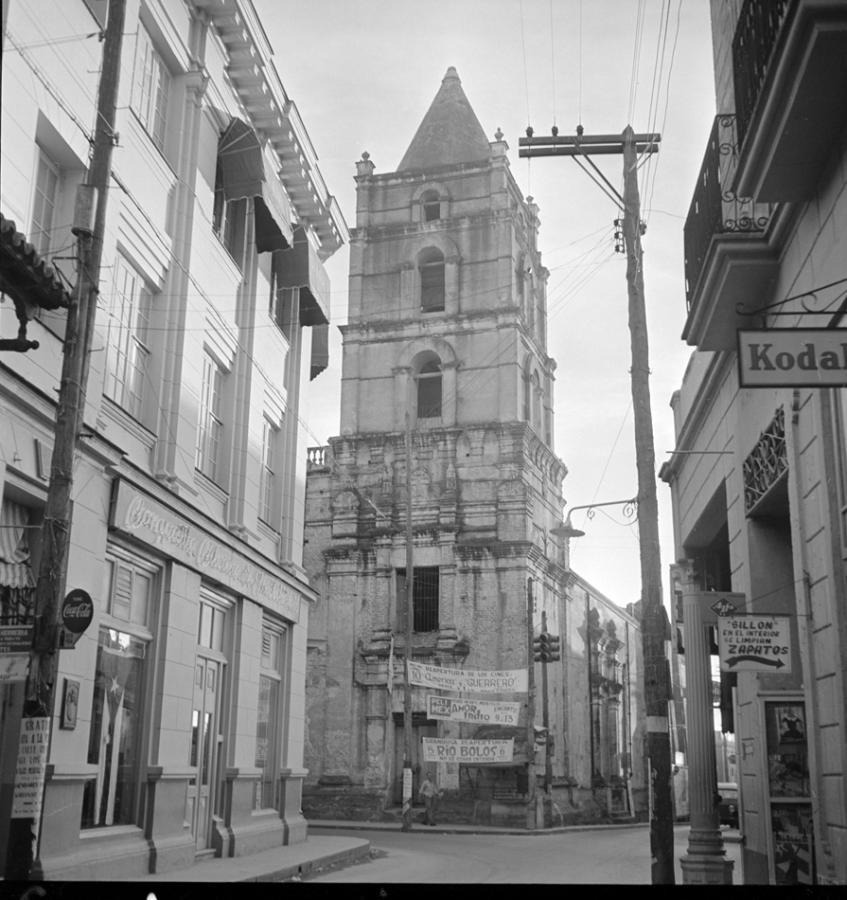
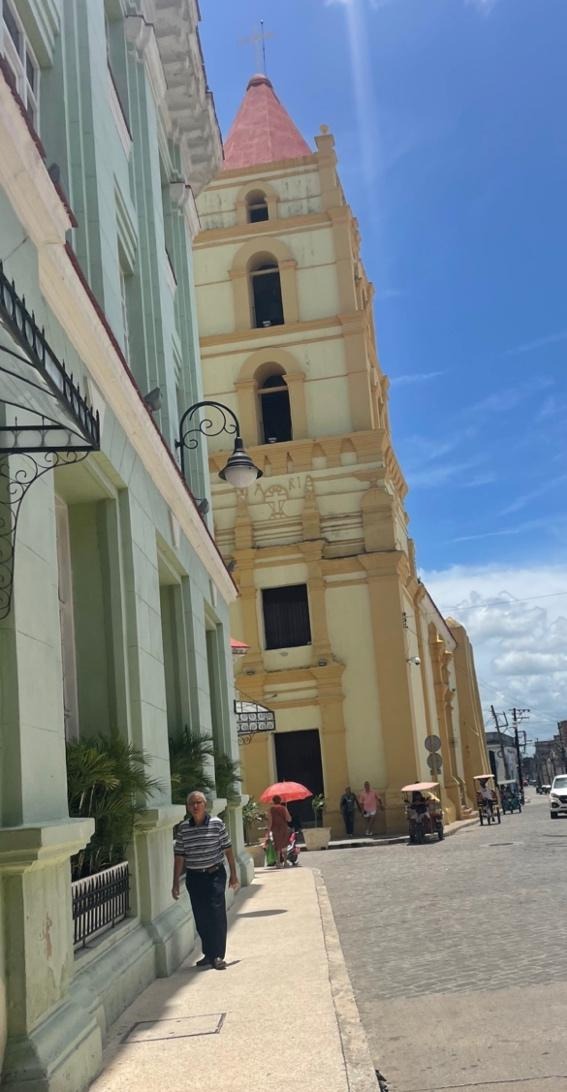
At the end of my time in Brazil, I had the opportunity to work closely with the Academia Brasileira das Letras (ABL, Brazilian Academy of Letters) and the Instituto de Pesquisas e Estudos Afro-Brasileiros (IPEAFRO, Institute for Afro-Brazilian Research and Studies) in Rio de Janeiro. At ABL, I reviewed transcripts of Guillén’s participation alongside influential Brazilian writers at a conference in November of 1947. The opening remarks by Manuel Bandeira foreground an unwavering kinship between Cuba and Brazil regarding racial and cultural identity, where figures like José Martí surface as a foundational reference for solidarity across the Global South. Following Bandeira, Guillén recollects Afro-Cuban authorship and problematizes Eurocentric and U.S. representations of Blackness in international movements of “Négritude,” while also placing these sociocultural and political movements in tandem with important Brazilian authors and literary histories. Overall, this field research unveiled early transnational influences of Guillén and shared experiences among intellectuals in Cuba and Brazil that help anchor my dissertation on the intersections of their cultural histories.
Acknowledgements
I am grateful for the various years of research support from not only the Tinker Foundation but also the Cuban Heritage Collection at the University of Miami, Florida, the UC Cuba Academic Initiative, the Rafael Soriano Foundation, the UCB John L. Simpson Pre-Dissertation Research Fellowship in International and Area Studies, and the UCB Graduate Assembly Professional Development Award.
Notes
- Definitions and genealogies of Concrete aesthetics reveal a porosity of temporal, geographic, and material iterations. For additional information, please see the pioneering projects of Rachel Price, Rebecca Kosick, Kurt Beals, Charles Perrone, and Nathaniel Wolfson.
↩︎ - Considerable scholarship addresses tensions within Guillén’s work and positionality. Particularly informative are Vera Kutzinski’s Sugar’s Secrets and Odette Casamayor-Cisneros’s article, “The Invention of the Black Cuban in the Early Twentieth Century” from The Cambridge History of Cuban Literature. Please also see Roberto Zurbano in “El triángulo invisible” (Zurbano 113, 121), Christina García in Corporeal Readings (García 22-34, emphasis on page 27), Robin Moore in Nationalizing Blackness (Moore 210-214), Jerome Branche in Colonialism and Race (Branche 176-177, 185), and Alejandro de la Fuente in A Nation for All.
↩︎ - As literary and political movements throughout the early 20th century, “Poesía Negrista,” “Negrismo,” and “Négritude,” center representations of Blackness within Francophone and Hispanic arts and literature. With varying genealogies among regions and authorship, many scholars situate this movement in the French poetics of Négritude led by Aimé Césaire and Léopold Sédar Senghor to redefine Black identity in the Antilles. Negrismo in the Hispanic Caribbean reveals regional intricacies like Afrocubanismo that include works by non-Black authors and further complicate the Negrista canon. In Brazil, Negrismo is often tethered to the Modernists, specifically the works of Jorge de Lima and Raul Bopp, whereas Lilia Mortiz Schwarcz suggests Lima Barreto (Schwarcz 395).
↩︎
References
Branche, Jerome. Colonialism and Race in Luso-Hispanic Literature. University of Missouri Press, 2006.
Casamayor-Cisneros, Odette. “The Invention of the Black Cuban in the Early Twentieth Century.” The Cambridge History of Cuban Literature, 2024, pp. 230–45.
Farias, Marcílio, “Portinari: Uma maneira correta de comemorar a independência” Jornal de Brasília. Print from Pinacoteca Museum in São Paulo,Brasil.
Fuente, Alejandro de la. A Nation for All: Race, Inequality, and Politics in Twentieth-Century Cuba. The University of North Carolina Press, 2011.
García, Christina M. Corporeal Readings of Cuban Literature and Art: The Body, the Inhuman, and Ecological Thinking. University of Florida Press, 2024.
Kutzinski, Vera M. Sugar’s Secrets: Race and the Erotics of Cuban Nationalism. University Press of Virginia, 1993.
Moore, Robin D. Nationalizing Blackness: Afrocubanismo and Artistic Revolution in Havana, 1920-1940. University of Pittsburgh Press, 1997.
Schwarcz, Lilia Moritz, “O NEGRISMO E AS VANGUARDAS NOS MODERNISMOS BRASILEIROS: PRESENÇA E AUSÊNCIA,” Modernismos 1922-2022. Edited by Gênese Andrade, Companhia das Letras, 2021.
Zurbano, Roberto. “El triángulo invisible del siglo XX cubano: raza, literatura y nación.” Temas, no. 46, June 2006, pp. 111–123.

Lydia Millhon is a Ph.D. student in Hispanic Languages and Literatures at UC Berkeley with a Designated Emphasis in New Media. She received a CLACS Tinker Field Research Grant in 2025. Her dissertation surveys intellectuals and literary practices in Cuba and Brazil, highlighting Black authorship and articulations of race in cultural production. She retraces poetry and visual art from the movements of Negrismo to Concretismo in these countries to unveil afro-diasporic networks of cultural belonging.

Leave a Reply