
By Tessa Wood

When I heard I was still required to write a post for the CLACS blog after having already dropped out of my Ph.D. program to attend law school, I was unsure what insight of value I still had to contribute to this space. I was prompted to write about my career change and what drew me to law as a career, but I felt that this decision wasn’t possible to separate from leaving academia, which in turn wasn’t possible to separate from how I personally experienced academia. Throughout my time as an undergraduate — and to a lesser extent in my Ph.D. program — I often felt I needed to be cautious about discussing parts of my experiences because I worried they could be misunderstood or received negatively. Contributing something helpful for others about leaving, however, requires reflecting on the factors that made the decision to withdraw from my Ph.D. program difficult.
Growing up, I had limited exposure to professional careers as a first-generation, low-income student who attended Title I public schools in the rural U.S., a classification for schools that are under-resourced and majority low-income. Instead of seeing careers as choices based on aptitude and preference, I saw them as divided into those worlds that were accessible to me and those that were not. While I initially saw this inaccessibility as a result of material and informational barriers, leaving my Ph.D. program made me also realize how strongly our sense of what futures are possible is shaped by our experiences, not objective reality.
As a sophomore in college, I remember attending a mandatory talk by a humanities professor who opened by making “jokes” about public school students. He laughingly told us that in underserved rural areas, “those students don’t want to learn” because “their families don’t care about them.” Beyond these statements’ inaccuracy, what concerned me the most about his talk weren’t the comments themselves, but the behavior of the audience. I looked around to see if others were as shocked as I was and saw classmates laughing or looking bored. I felt ashamed for not raising my hand and sharing my disagreement and simultaneously afraid to express my opinion, so I did not intervene.
In my time as an undergraduate, this was one of the many occasions where I felt afraid to share a perspective my peers might not all share and also one of many times in which I encountered beliefs about low-income areas of the U.S. that differed from what my experiences might lead me to believe. While in retrospect the open expression of these beliefs perhaps should have steered me away from pursuing a Ph.D., at the time they also gave me curiosity about academia. It made me want to interact with students in the future. If I could teach without making similar harmful comments, I believed that I could contribute to an environment that was more productive to students.
While I luckily did not encounter this level of hostility in graduate school at Berkeley, I was still forced to grapple with the sacrifices necessary to pursue a Ph.D. without family support. What I had recognized to be a privileged position from the perspective of an undergraduate learning from graduate student instructors now felt deeply unstable. Being unable to control my graduation date, where I would live post-graduation, and how many years I would have to wait for stability after graduation were concerns that I understood intellectually when I committed to my program but did not understand as a lived reality until a few years into my graduate studies. I felt constrained, that I was too many years into my program to quit, and that I genuinely had no option but to continue. At the same time, because others in my family could not pursue a Ph.D., I experienced incredible guilt at the prospect of voluntarily leaving a rare opportunity. I eventually realized that holding a position I profoundly didn’t want to be in would do nothing to help another person access it. Not being able to influence the outcome of my program also cost me psychologically — I felt that I could not live as a version of myself that was true to who I am as someone who values work ethic and autonomy. If the only factors keeping me in my program were external ones — guilt and sunk cost — then this did not justify remaining in a career that did not align with the kind of life that I wanted. These factors led to my decision to withdraw from my Ph.D. program to attend law school, which I knew was a much better fit for me because of the stability that legal careers offer.
While I have no regrets about choosing law school starting this fall, I do regret previously choosing a path without all of the information that I should have had due to not having family-based insight. Because my decision to pursue a Ph.D. was made with no guidance from family, this made a privileged position seem, to me, to be stable simply by virtue of being privileged, not just from my interest in my field and in teaching others. I didn’t have the tools to realize that privilege and stability can be completely separate — that something can be privileged and unstable at the same time. More importantly, I also didn’t believe I was capable of anything more. While I couldn’t have changed my interest in my field, better guidance about the range of careers available to students like me could have changed the first part of the calculation for me.
This reflection is particularly disheartening to me when I consider the current situation of first-generation students, students who went to vocational, Title I, or other nontraditional high schools, low-income students, and any other student who lacks information about higher education. Beyond asking why academia is so unsustainable for many people for a variety of reasons, I believe that reflecting on how many students must experience the same lack of family guidance when they were the first to attend college and did not have access to college preparatory courses would help us understand why students can make choices that do not always align with what may seem obvious to those who are already familiar with academic and professional pathways.
In having to become my own parent and teacher, my process in choosing a career path was not as effective as what it should have been due not just to a lack of information, as I had first thought, but also due to limiting beliefs about what options I was capable of. Through last summer, I genuinely believed that law school was inaccessible to me; it was never an option that I seriously considered. While I might not have been completely certain as an undergraduate that I could enter a Ph.D. program, it seemed more accessible to me because I knew Ph.D. students — my instructors. For other professions, examples have to be sought out, but to seek them out, it is necessary to know that they exist in the first place. While I knew that lawyers existed in theory, law had never existed as a viable career choice for me until recently. My worldview wasn’t expansive enough to comprehend the benefits that make law school a path worth pursuing.
While making a career transition, I realized that part of what makes professional careers so inaccessible for those without inherited exposure isn’t just a lack of preparation for entrance exams or financial barriers. Neither is it purely a question of the “hidden curriculum” of unspoken expectations, as I learned as an undergraduate and still thought a year ago. Even when I tried to adopt these expectations as my own, I still couldn’t see the full panorama of possibilities around me that many others already knew from an early age. I realize now that there is a third component beyond external barriers and limited exposure to hidden norms: the ability to imagine certain futures as possible in the first place.
Now that I have had to teach myself about law school admissions, I see in retrospect that law school was probably always a realistic possibility, if I had been able to conceptualize it as such. But even when a door is technically open, you can only enter if you can see that it exists. This made me think about how in my high school, students were discouraged from attending college not because of the financial burden or geographic constraints, but because it was “too hard.” Likewise, at my middle school, my counselor told us that we should enroll in an online alternative high school because regular in-person high school would be too challenging. When my teachers and counselors expressed these ideas, it made me internalize these self-limiting beliefs, even when I thought on a surface level that I had rejected them.
When I was younger, I had some doubts about whether these statements were true and still wanted to experience college, even if I failed classes, because I wanted to know what it was like to study the humanities, especially literature. As an undergraduate, I came to see that taking humanities classes was possible, even with a limited educational background that hadn’t emphasized such subjects. It is only now, however, that I see how little I had actually questioned these beliefs: years later, when I contemplated leaving graduate school, I still felt that many paths weren’t open to me not due to concrete evidence, but just because that was what I grew up hearing. What disturbs me most about the contrasts that I saw between my upbringing and my experiences in higher education is that an individual can be the same exact person, but in two different environments, others will perceive them as possessing a radically different inherent value and capabilities. This discrepancy is wrong. Part of opposing this process is for everyone to reflect critically on how to more fully refuse to engage these ideological positions.
Even in this case, I was very fortunate in that my initial exposure to law school came from my scholarship donor, a lawyer, who I met when I was an undergraduate. When I was looking for paths outside of academia and started to read about law school, I thought about that encounter and, because I had previously met a lawyer, for the first time it occurred to me that maybe I could do something similar. If I hadn’t experienced meeting someone who went to law school years before, especially as that person also came from a background similar to mine, I don’t know if I would have processed that information in the same way when I finally considered a legal career as an option. I remain grateful for having experienced that generosity, just as I remain grateful to have been in my program at Berkeley, even though my gratitude does not change that academia was not the right fit for me personally.
Navigating educational institutions without guidance taught me that just as these issues never resolve, the stakes of the questions keep changing. At least for me, trying to understand professional careers is a process of ongoing inquiry characterized by trial and error, observing others, and reflecting critically on my own assumptions. Having made the choice of leaving academia, what I hope to have learned is not one concrete realization about how to overcome environmental barriers that should not be one individual’s responsibility, but instead to be more skeptical about the underlying beliefs that limit our choices before we can even make them.
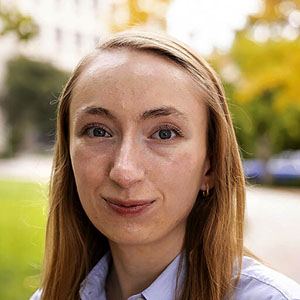
Tessa Wood was a 2025-26 CLACS Graduate Affiliate. She holds a B.A. in Romance Languages and Literatures from Harvard College and an M.A. in Comparative Literature from UC Berkeley, and she is currently pursuing a J.D. at Columbia Law School.

Leave a Reply