
By Deibi Sibrian

In San Salvador, the digital future does not only appear on a screen.
It appears in the driver who cancels an Uber ride as flash floods begin to fill the streets. It appears in the informal vendors who push carts through the historic district while new plazas, libraries, and redevelopment projects reshape the city around them. It appears in conversations with professors, activists, platform workers, students, and families trying to understand what rapid technological change means for their livelihoods, neighborhoods, and futures.
During two weeks of fieldwork in El Salvador in August 2025, I began tracing these connections through interviews, field observations, visual documentation, and everyday encounters. I had been visiting El Salvador regularly since 2022, building relationships and gathering context, but this trip marked my first visit approved by an Institutional Review Board for working with human subjects, to initiate formal interviews and systematic data collection for my research.
My work examines the socio-environmental health impacts of digital transformations, especially technologies often described as “virtual” or “immaterial”: cryptocurrency, artificial intelligence, data infrastructures, platform economies, and digital services. These systems are frequently narrated through the language of innovation, modernization, and economic opportunity. Yet on the ground, they are deeply material. They depend on land, water, energy, minerals, labor, infrastructure, and political decisions.
I call this condition the Cryptonocene: a digital age in which technologies such as cryptocurrency and artificial intelligence reshape social and ecological life, while often hiding the physical costs that make them possible. I first developed this concept in my article, “Thriving Through Adversity: Ancestral Wisdom and Environmental Justice”, and I am now expanding it in both my dissertation and the Digital Ecologies research program at UC Berkeley.
El Salvador is a powerful place to study these questions. It became the first country to adopt Bitcoin as legal tender, has promoted digital development as part of national transformation, and has recently reopened debates over metal mining and resource extraction. These shifts are not isolated policy events. They are part of a broader struggle over what development means, who benefits from it, and who absorbs its environmental and social costs.
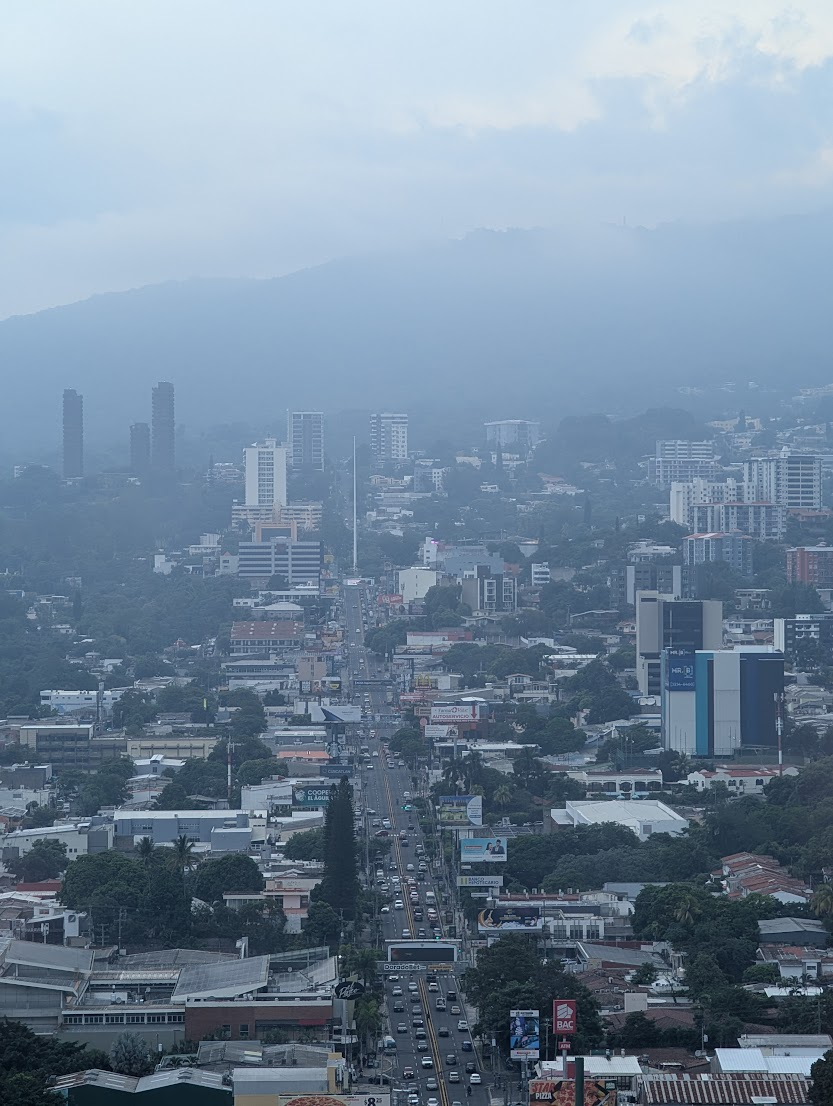
In San Salvador, I observed how technological change moves through everyday life. Over the course of seventeen Uber rides and six inDrive rides, I had informal conversations with drivers about platform labor, safety, income, and the changing transportation economy. Some drivers I spoke with described how the pandemic and digital platforms had altered the taxi industry. Others reflected on differences between Uber, which some characterized as more international and rigid, and inDrive, which they described as allowing greater negotiation and local flexibility. Some women drivers I spoke with described inDrive as offering them a greater sense of autonomy and safety.
These informal conversations, alongside my broader field observations, helped me think about platform work as more than a convenience. Ride-hailing and delivery apps are part of a changing labor landscape where people navigate economic uncertainty through digital tools, but without always receiving stability or protection in return. The same platforms that make movement easier for some can expose workers and riders to new forms of vulnerability, especially during moments of crisis.
That became especially clear the night before I returned to the San Francisco Bay Area. A torrential downpour hit San Salvador, and the streets quickly began to flood. I tried calling an Uber, but drivers repeatedly canceled. Later, I learned that many did not want to enter the pickup zone because the area had already started flooding. At one point, I rushed through the rain toward a car, opened the door, confirmed the driver, and watched him cancel the ride at that exact moment.
Soon after, I was walking through the downpour as the streets turned into rivers. The next morning, I learned that the storm had affected much of the country, with low-income and marginalized communities among the hardest hit. That moment stayed with me because it revealed how climate vulnerability, digital platforms, and urban infrastructure can fail at the same time. When the flood came, the app did not solve the crisis. Mobility stopped. The digital system depended on streets, drainage, workers, vehicles, and decisions made under risk.
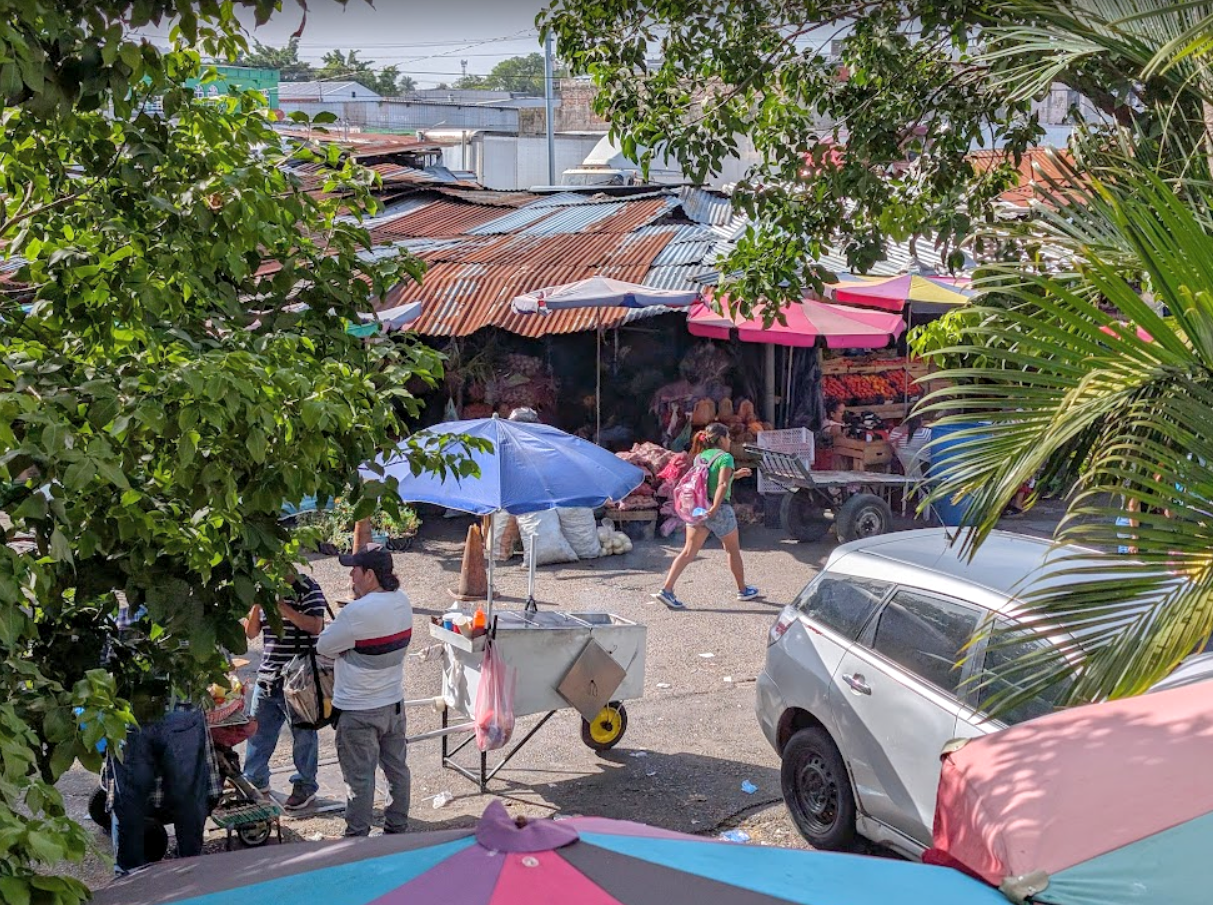
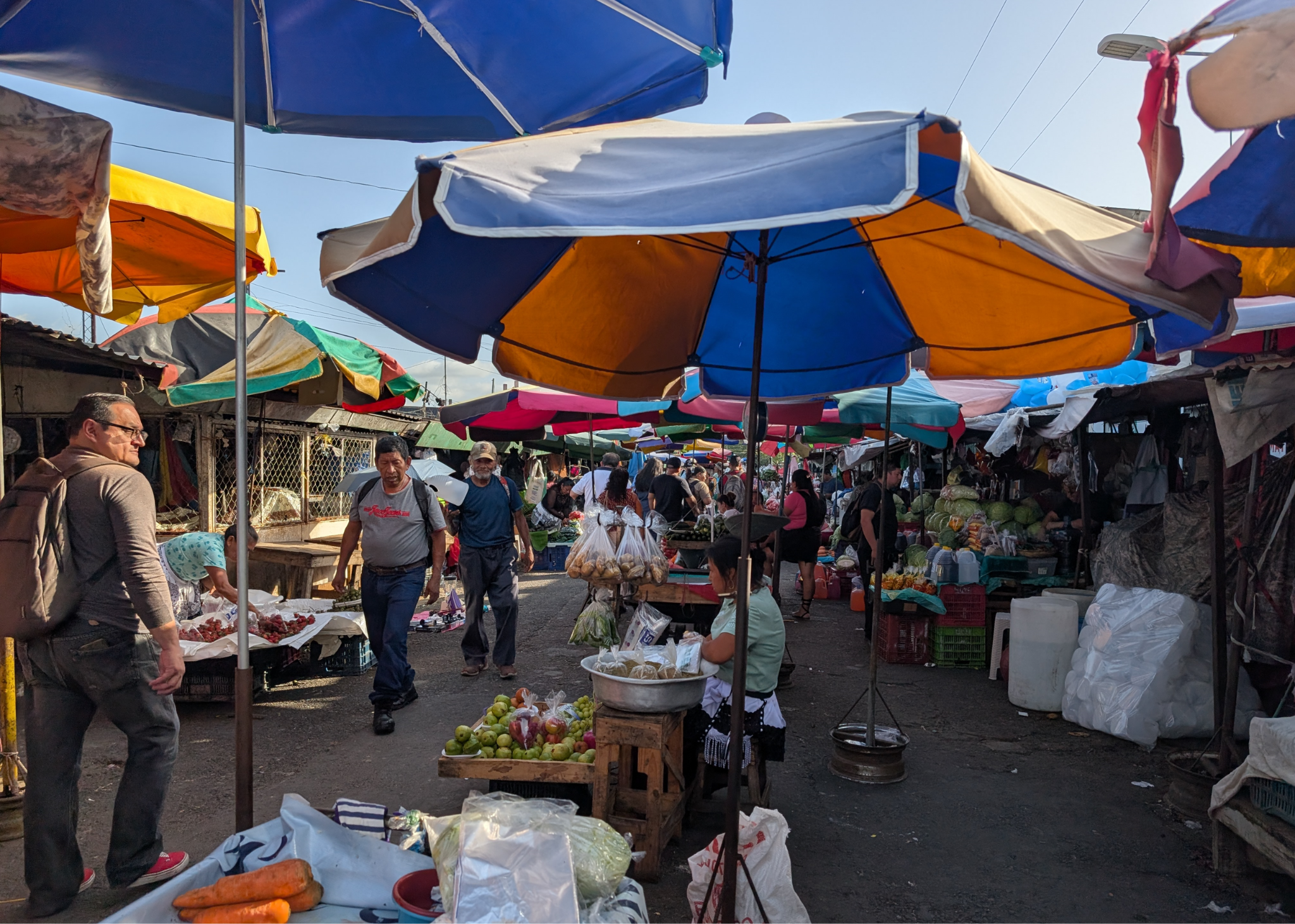
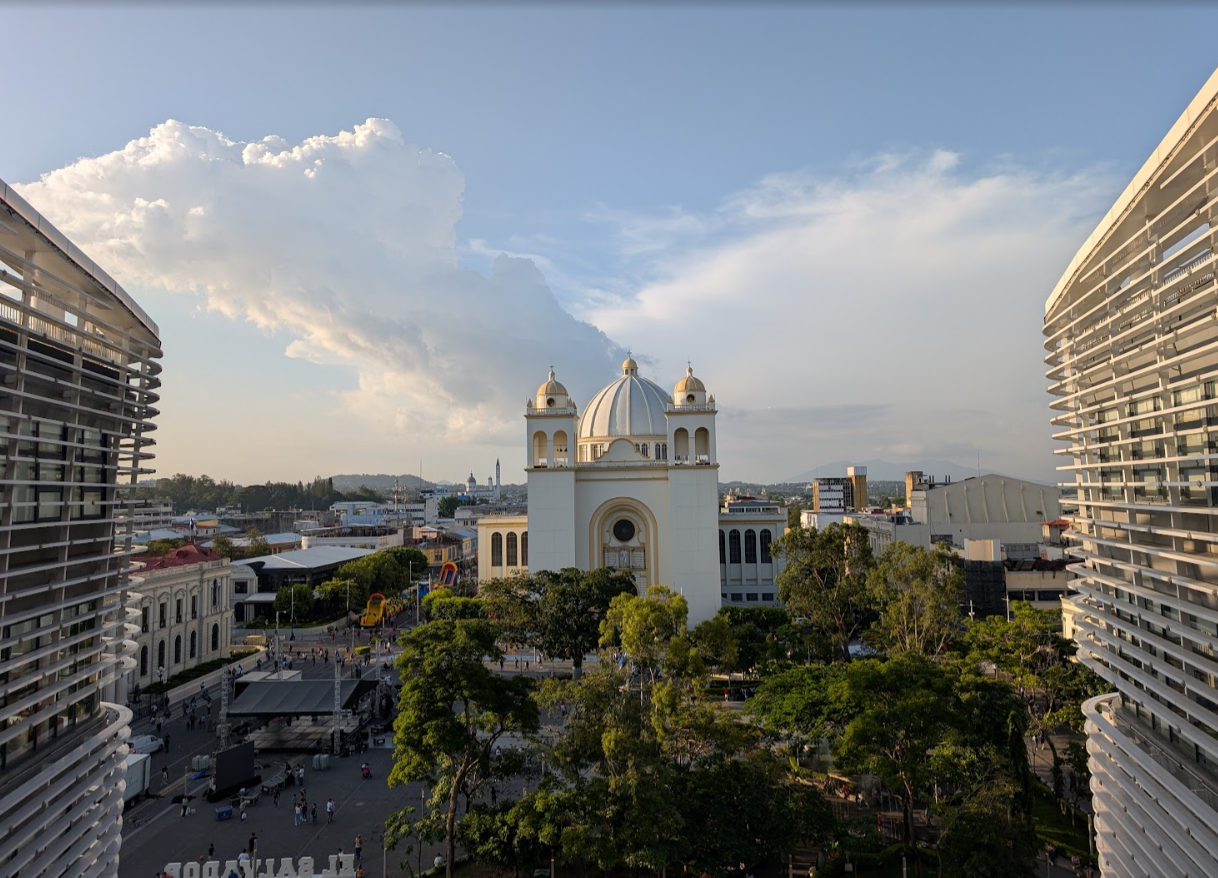
Other moments revealed different dimensions of digital development. In the historic district, I observed redevelopment projects remaking public plazas with new paving, landscaping, and cultural infrastructure. Nearby, informal vendors continued working under intense pressure. At one point, I witnessed street vendors suddenly fleeing as police moved through the area. Carts rattled across the pavement, goods spilled, and people rushed to escape. I had seen similar scenes circulated online, but witnessing it directly made the stakes feel immediate. Urban modernization was not only an aesthetic or infrastructural project. It was also a process that could displace people whose livelihoods depend on public space.
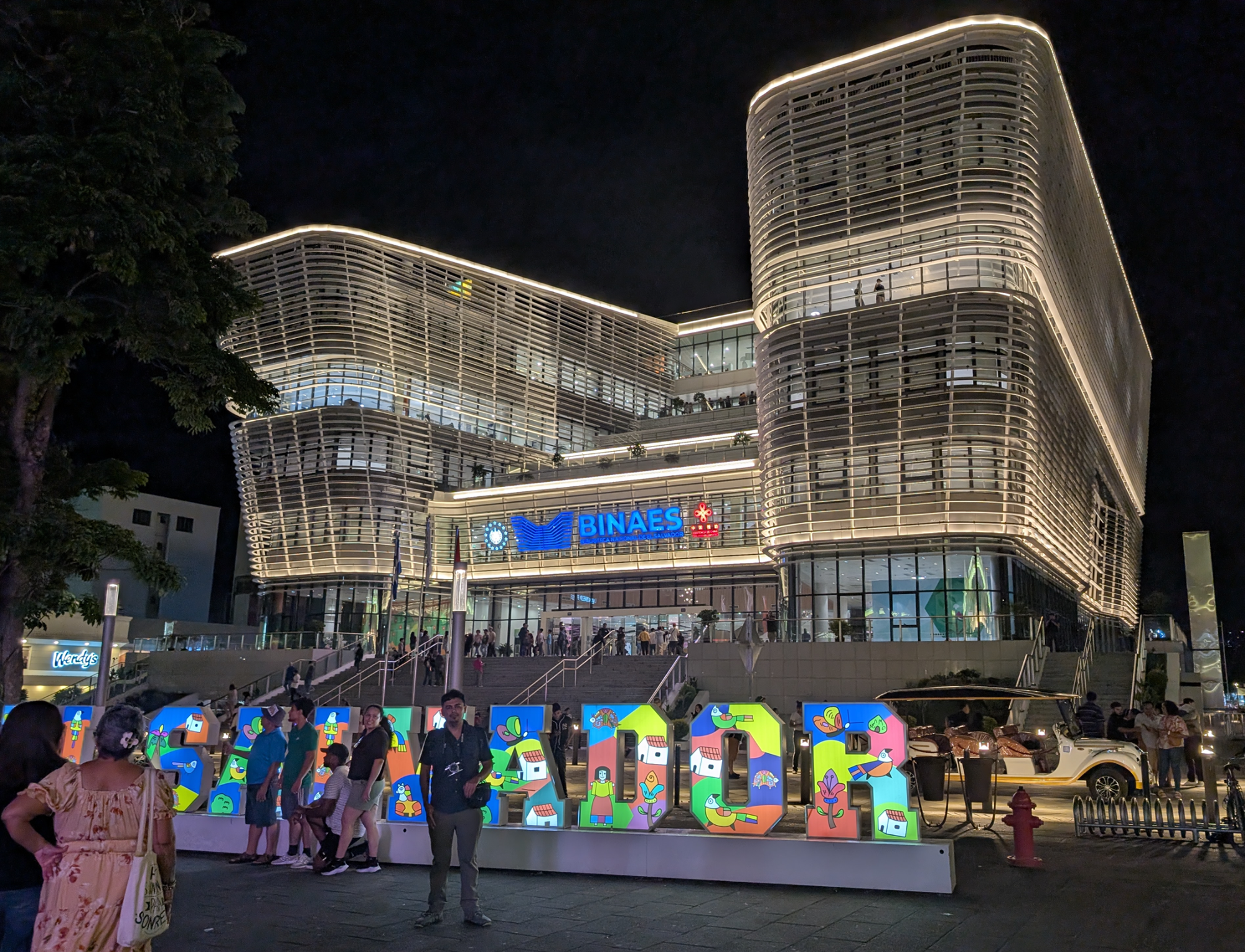
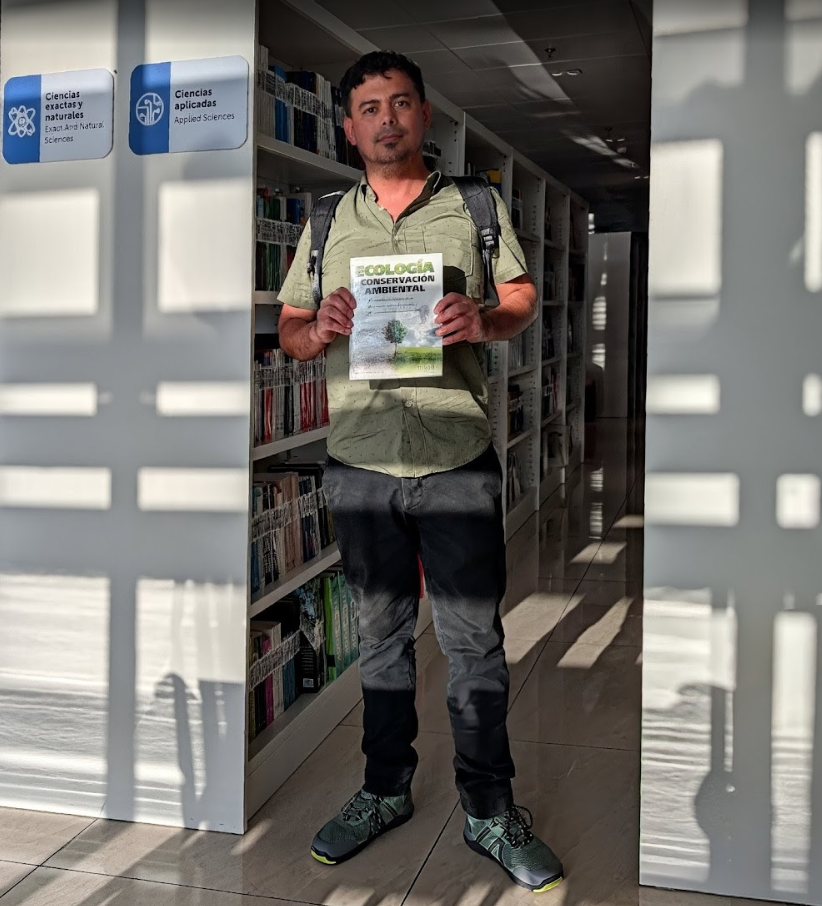
Just blocks away, children played in the fountain outside the new National Library of El Salvador. Families gathered to cool off in the afternoon heat. Inside, the library offered an impressive space for reading, studying, and cultural programming. It also symbolized the country’s changing geopolitical and infrastructural landscape, as residents frequently described major projects like the library through their connection to Chinese investment and development. The contrast between the library’s polished interior and the informal economies surrounding it raised questions that continue to guide my research: Who gets to experience modernization as opportunity? Who experiences it as displacement? And how do digital and infrastructural futures become unevenly distributed across class, age, race, gender, and territory?
One conversation brought these questions into the intimate space of the household. Doña Maria (a pseudonym), a housekeeper and single mother, spoke with me about education, grief, and the promises and limits of digital access. She explained that students receive government-provided tablets or laptops, along with uniforms and some school supplies. These programs are often celebrated as signs of progress. Yet her story made clear that devices alone cannot guarantee educational justice. Families still face hidden costs, uneven internet access, emotional trauma, and institutional failures. After losing her husband during the pandemic, one of her children struggled deeply at school. Instead of receiving care, he experienced mistreatment from a teacher, forcing Doña Maria to transfer him elsewhere.
Her reflections reminded me that digital inclusion is not only about whether someone has a device. It is also about whether families have the support, safety, infrastructure, and dignity needed to use technology meaningfully. Without those conditions, digital access can become a symbol of progress that leaves deeper inequalities untouched.
These field observations are now informing a broader research effort I am leading through the Digital Ecologies research group at UC Berkeley. Supported by CLACS, Digital Ecologies brings together undergraduate researchers, graduate collaborators, and faculty mentors to study the socio-environmental impacts of digital transformation in Latin America. Our work combines media analysis, remote sensing, Google Earth Engine, visual storytelling, and ethnographic fieldwork to examine how digital industries reshape land, infrastructure, public narratives, and environmental justice.
Digital Ecologies is also a mentoring and methods-building space. In our meetings, students trained in computer science, environmental studies, political economy, and the humanities think together about how to study technologies that are often treated as neutral or purely technical. A recurring lesson is that digital transformation is always political: it is shaped by policy, infrastructure, capital, institutional priorities, and uneven power. This is why our group combines quantitative tools such as remote sensing and media analysis with qualitative approaches such as interviews, fieldnotes, and ethnographic reflection. To understand the digital future, we need both satellite images and street-level stories.
This interdisciplinary approach matters because digital technologies are surrounded by powerful stories. They are often described as inevitable, efficient, revolutionary, or universally beneficial. But these stories can distract from the present conditions under which technologies are built and used. They can make social and environmental costs appear secondary, temporary, or invisible. Part of our work is to examine not only what technologies do, but also how they are narrated: who tells stories of progress, whose experiences are left out, and what alternative stories emerge from communities living with the consequences of digital transformation.
The group is currently organized around several related research tracks. One examines media narratives about cryptocurrency, mining, and digital development in El Salvador. Another uses satellite imagery and geospatial tools to study environmental change associated with metal mining and current pressures for its renewal. A third focuses on crypto-urbanism, infrastructure siting, and territorial change, studying where digitally oriented development can actually be observed on the ground. A fourth group focuses on ethnographic fieldwork, lived experience, governance asymmetry, and the everyday realities of people navigating digital transformation. Together, these projects ask a shared question: how can we make visible the social and ecological costs of technologies that are too often imagined as weightless?
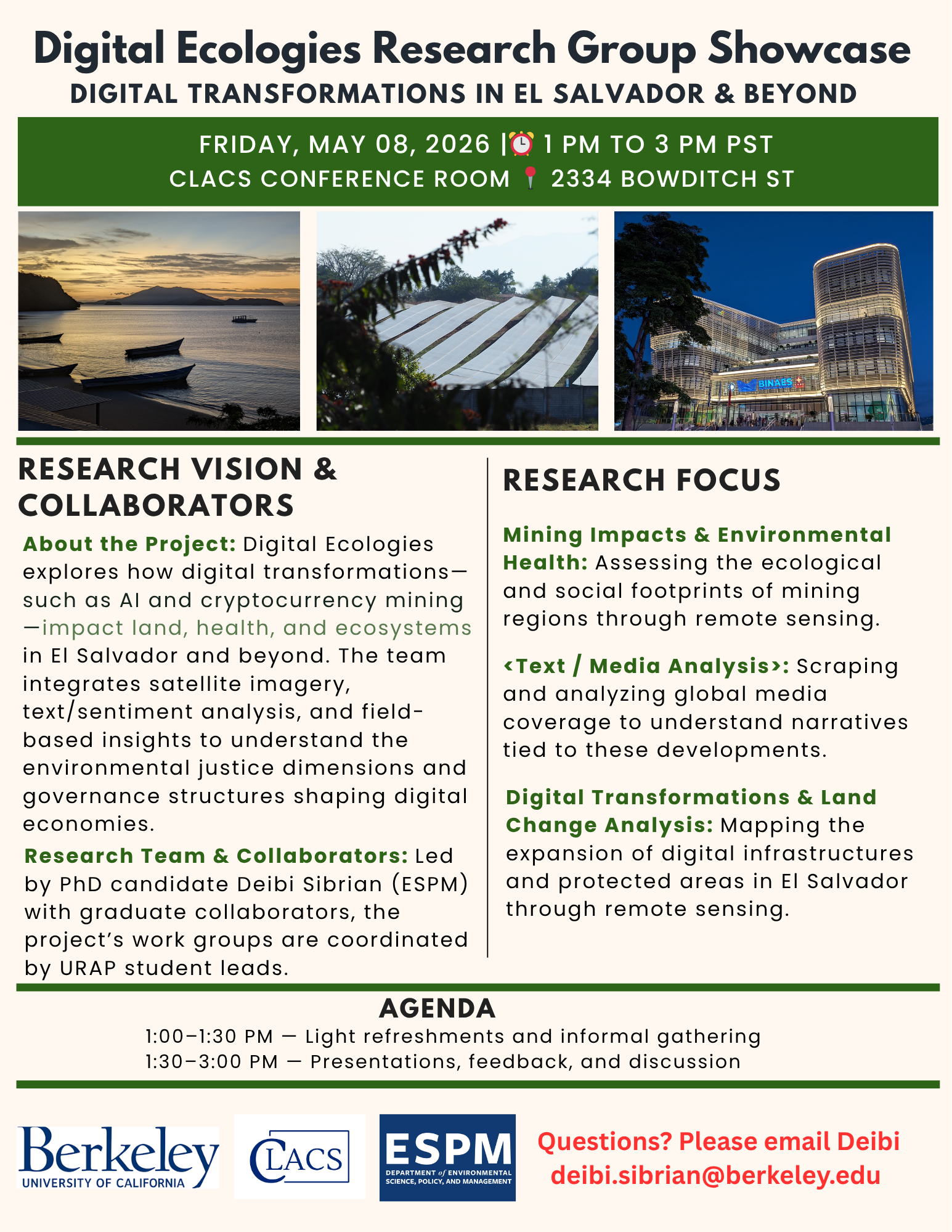
As part of this work, the Digital Ecologies Research Group has also prepared a student-led showcase focused on “Digital Transformations in El Salvador & Beyond.” The showcase was not only a presentation of ongoing research but also a space for feedback, dialogue, and cross-disciplinary collaboration. This work contributes to a broader conversation about how Latin American perspectives can reshape debates over technology, environmental justice, and development.
This work is also collaborative beyond the Berkeley campus. During my fieldwork, I met with faculty at the Universidad de El Salvador (UES), including colleagues interested in digital transformation, governance, and environmental health, as well as potential future joint publications. These conversations are growing into plans for a hybrid forum between UES and UC Berkeley, with the possibility of expanding into a broader event series. For me, this collaboration is essential. Research on Latin America should not only analyze the region from afar. It should build relationships, share knowledge across institutions, and support forms of public scholarship that remain accountable to the places and people at the center of the work.
What I saw in San Salvador complicates simple stories about digital progress. The digital future is not only Bitcoin, apps, artificial intelligence, and new infrastructure. It is also the flooded street, the vendor’s cart, the driver’s canceled ride, the child with a tablet, the mother navigating grief, the public library, the mining debate, and the communities asking what kind of development is being built around them.
These questions also shape how I think about technological futures beyond Digital Ecologies. Through the Engineered Living Materials Lab, students and collaborators explore regenerative materials and ask how innovation might be designed around repair rather than extraction. I see these projects as connected: one studies the harms and uneven burdens of digital transformation, while the other asks what more grounded, ecological, and justice-oriented forms of innovation might look like.
To study digital transformation from Latin America is to ask different questions. Not only what can technology do? But also, what does it require? Who decides? Who benefits? Who is displaced? What ecosystems are altered? What forms of labor become invisible? And what futures become possible when communities, researchers, and institutions refuse to separate innovation from justice?
The digital age is already here. The task now is to understand it from the ground, while imagining futures that are accountable to land, community, and more-than-human life.

Deibi Sibrian is a Ph.D. Candidate in Environmental Science, Policy, and Management at UC Berkeley, with a Designated Emphasis in Development Engineering, and the recipient of a Tinker CLACS Field Research Grant in 2025. His dissertation examines the socio-environmental health impacts of digital transformations, including cryptocurrency, artificial intelligence, platform economies, and digital infrastructure, with a focus on environmental justice in El Salvador and comparative field sites. He directs the Digital Ecologies research group and the Engineered Living Materials Lab, leading interdisciplinary work that connects political ecology, One Health, multispecies justice, geospatial analysis, regenerative materials, and community-engaged public scholarship.

Leave a Reply