
By Emiliano Arizmendi-Castilla (edited by José Miguel Alvarado)
It’s 6 pm and all the doors to the office wing in Berkeley’s Dwinelle Hall are closed. You can try knocking, and you may be lucky enough that someone staying past working hours might open the door for you. Or you can see if other floors have their entrances open. If nothing else works, you can try going to the main entrance and using your ID. It doesn’t matter. You’ll be met with a hall that stretches for too long, and you might take the wrong turn and end up in the classroom wing, lost again. But if you listen carefully, you might hear the laughs and giggles, sometimes the voices of an excited attendee. You just have to follow them, you must, and they’ll lead you to the Department of Spanish and Portuguese Library.
The room that ten minutes before was dark and empty, is now occupied by ten or so people. You also notice a floating head, or at least that’s your first impression. Turns out it’s just someone who joined online. They sit around the small wooden table on which they have laid their books. They welcome you and loop you into the joke (‘cause you didn’t know about that post they were speaking about). But it doesn’t matter because it’s time to discuss Temprada de huracanes (2017) by Fernanda Melchor.
That might’ve been the impression of a first-time attendee to the Mexican Working Group (MWG). The MWG has been a project that graduate students of Spanish and Portuguese have been working on for a while, the goal of which has been to learn about Mexico’s culture and literary production from the earliest Indigenous imaginative practices to the latest award-winning fiction and poetry. We take a rotating approach, in which each member presents a topic of their interest to present to the group. This approach allows us to learn from each other by sharing and debating our different ways of approaching and understanding a text.
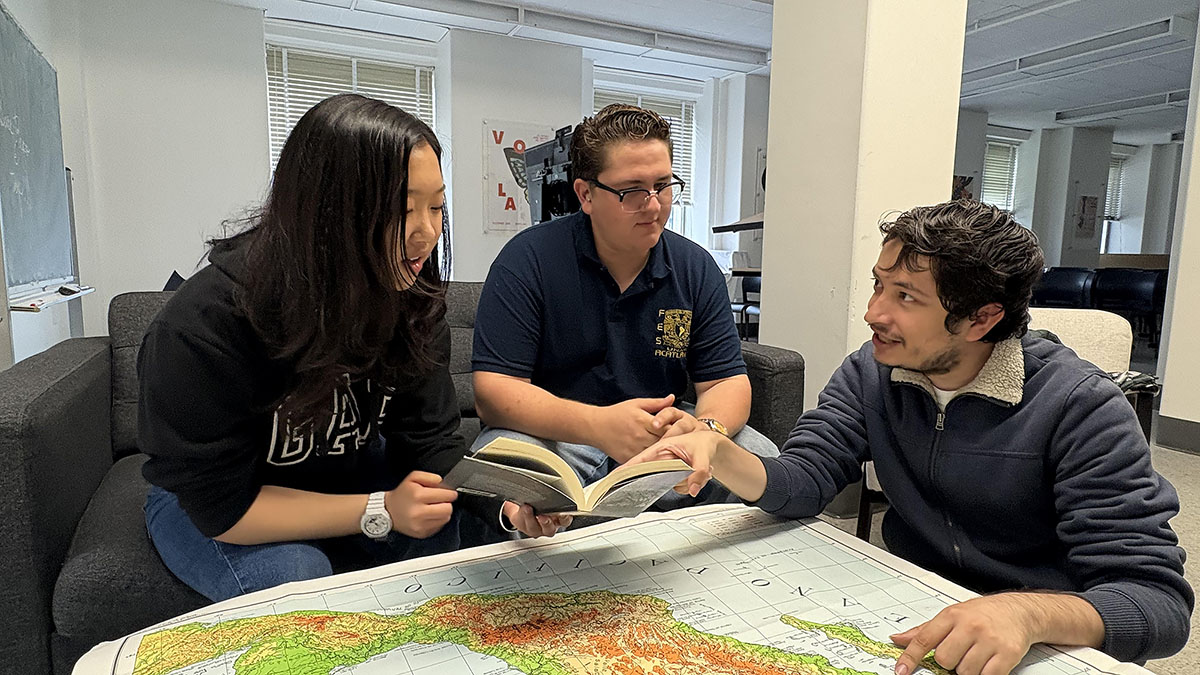
This year, the MWG began the rotation with contemporary Nahua literature and ended with contemporary Mexican literature. Our first two sessions were led by Miroslava Guzmán, who presented us with Adam W. Coon’s analysis of contemporary Nahua literary production, and Doña Luz Jimenez’s De Porfirio Díaz a Zapata; memoria náhuatl de Milpa Alta (2000). This session was particularly fruitful because two undergraduate students joined in the discussion. We introduced them to Nahua literature and gave them a crash course on the Mexica people of the Valley of Mexico, highlighting predominant historical misconceptions, and how they continue to affect Mexican culture, society and language.
Part of our approach to Mexican studies relies on exploring different time periods and literary traditions, often looking for instances where the notion of “Mexican” ceases to exist, or transforms into something else. For example, José Miguel Alvarado led our section about the city of Tijuana. We studied the poetry and fiction of Omar Pimienta and Rafa Saavedrato explore how they adumbrate the inner logic of their city, and how this logic, generally neglected in widely-circulated depictions of Tijuana, corresponds with what Humberto Félix Berumen, in Tijuana: Vivir (en) la desmothernidad (2021), views as an undoing of modernity.
In a similar manner, Luis Amaya Madrid invited us to think about the instances where Mexican national discourse, under the banner of progress led Porfirio Diaz, supported the genocide of the Yaqui people of Sonora and Arizona. For this, we looked into Unspeakable Violence: Remapping U.S. and Mexican National Imaginaries (2011) by Nicole M. Guidotti-Hernández and excerpts from Au Te Waate / We Remember It: Hiaki Survival Through a Bitter War (2025) by Maria Fernanda Leyva and edited by Heidi Harley. We also touched on Mexican Dirty War-era (roughly 1964–1982) poems produced by incarcerated individuals in Lecumberi Prison in Mexico City. Jackson Ribler presented us with a collection of poems titled Sobreviviremos al hielo: literatura de presos políticos (1983) compiled by David Zaragoza Jiménez and Manuel Anzaldo Meneses. We looked for places where the emotion of the poet shone through the poem’s form, style and language, to activate a political, if not necessarily a “civil,” affect.
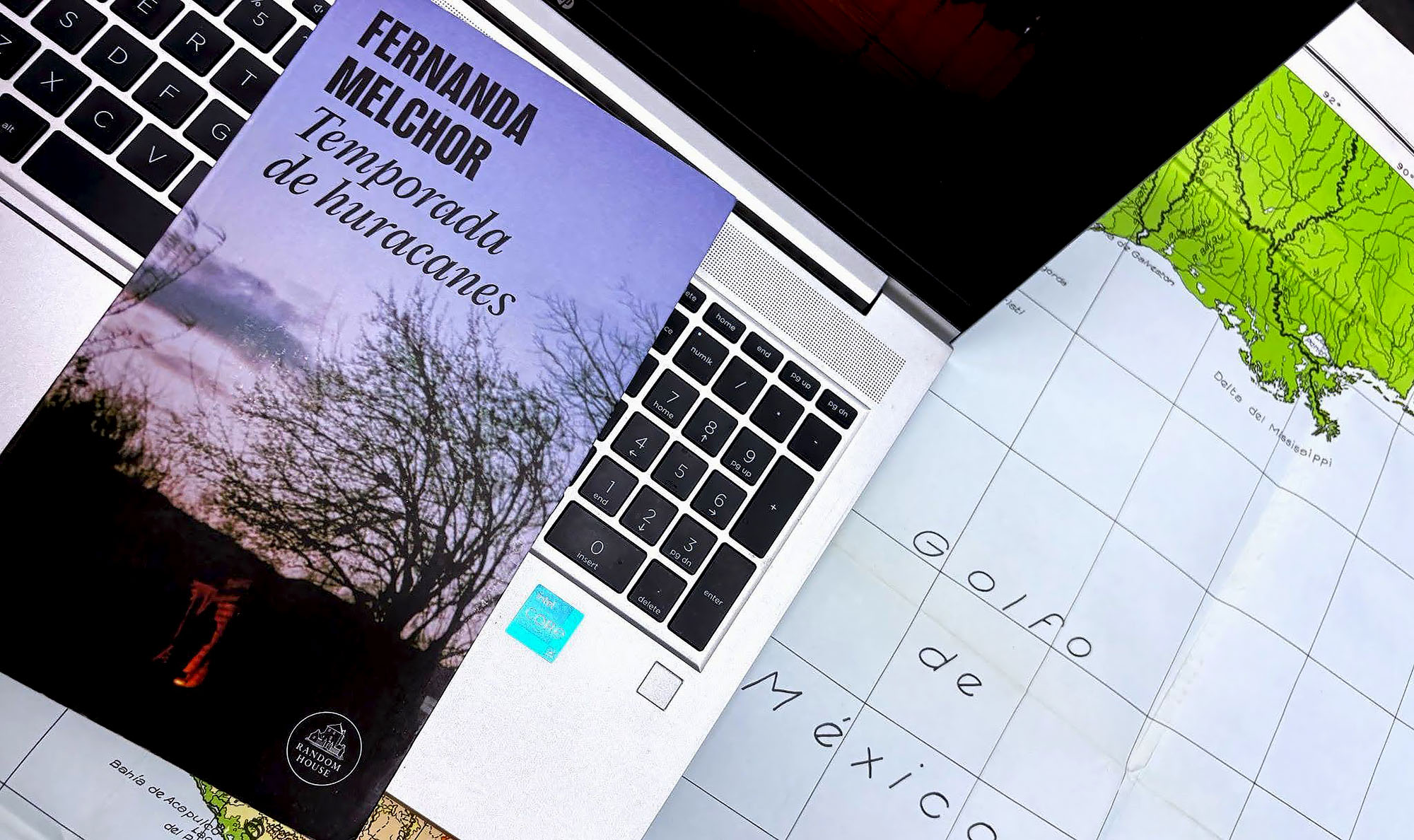
For our latest sessions, we delved into the uncanny and sometimes horrendous corners of Mexican literature, beginning with Pedro Páramo (1955) by Juan Rulfo. Presented by Benito Lopez, the novel was the perfect example of the ways in which literature, in comparison to a historical account, reaches deeper into the reader’s emotions and understanding of historical events and their lasting results. Set in an unknown time before and after the Mexican Revolution, the novel highlights the themes of scarcity, and an abundance of helplessness and hope, where other futures, as well as other pasts, are still possible. Our latest session focused on Temporada de Huracanes by Fernanda Melchor. The novel’s peculiar form, as well as its potent but careful depictions of violence, gave us a picture of contemporary Mexico that in several ways seemed to respond to, even complement, Rulfo’s Pedro Páramo.
Although Temporada de huracanes was Emiliano Arizmendi’s pick for the session, José Miguel and Luis joined him in the presentation of the novel. Emiliano focused on the form of the novel, which was reminiscent of Mexican sensationalist journalism, a psychological thriller, and gothic literature. Built from the pieces which Mexican society has buried or forgotten, such as marginalized people, and the overwhelming state of poverty and violence that they suffer, the novel may be read as a sharp critique of the project of modernity in Mexico. José Miguel argued that the isolation of La Matosa, contrasted with the omnipresence of the oil refineries that symbolize a close but unattainable escape from poverty, are evidence of the failure of the project of modernity in Mexico, which left behind and harmed many sectors of the Mexican population.
We seek to continue this group next year. We’re currently looking to establish a broader theme for our next sessions, as we encourage perspectives outside literature alone, looking to enrich our knowledge of Mexico through several perspectives, critiques, and theoretical frameworks that are emerging from, and are wholly grounded in, Mexican ways of life, broadly defined, both in Mexico and elsewhere.
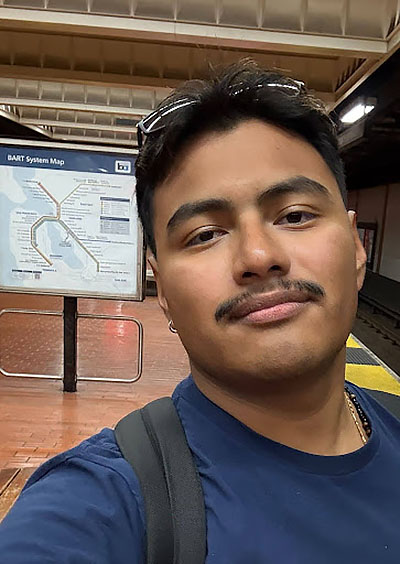
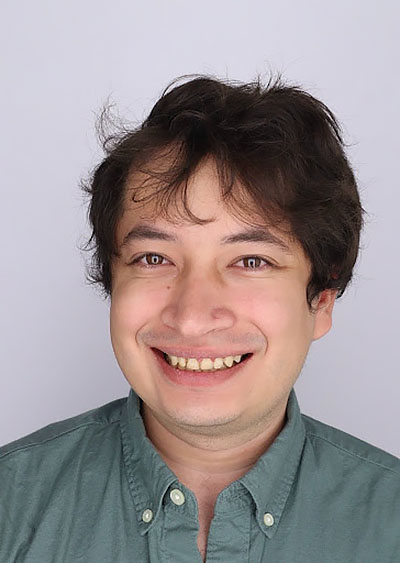
Emiliano Arizmendi (left) is a Ph.D. student in Spanish and Portuguese. José Miguel Alvarado is a Ph.D. student in Comparative Literature. They are both members of the 2025-26 Mexican Studies Working Group supported by CLACS.

Leave a Reply