
By Greg Louden

Indigenous studies in academia have historically been from the perspective of the non-Indigenous scholar. The Núcleo Takinahakỹ de Formação Superior Indígena (NTFSI, Takinahakỹ Center for Indigenous Higher Education) at the Universidade Federal de Goiás (UFG, Federal University of Goiás) is helping to address that issue, as part of its service to Indigenous communities in Brazil, who “dreamed of a different kind of school — one that met their needs rather than external policies.” NTFSI, established in 2006, has established itself as an “international benchmark in the training of Indigenous teachers, pioneering an approach involving Indigenous communities in various pedagogical initiatives, incorporating traditional knowledge, interculturality, transdisciplinarity, multilingualism, and diversity as its own pillars of support.”
With the leadership of Professor and Chair Natalia Brizuela, in early 2024 the Center of Latin American and Caribbean Studies (CLACS) at UC Berkeley entered into a partnership with the NTFSI and the Secretaría de Formação, Livro e Leitura at Brazil’s Ministério da Cultura, who are the publishers of Revista Pihhy, a publication highlighting knowledge from Indigenous Brazilian scholars. CLACS publishes English-language translations of selected Pihhy articles, in an effort to make that knowledge accessible to non-Portuguese speakers.
With a dedicated team of translators — Derek Allen, Luiza Bastos Lages, Mônica Carvalho Gimenes, Gabriel Lesser, Ana Claudia Lopes, Isaac McQuinn, and Liam G. Seeley, known as the Coletivo de Tradutores Berkeley-Brasil (the Coletivo) — CLACS has produced a series of articles by Indigenous Brazilian authors, more than 75,000 words of English text that strives to hew as close to the original meaning as possible.
The Coletivo’s fidelity to the source material is extraordinary. As an editor, I had difficulty with what seemed to me like an excessive use of commas and other punctuation in the translated material. But in discussions with the translators, I learned that those seemingly extraneous commas serve both a direct purpose as well as a more subtle goal. Concretely, some of the original source languages use breath-stops and other forms of cadencing that may seem strange and uncomfortable to English-speaking readers. More subtly, that discomfort is an indirect and productive byproduct of the translation process. It keeps the reader aware that the Indigenous authors themselves are creating a work in a second language – communicating their knowledge through translation from their native Indigenous language into Portuguese – a process that makes fidelity to original meanings difficult at best.
In translation, in-person experience is an invaluable addition to the translator’s toolkit. Knowledge and experience from the home environment of the source material provides insight that the written word alone might not. And when the opportunity arose, a group representing the Pihhy project took full advantage.
Visiting the Núcleo and Goiás
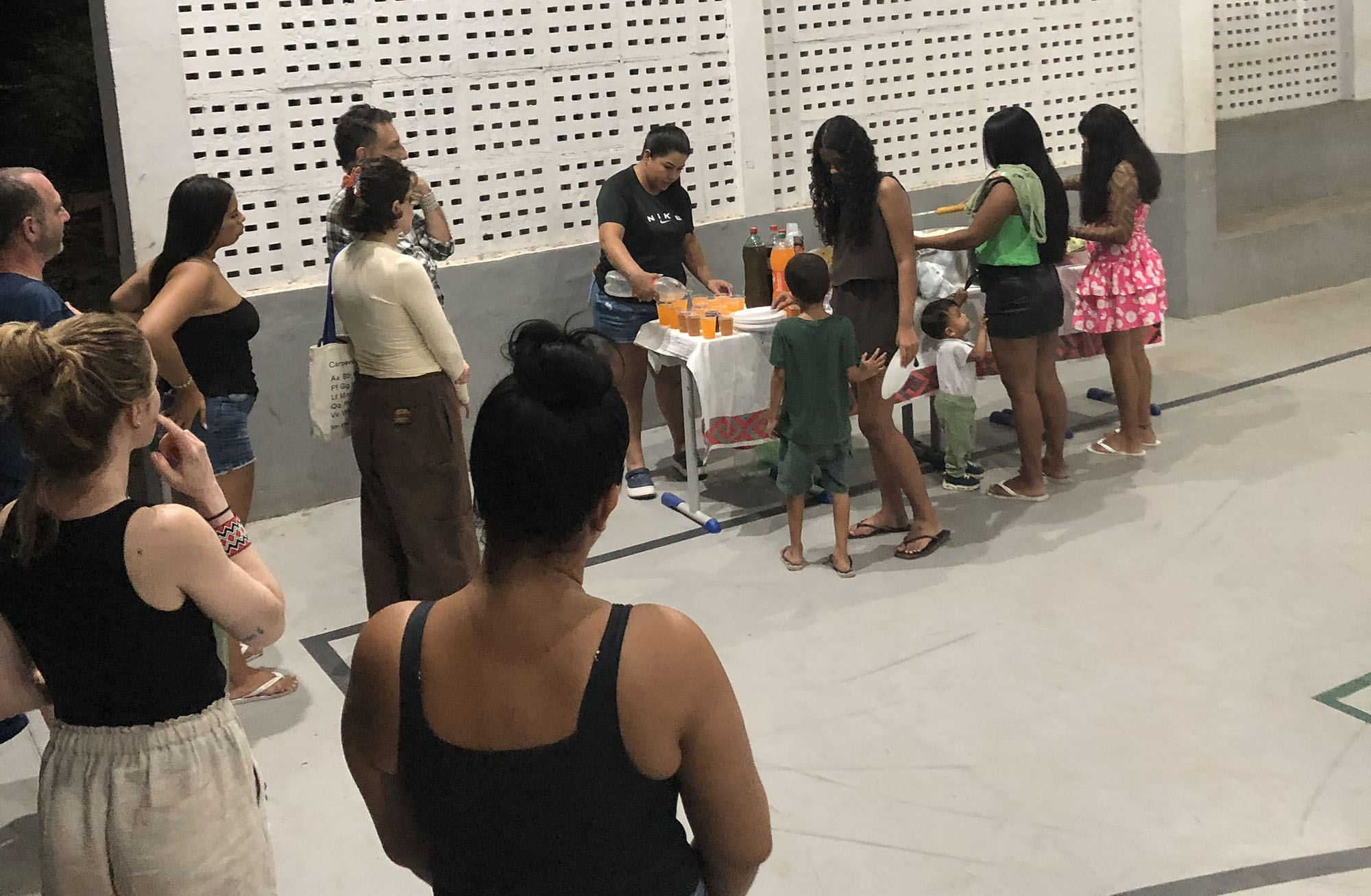
Dr. Alexandre Herbetta, a faculty leader of NTFSI in Goiânia, Goiás, is one of the forces behind Revista Pihhy and its English-language partnership with CLACS. As that partnership has matured, he generously invited those working on the project at Berkeley to visit his university for a program for Indigenous educators and students. In late July 2025, members of the Coletivo, along with Prof. Brizuela and myself, visited UFG, Alexandre, and his colleagues and students to experience their program.
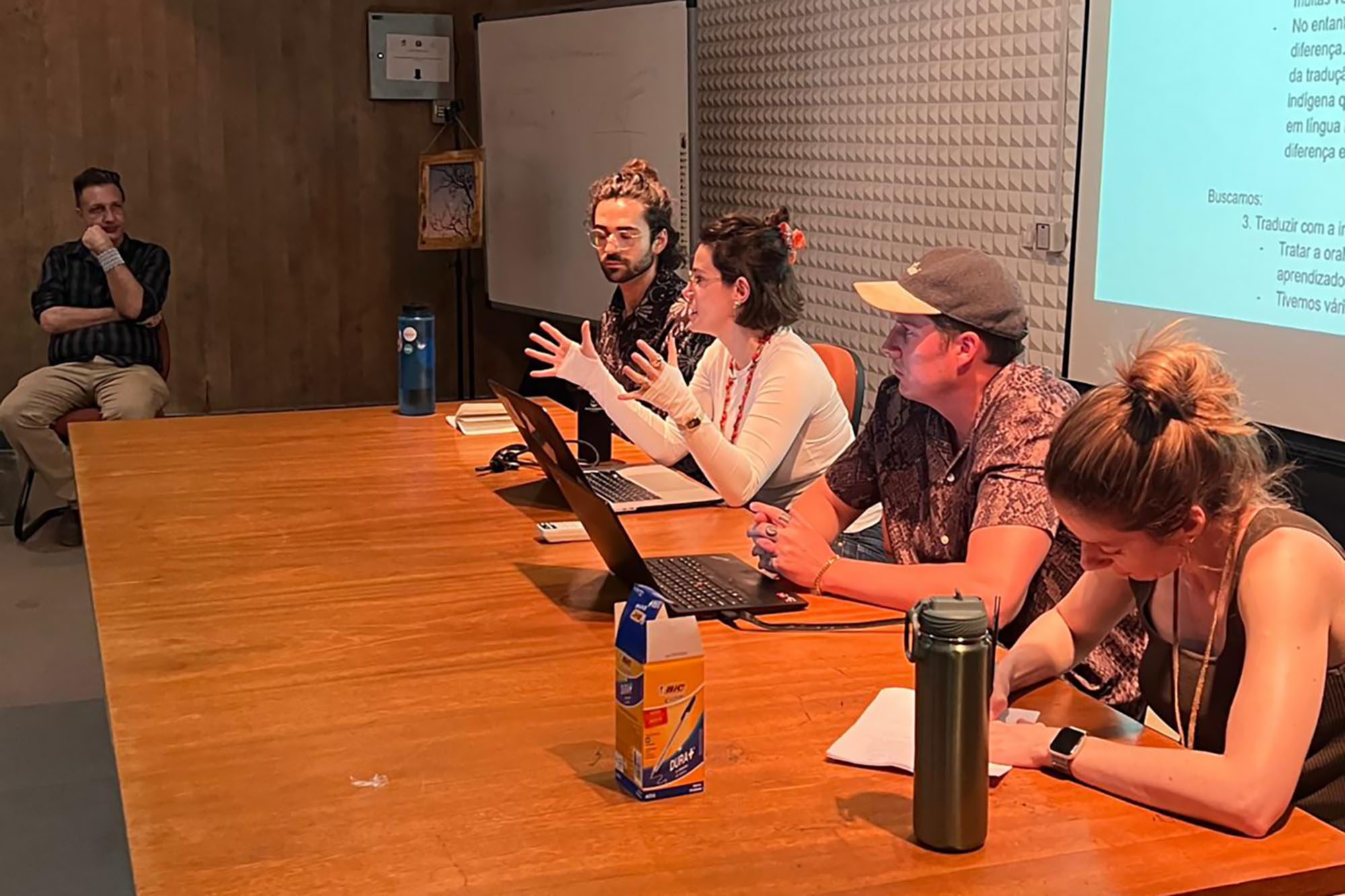
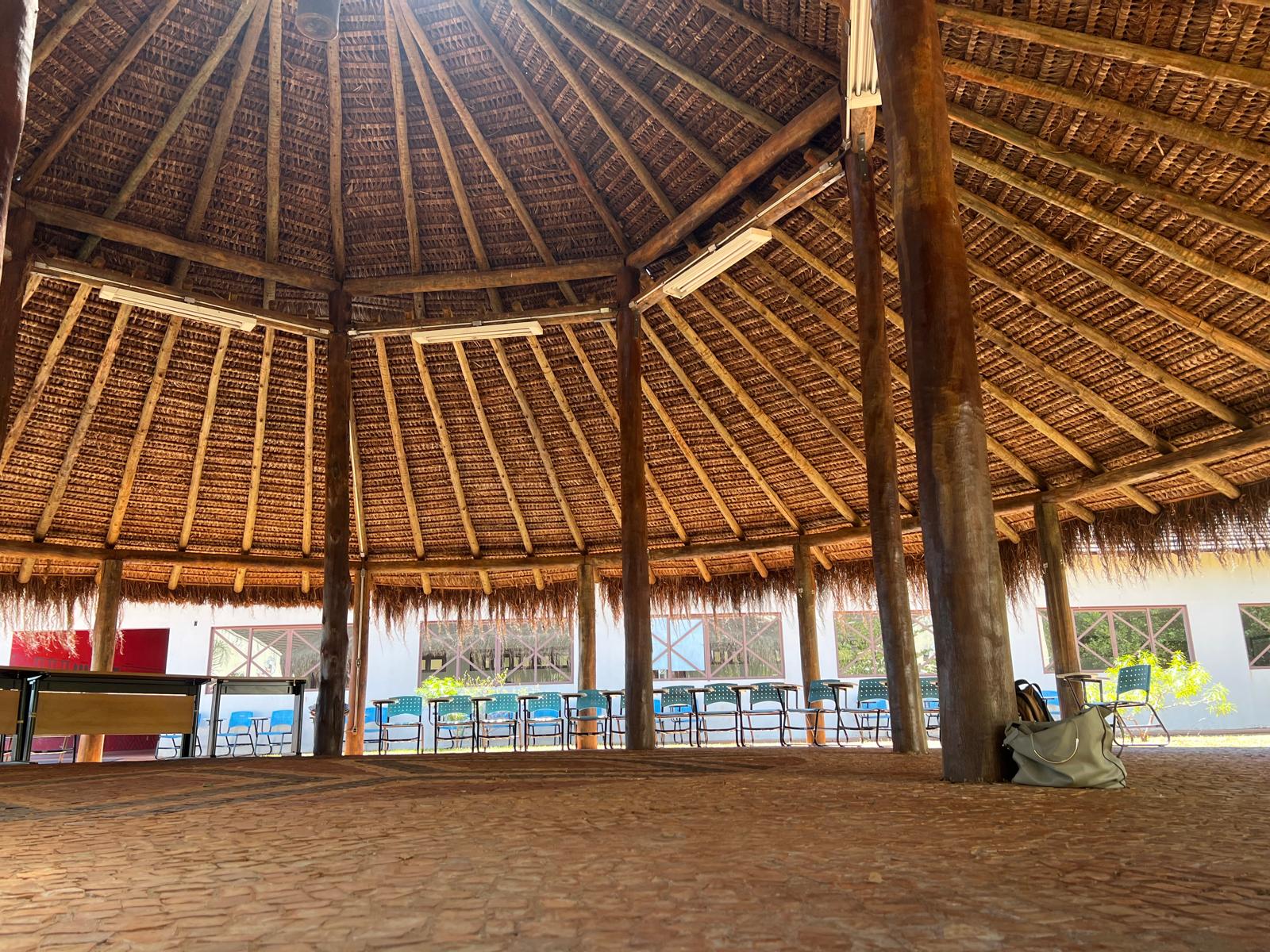

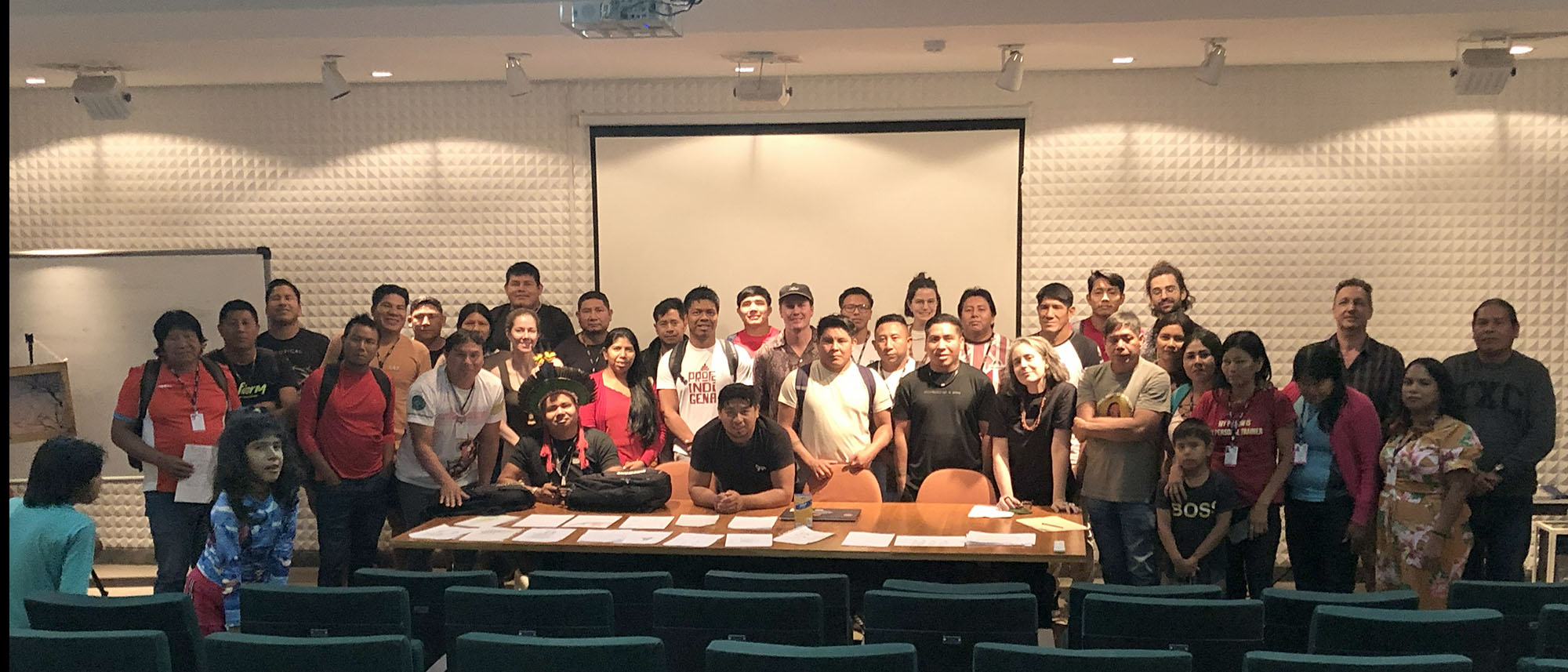
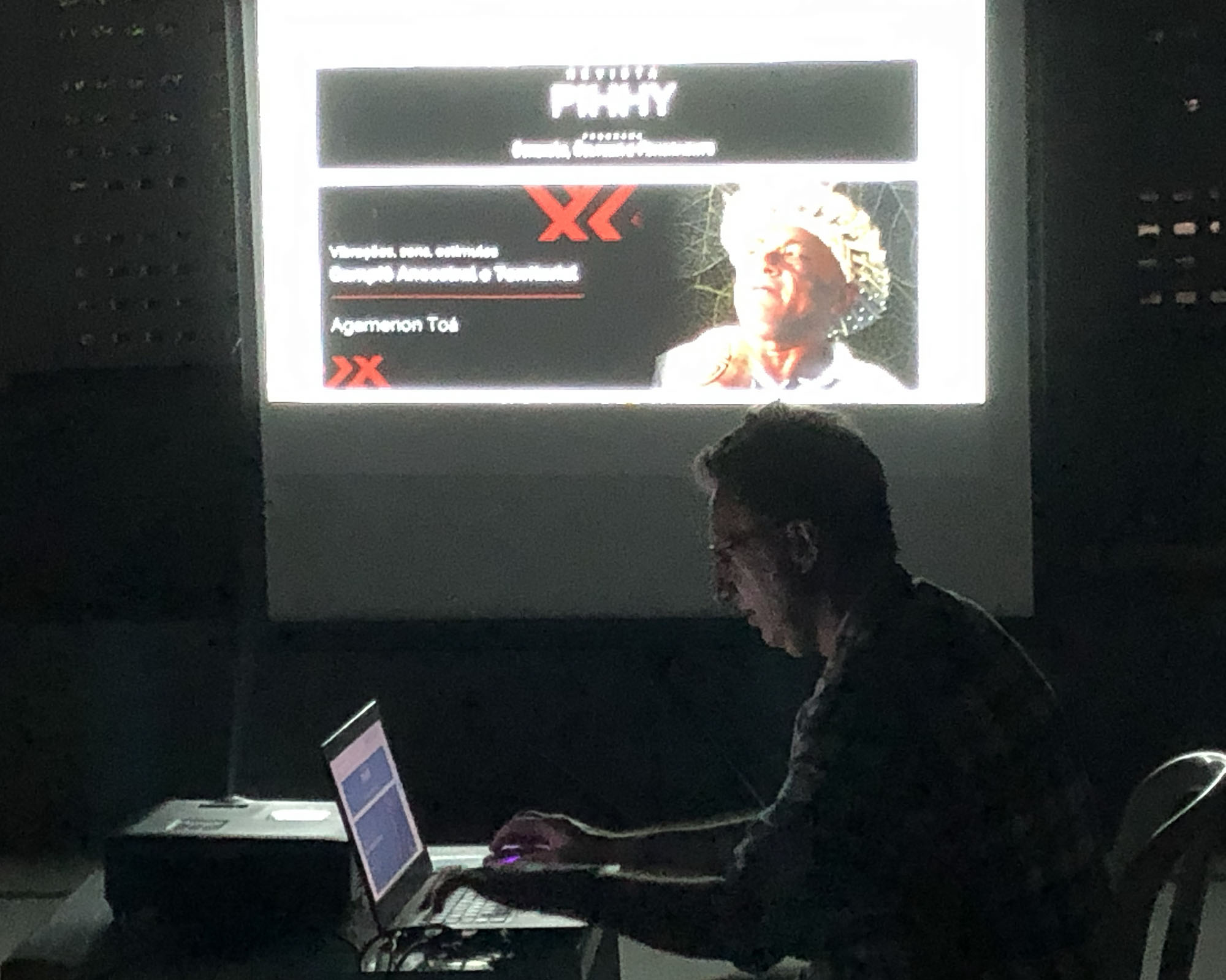
The Coletivo members ran a day-long program for those attending the program, working together to understand their translation process and the entire Pihhy project. (Stay tuned for future blog about their experiences published in the coming months!) Prof. Brizuela also gave a presentation on Indigenous studies in the U.S. and their status at Berkeley and other educational institutions, emphasizing how CLACS and U.S. education have a model to follow in the approach of the program at NTSFI.
Along the River
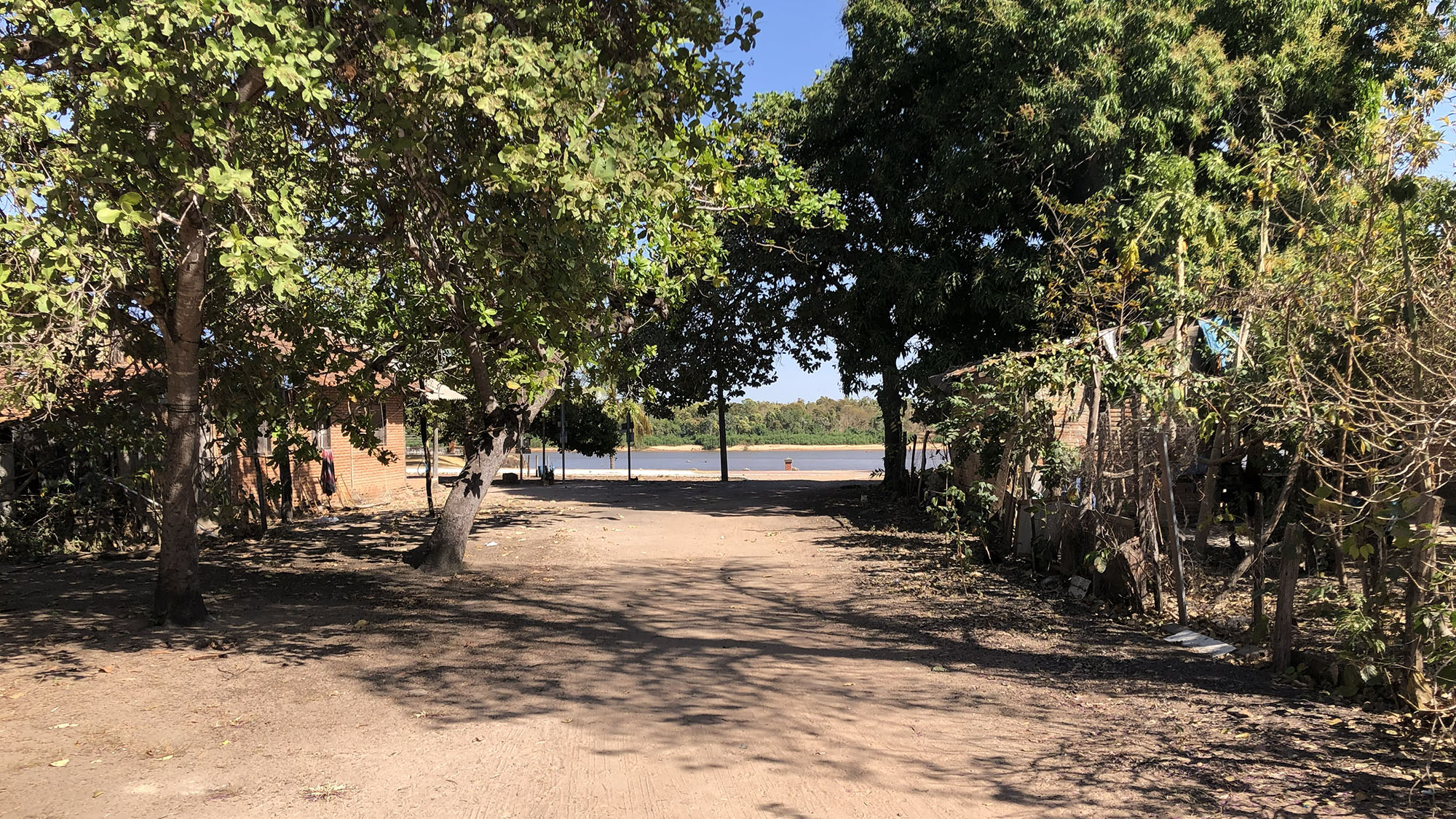
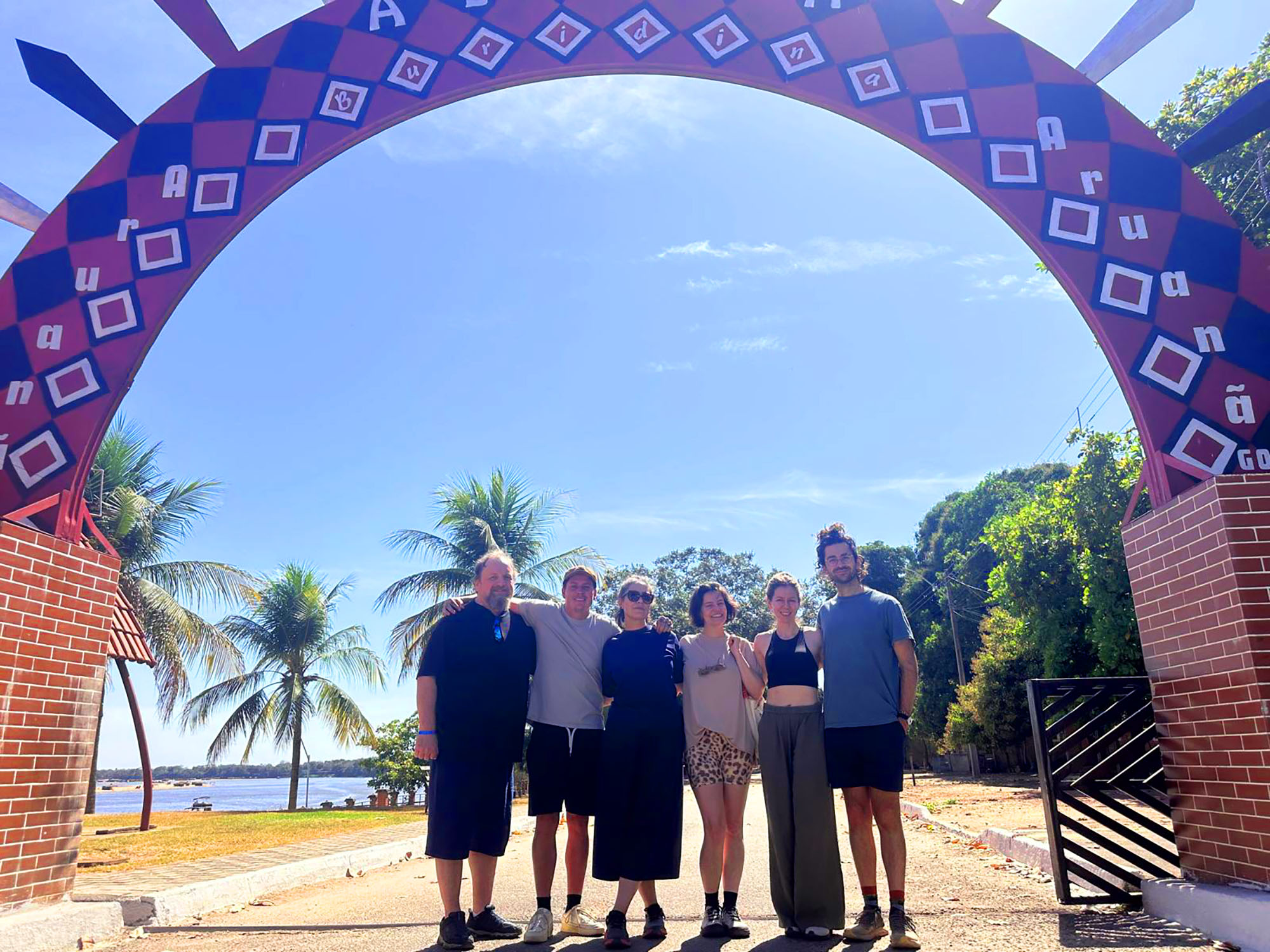
During the trip, Dr. Herbetta arranged a visit for the Berkeley group to an Indigenous community. The Aldeia Buridina Karajá in Aruanã, at the confluence of the Vermelho and Araguaia Rivers about 300 km northwest of Goiânia, was gracious enough to host the CLACS contingent.

The aldeia, officially the Terra Indígena Karajá de Aruanã (Karajá Indigenous Land of Aruanã), is divided between two pieces of land – one parcel along the river in the midst of Aruanã’s downtown area and another larger parcel just to the north. Those parcels are what remains along the rivers of the territory of the Iny Karajá, a people whose origin stories recount arising from the bottom of those waters.

The two rivers made the area a tempting target for colonizers, who displaced the original inhabitants into more restricted territories, pushing them off of much of their lands at the rivers’ junction. Aruanã is heavily dependent on tourism, with riverside beaches and sport fishing. Luxury vacation homes and shops filled with cheap plastic water toys are separated from the aldeia’s traditional homes and culture by a gateway arch. Just down the road from the aldeia, what had been an Iny Karajá burial ground has been built over and turned into a boatyard for sportfishing and waterskiing boats of wealthy Brazilians who own those luxury vacation homes.
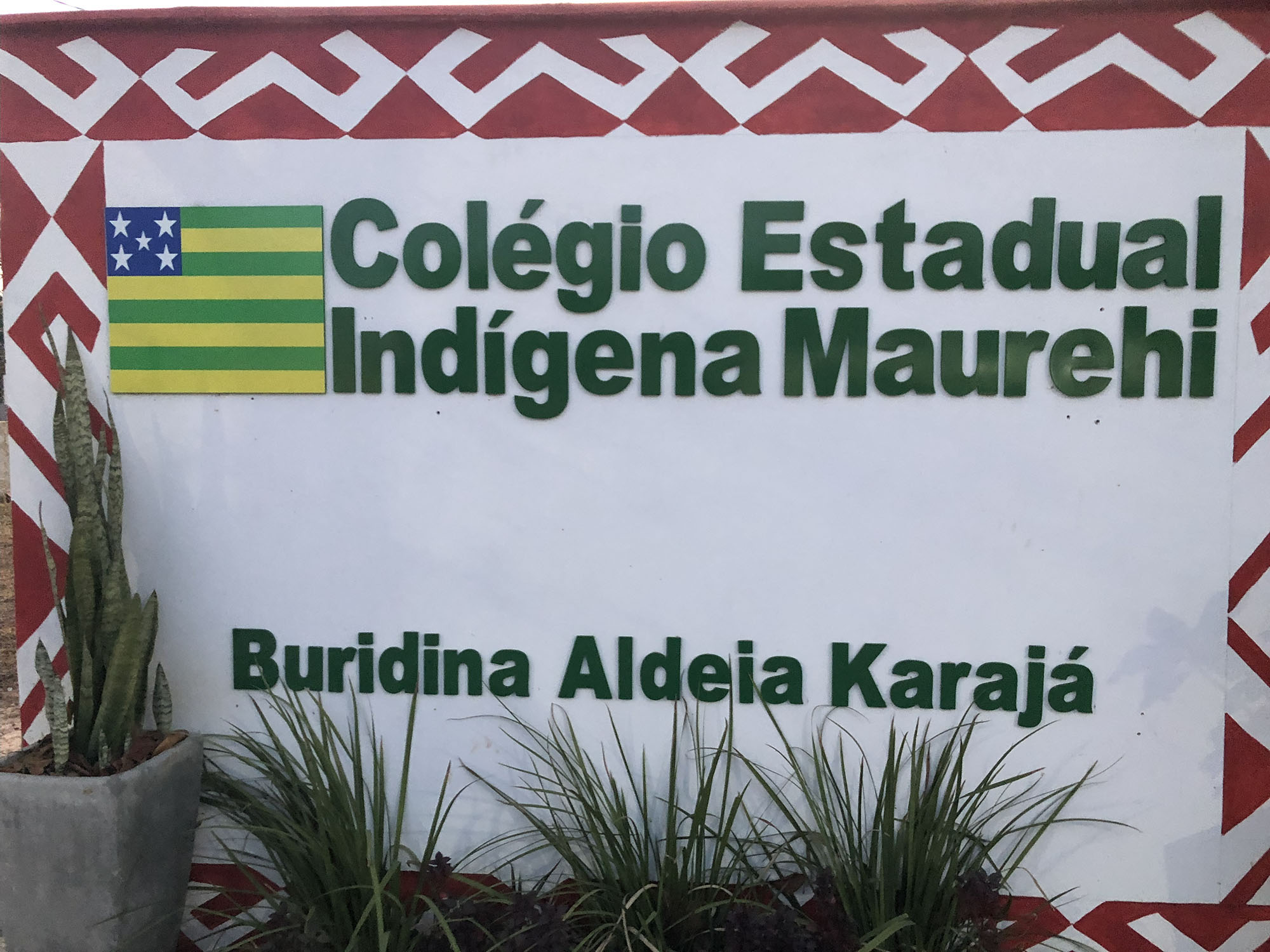
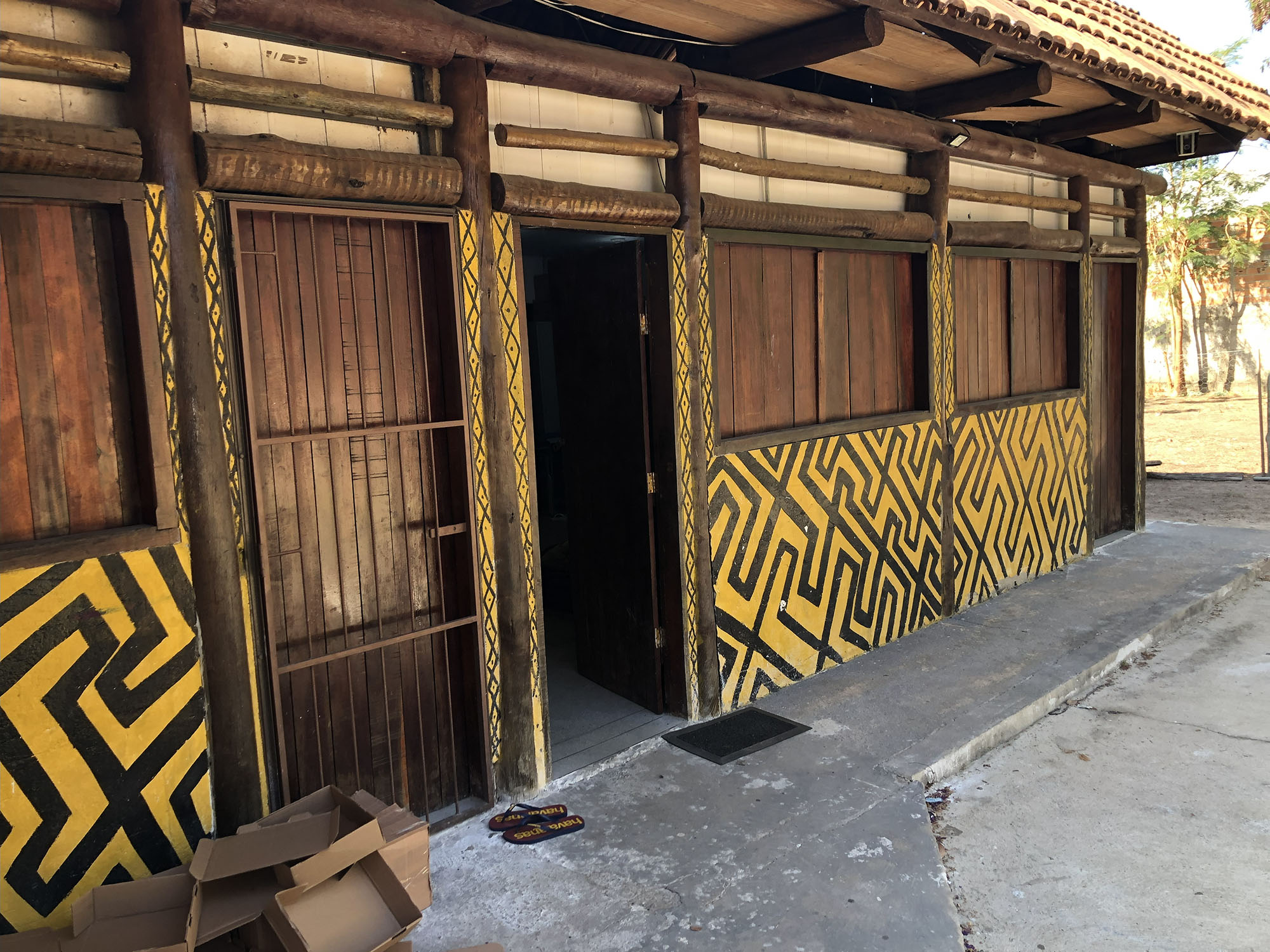
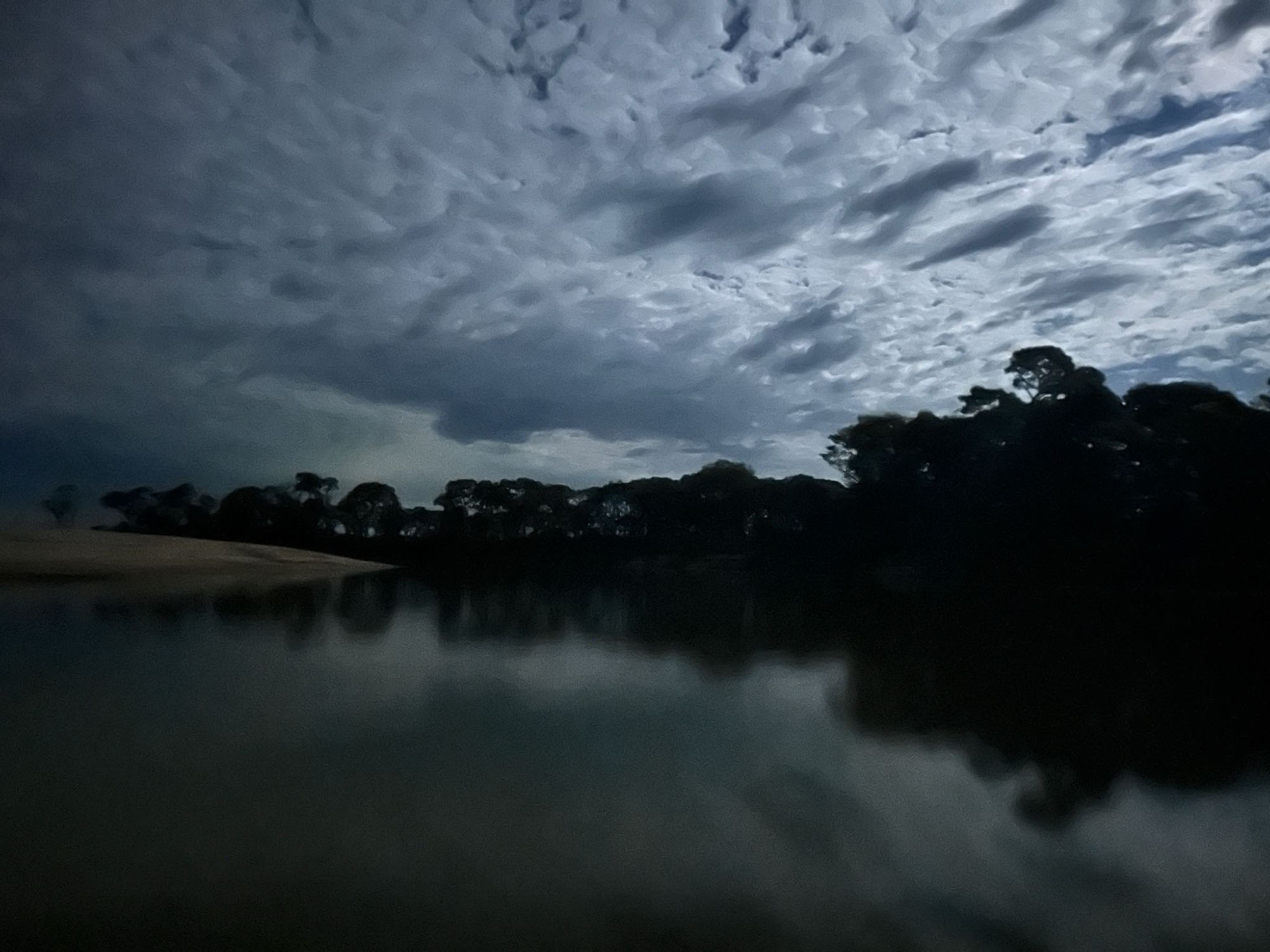
But the aldeia is resilient. We visited a local elder, a ceramicist who demonstrated the continuity of their art forms. Trips with community members on the river showed how fishing and other traditional aquatic pursuits have been supplemented by a judicious involvement in the local tourism industry. And saw a screening of several documentary films about the continuing work of Indigenous territories including the aldeia to strengthen their communities and connections.
Bringing Knowledge Back to Berkeley
Visiting both the NTSFI and the aldeia were transformative experiences. The strength and openness of the teachers and those studying at the UFG drew us in. And while on the trip, we began a project to bring part of that experience back and instill it into our version of Revista Pihhy.
Working with students and others in attendance at the gathering, the CLACS team recorded Indigenous speakers of the original languages represented in some of the Pihhy articles as they articulated words and phrases in those languages.
For example, in the article “Wato ne hômpu ne kãmpa: I live, I see, and I hear Mehi,” the Coletivo left the original Krahô term mehi untranslated. The word involves multiple meanings, including “woman” and “village.” Leaving the word in its original form reminds the reader that there are layers to its meaning, and recognizes (or foregrounds) the multiple languages involved in the translation process from Krahô to Portuguese to English. Listening to a verbal recording of the word adds yet another level to the experience of the article. (Hear the word below)
Upon returning, I’ve been working to link those audio files to the words and phrases as they appear in Pihhy articles. Beyond allowing listeners to hear pronunciations in the voices of native speakers, those audio recordings also increase the accessibility of articles to those with visual challenges who use screen reading technology. Screen readers are often incapable of vocalizing some transliterations of non-English words and phrases, especially when they have sounds not easily transliterated into the Latin alphabet. In providing audio recordings, CLACS is making the articles more intelligible.
Our trip to Brazil both broadened and deepened our perspectives and understanding of the Indigenous knowledge we have been translating. The Coletivo, in facilitating a workshop at NTSFI, connected with speakers of some of the Indigenous languages represented in their work. We all learned from the path-breaking pedagogy at the Núcleo, its innovative approach to bringing Indigenous knowledge into its curriculum. And the welcome of the Iny Karajá people of the aldeia and the experiences they shared with us will leave a lasting impression.
Greg Louden has worked at the Center for Latin American and Caribbean Studies for more than 20 years, helping to design, edit, and produce publications and communications, support students and scholars in their work at CLACS, and work on the Center’s website.

Leave a Reply