
By Sandra Oseguera Sotomayor
*Both in the workshop that will be presented at LASA 2025 and in this text for the Blog of the Center for Latin American and Caribbean Studies at UC Berkeley, I want to clarify that the use of the term “women” in the title reflects the experience and gender positionality of those of us who organized the panel. When choosing the title, we made the decision to be consistent and not to co-opt other identities. We recognize, however, that fieldwork experiences cross multiple gender experiences; Therefore, this space is open and committed to including women, non-binary people and all identities that feel represented by the reflections we share here.
NOTE: This blog post was originally written in Spanish to align with the structure of the LASA 2025 workshop; however, in an attempt to reach a broader audience, it was translated into English. The original Spanish can be found here.
As part of the Latin American Studies Association (LASA) Congress in San Francisco, California, we will meet on Monday, May 26, 2025, at 1:45 pm at the Marriott Marquis hotel in San Francisco, California, to discuss fieldwork experiences in Latin America in the workshop “Women Doing Fieldwork in Latin America: A Multidisciplinary Conversation About The Lessons and Challenges of Putting the Body in the Region.” Holly Moulton (College of the Holy Cross) and I, Sandra Oseguera (UC Berkeley), have organized this space as an open invitation to collectively engage in honest and vulnerable reflection on the challenges of fieldwork, approached from a gender perspective.
The idea for this workshop arose from casual conversations among colleagues who practice field research. Many times, these talks ended with the feeling that we needed a space in which we could share our experiences and turn them into a joint reflection. The participants in the workshop do not intend to present ourselves as experts in field work, although some have notable careers; rather, we seek to build a space open to different levels of experience, as well as the various emotions and challenges we face when entering the worlds of our interlocutors.
I want to share some ideas about the origin of the workshop, the voices with which we entered into dialogue, and fragments of my personal experience that led me to be one of the organizers of this space.
While I was trying to figure out my interests as an adolescent, I was deciding what profession I wanted to pursue as an adult. None of my decisions up until that moment, at 19 years old, had made a lasting impact on my idea of a lifelong career. The more I considered what I would like to be, the idea of traveling, of being in unknown places and making those places my own, meeting people and understanding them, always came to mind. Today, reflecting on that moment in my life, I realize that it makes sense that, fifteen years later, I am an anthropologist, with seven years of experience doing field work in Mexico and Japan.
In the popular imagination, nourished by television fiction, cinema, and classic ethnographies, fieldwork is presented as an accessible, safe, and orderly journey. It is a journey with a beginning, a middle, and an end: you arrive, you investigate, you collect your findings, and you leave. Everything happens with the appearance of a clean and inevitably successful process.
In the academic field of anthropology, from the beginning of the discipline and during much of the twentieth century, fieldwork was mentioned as a narrative form or as a requirement for legitimacy when presenting theory. Only with the passage of time, and thanks to critical voices, often of women (Behar 1995, 1996), did the imperative arise to narrate these experiences as a situated practice, informed by distances, privileges, challenges, discomforts, small triumphs and, above all, by the profound transformation implied by the exchange that exists between the researcher and her collaborators.
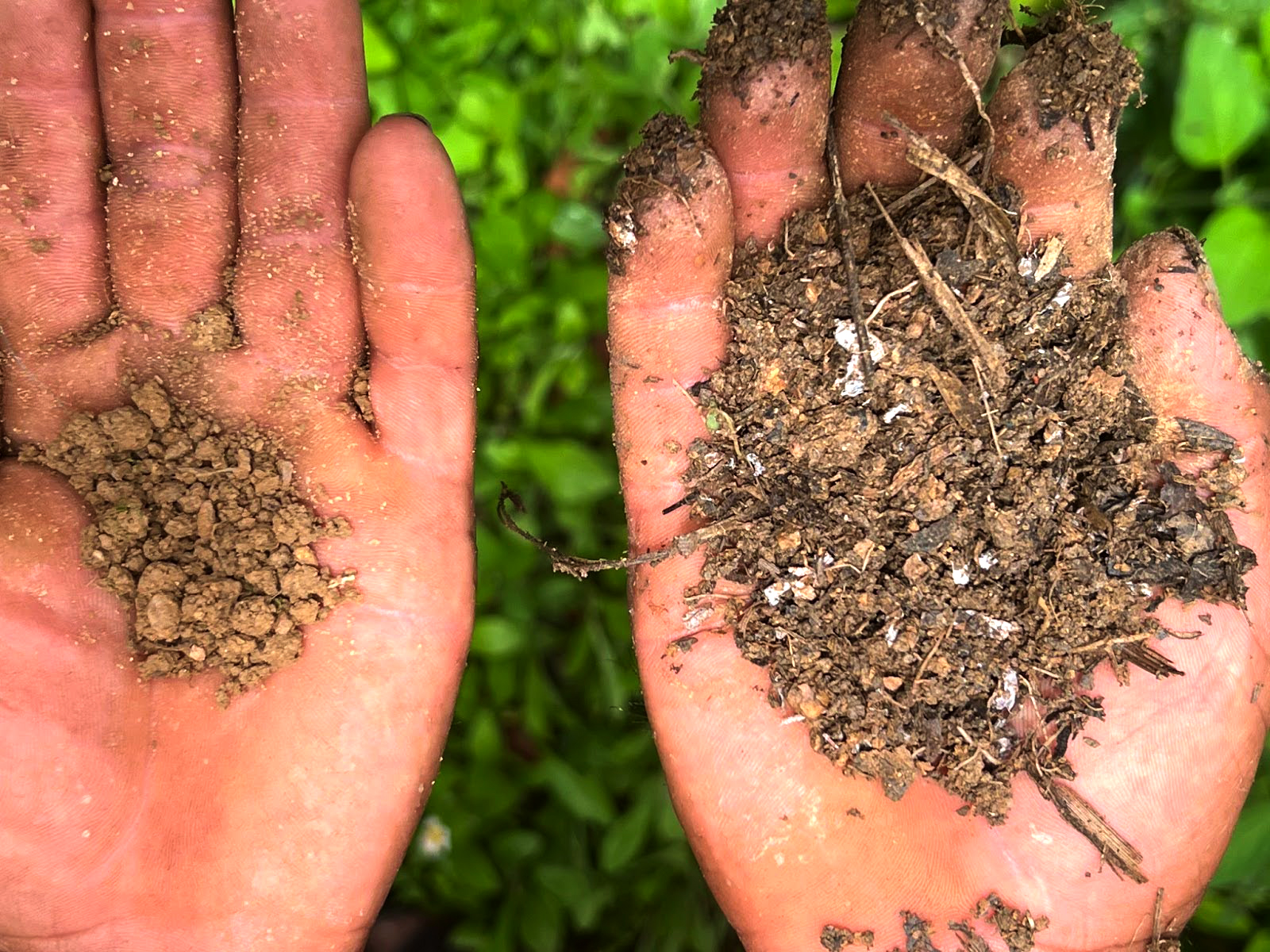
In my personal experience, carrying out fieldwork in both rural areas of Japan and in the Sierra Norte of Oaxaca, I have encountered a reality that is far from the fantasies of my adolescence. During my academic career I have had the support of two exceptional mentors: Laura Nader, who in the 1950s worked in the Sierra Norte of Oaxaca, pregnant and with young children in her care in a completely unknown context (Nader 1970 and personal communication); and Junko Habu, who since the nineties has directed archaeological excavations and ethnographic work in Japan, in a predominantly male environment (personal communication). Despite that support, no preparation is sufficient to face what fieldwork really entails.
My mentors did everything possible to guide me, and although the generational distances and the contexts in which we carry out field work are different, I deeply value their teachings: reciprocity, precision, and collaboration. Before embarking on my own journey, I learned from them, accumulating intergenerational knowledge that has marked my training. However, what I encountered in the field is an experience that only belongs to me. Here I want to make clear a lesson that is rarely mentioned: the fieldwork experience heavily depends on preparation, luck, and privilege.
The truth is that there is no way to anticipate what is coming once we enter our research site. Firstly, there is the physical and emotional discomfort of being in an unknown place and meeting new people Then, there is the constant stress derived from lack of experience and the weight of responsibility to do a “good job”, because, at the end of the day, your academic or professional development depends on your ability to carry out research in a completely foreign context.
As experience accumulates, the challenges of fieldwork become increasingly complex and multidimensional. Personal challenges arise such as discomfort, guilt, and shame. Positional challenges also emerge, related to who you are — your gender, social status, academic level, marital status — and how those characteristics are perceived by interlocutors or collaborators in their own social contexts. These perceptions can create both limitations and opportunities. On the other hand, social challenges are linked to relationships with the people who guide our work, and encompass ethical issues of reciprocity, empathy, and care.
Additionally, there are challenges in interpersonal relationships. Fieldwork is not a linear process. On the contrary, it is a dynamic experience that branches and evolves in multiple directions. In this process, new relationships arise that can be both enriching and difficult, and some of them will last a lifetime.

The geographical dimension of fieldwork also entails its own challenges, particularly in Latin America, a context marked by unique social, economic, political, and historical realities. The questions that inevitably come to mind and that are part of the workshop we are presenting at LASA are: How do we researchers “put our bodies” in Latin America? How can these researchers, who enjoy the privilege of academia but are also subject to gender violence and insecurity, relate and maintain their work with populations that systematically experience violence, marginalization, and social precariousness?
Today, in the 21st century, in the midst of a digital revolution and a growing interdisciplinarity in research methods, fieldwork continues as a common practice. However, a lack of communication between generations and disciplines persists. New generations of academics often arrive in the field without knowing what to expect. And although each experience is without doubt unique and unpredictable, there is an urgent need to share our experiences and reflect collectively. Only in this way can we transmit the accumulated knowledge with the hope that it will be useful when facing the realities of those new worlds to which we arrive as travelers that no one expects (taken from the poem “Traveler” by Dulce María Loynaz, Behar 1996).
This workshop addresses issues of positionality, ethics, and the multidimensional challenges of fieldwork in Latin America. To address the workshop’s objective, seven researchers who work in various disciplines and regions of the continent will come together to discuss their experiences . Our goal is to continue the conversation started by other voices such as (but not only) Nader, Golde, Habu and Behar, normalizing the complex emotions of fieldwork without stigmatizing them. Focusing on gender, we explore how personal and other perceptions impact our experiences.
We invite you to a space of reflection and vulnerability, where we can share our stories, embrace our experiences and create community through care and honesty.
References
Behar, Ruth. 1996. The Vulnerable Observer: Anthropology That Breaks Your Heart. Boston: Beacon Press.
Behar, Ruth. 1995. “Introduction.” In Women Writing Culture, edited by Ruth Behar and Deborah A. Gordon, xiii–xxvii. Berkeley: University of California Press.
Golde, Peggy. 1970. “Introduction.” In Women in the Field: Anthropological Experiences, edited by Peggy Golde, 1–18. Berkeley: University of California Press.
Lutz, Catherine. 1995. “The Gender of Theory.” In Women Writing Culture, edited by Ruth Behar and Deborah A. Gordon, 249–266. Berkeley: University of California Press.
Nader, Laura. 1970. “From Anguish to Exultation.” In Women in the Field: Anthropological Experiences, edited by Peggy Golde, 91–111. Berkeley: University of California Press.
Nader, Laura. 2025. Personal communication, March 14
Habu, Junko. 2025. Personal communication, May 2.
Sandra Oseguera Sotomayor (she/she/her) is a Ph.D. Student in the Department of Anthropology and a Graduate Affiliate of the Center for Latin American and Caribbean Studies at UC Berkeley. Her work focuses on collaborative and Indigenous archeology in the Sierra Norte of Oaxaca, where she collaborates with the communities of Villa Talea de Castro and San Juan Luvina to explore long-standing relationships between people and their landscapes through the analysis of agricultural practices. Her research seeks to understand how agriculture and links with the environment have enabled cultural persistence and environmental resilience in these communities. Sandra is interested in decolonial studies, traditional ecological knowledge (TEK), food sovereignty, and low-impact archaeological methodologies.
