
By Derek Allen

The novels Terra sonâmbula (Sleepwalking Land) and O comboio de sal e açúcar (The Train of Salt and Sugar) highlight the postcolonial perpetuation of the violence which characterized the Mozambican War of Independence (1964-1974), as well as the incomplete, ongoing nature of identity formation in the independent nation. These travel narratives, penned by Mia Couto in 1992 and Licínio Azevedo in 2007, and their film adaptations directed respectively by Teresa Prata and Licínio Azevedo himself, highlight the multi-faceted nature of the violent internal conflicts that continued throughout the nation’s civil war from 1977 to 2002, and have persisted to the present, most recently exhibited by allegations of unfair elections in October 2024 and subsequent protests, in which more than 300 protestors have died and more than 3000 have been injured.
This widespread civil unrest has also included the assassination of two opposition officials and a mass jailbreak of more than 1,500 prisoners from a high-security prison located 15 kilometers from the capital city of Maputo.
Given the turbulent political climate following Mozambique’s controversial elections, Civil War narratives such as Terra sonâmbula and O comboio de sal e açúcar remain as relevant as ever to understanding the nation’s complex postcolonial identity, and the continuing challenges to achieving solidarity and stability.
Mia Couto’s novel Terra sonâmbula, set during two different temporalities of the Mozambican Civil War, examines the lingering effects of coloniality upon the newly independent Mozambican nation, highlighting the preservation of colonial power structures, perpetuated violence, and the persistence of internal division. Couto’s story features a tale of adolescent growth, journey, and the rediscovery of lost identity, reflecting the tenuous transitionary period of the nation, full of violence which has not been resolved by the end of colonial rule. As the novel’s character Kindzu states, “It may finish in the country. But inside us, the war will never end.” (Couto (1992), p. 105)

In Terra sonâmbula, Couto constructs a metafictional, fantastical portrait of a devastated nation which must rediscover its suppressed past to navigate the future. The novel alternates between conversations that take place in the novel’s present, in which Mozambique is still engaged in civil war, between Muidinga, a boy with no memories of his past, and his surrogate father Tuahir, alternating those events with stories from notebooks written by Kindzu that were penned shortly after independence. Muidinga reads the stories aloud to Tuahir, in a reproduction of African oral storytelling methods. Full of neologisms, amalgamations, and Mozambican vocabulary, Couto’s novel reflects the desire to represent a distinctly African voice that promotes African interests, language, culture, and history.
In Terra sonâmbula, characters value stories and their ability to reveal the past, provide vicarious experience, and teach lessons. Muidinga, a child with no memories of his own, heavily symbolic of a nation whose ancestral past has been subdued through trauma, begins to blur the boundaries between his own life and the stories he reads. Like Muidinga, the novel’s reader can also learn from the stories and perhaps even find themselves within. The novel’s film adaptation, realized by Portuguese director Teresa Prata, further exemplifies the potential for international Lusophone collaboration in the ongoing quest for stability in postcolonial Mozambique. Together, the novel and film continue to articulate the necessity of understanding the nation’s violent past in order to both survive the present and move forward into the future.
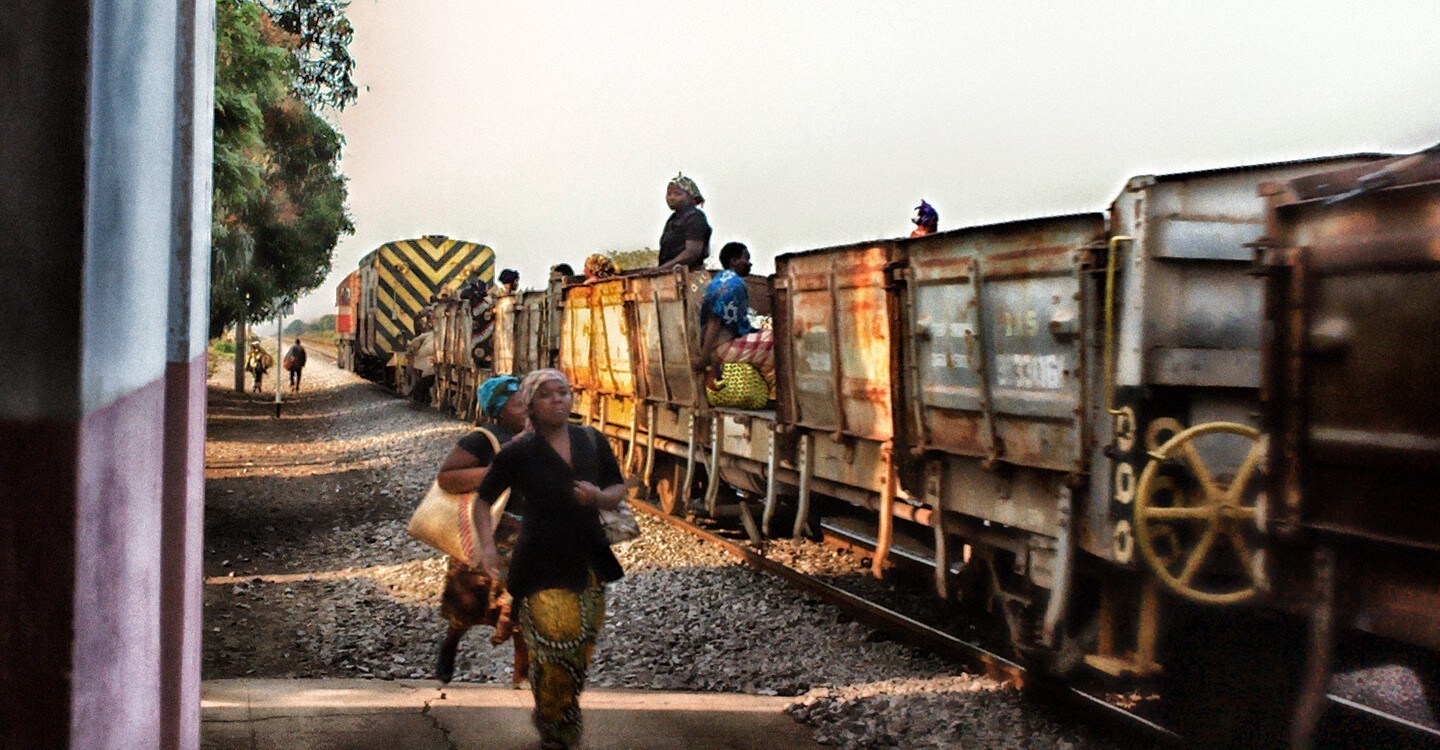
Similarly, Licínio Azevedo’s 2007 novel O comboio de sal e açúcar, which the author himself later adapted into a screenplay that he also directed as feature-length motion picture in 2016, emphasizes the ongoing nature of postcolonial conflict and identity formation during the Mozambican Civil War. The novel serves as an allegorical tale of continuous journey which symbolizes the incomplete search for peace in the independent nation which remains marked by sustained violence. Set aboard a train, the dangerous voyage of the tale represents the fixity of progress, symbolized by the tracks. However, those on board suffer constant setbacks by ambush and sabotage, both from within and without. Renamo guerillas destroy portions of the tracks and open fire upon the train, having learned about its movements from a traitorous informant. Simultaneously, the passengers are placed in further danger by the soldiers meant to protect them. As articulated in the opening citation of Azevedo’s novel, “Aqueles que os atacavam eram terríveis. Mas aqueles a quem eles defendiam, por vezes, achavam-nos piores.” (“Those who attacked them were terrible. But those they defended sometimes thought them worse.”) (Azevedo (2007), p. 6) Accordingly, Azevedo’s novel and film highlight the ongoing internal conflict which persisted post-independence. Moreover, the story exemplifies the didactic role of cultural production in the shaping of the collective self by demonstrating the need for unity amongst the train’s passengers in order to survive. Amidst the endless attacks they suffer, the passengers themselves remain responsible for repairing the sabotaged tracks, despite the absence of any skilled labor training in railway maintenance, in order to advance. Azevedo thus highlights the nation’s need to unify and collectively work forward.
Couto and Azevedo’s novels, along with their filmic adaptations, highlight the incompleteness of many of the ideals which were established throughout Mozambique’s War of Independence, along with the need for continued resistance to oppressive violence. These powerful travel narratives highlight the ongoing nature of nation building, the importance of remembering one’s past, and the need for collective action that remains particularly relevant amidst current national unrest.
References
Azevedo, Licínio de (2007). Comboio de sal e açúcar. Maputo, Moçambique: Editora Ndjira.
Azevedo, Licínio de (Director). (2016). Comboio de sal e açúcar. Moçambique: Ukbar Filmes.
Couto, Mia (1992). Terra sonâmbula. Lisboa, Portugal: Editorial Caminho.
Prata, Teresa (Director) (2007). Terra sonâmbula. Moçambique, Portugal: Filmes de Fundo/Ébano Multimédia.

Derek Allen is a Ph.D. Candidate in the Department of Spanish & Portuguese at UC Berkeley, studying Luso-Brazilian Literature and Culture with a Designated Emphasis in Film. At Berkeley, he has taught the Portuguese language and Lusophone literature and film courses. He spent two years as a volunteer service representative in Mozambique and Angola, and has also studied and conducted independent research in Portugal and Brazil.


Leave a Reply