
By Karol Alzate Londoño, Alejandra Decker and Gabriel Lesser
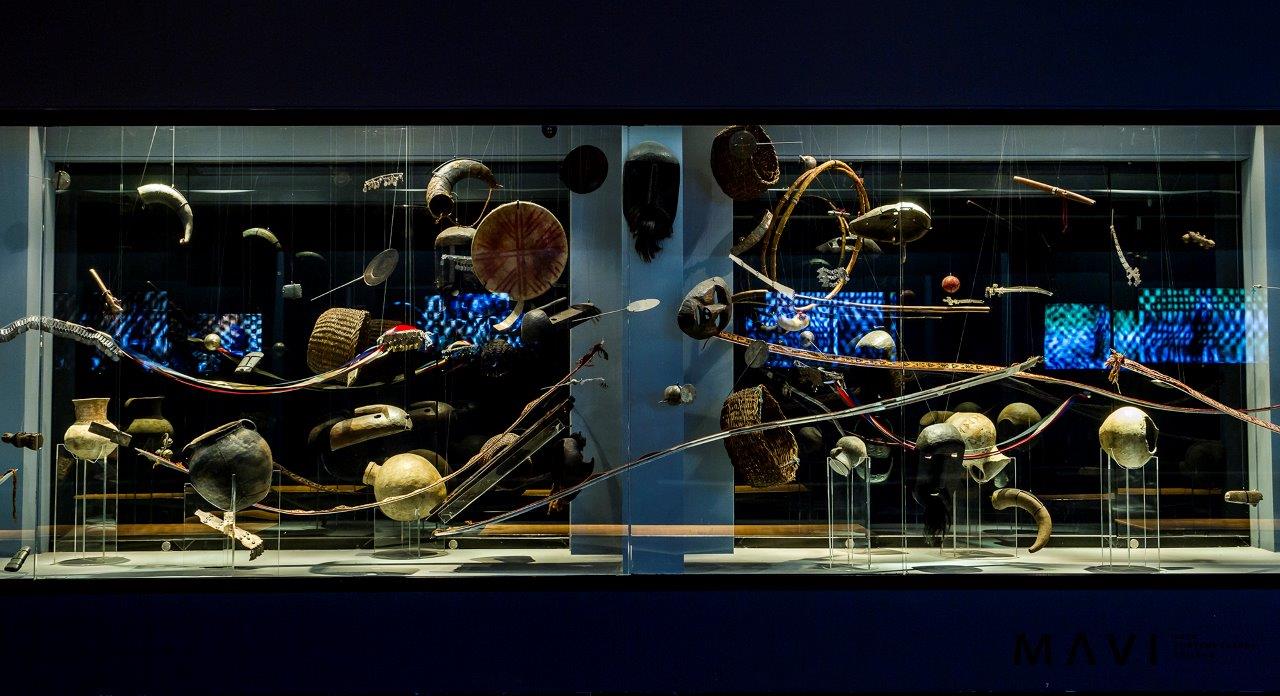
“The Archive and Its Forms in the Americas”, a two-day conference sponsored by the Center for Latin American Studies in collaboration with the Arts Research Center, the Center for Race and Gender, and the Latinx Research Center, brought together an interdisciplinary group of scholars and artists dedicated to rethinking our approach to archival studies. The conference opened with broad questions about the nature of the archive: What counts as an archive? Is the archive a repository or is it a topic of study? How do we reconstruct what doesn’t enter into the archive? How do we intervene into the archive? Challenge it? Read it along or against the grain? Does every archive have a counter-archive?
Our first panel asked us to begin by thinking about a living archive. Tiganá Santana (Universidade Federal da Bahia) and Francisco Huichaqueo came together in the panel “Activaciones estéticas del archivo” to push the participants to think of archives as something that does not exist in the past, but rather is in constant formation. For Santana, we find the archives in our performances and cultural manifestations, which allows us to listen to the present first and then activate systems of remembrance. For Huichaqueo, our current conception of archives limits our thinking of other forms of knowledge like dreams. Both of the panelists also proposed thinking about other-than-human bodies as witnesses. For Santana, the tree can be an archive of time, just as for Huichaqueo, the rocks can see.
The second panel of the conference, “Indigeneidad, negritud, y archivo”, proposed alternative archival methodologies for relating the lives and experiences of racialized communities in nineteenth-century Latin America. The two presenters reminded us that just as it is important to leave behind the traditional archive in order to not reproduce its violences, it is also important to return to state and administrative archives using “undisciplined strategies” of reading and interpretation. Laura Pensa (Brown University) examined cartographic archives from the Chaco region of Argentina and proposed that colonial studies should not limit itself to objects from the colonial period. Moving between past and present, she connected nineteenth- and twentieth-century maps to their colonial structures, pushing us to complicate the temporalities of the archive and unbind archival objects from a linear chronology. Pensa also demonstrated how Indigenous knowledge participated in the meaning and making of cartographies of the Chaco, often disrupting the cartographers’ attempts to definitively map Indigenous territories. Rachel Price (Princeton University) followed with an intervention into the aesthetic archives of nineteenth-century Cuba, presenting us with the methodological challenges of an archival project that seeks to recuperate the perspectives of enslaved people, women, and working-class subjects. Price proposed two strategies for responding to the incomplete nature of the archive: a centrifugal reading of fragmentary sources in administrative archives that reconstructs their intellectual and political context, and a turn to archives of theater, dance, and visual art made by Africans and Afro-descendants that are “hidden in plain sight.” Both presentations challenged the often-assumed silence of Black and Indigenous voices in Latin American archives while raising questions about the methods we use to engage with them.

The third Panel, “Género, archivo y frontera”, brought together two geographies often not thought of in conjunction. Through an archive of expansionism and borders, Cuba and Mexico were united in two panel presentations that asked us to think of the frontier as a space both dominated and deeply impacted by women. Bernardine Hernandez (University of New Mexico) led us into the archive of border bodies, in which she argues, sex was inseparable from power. And while sex itself might not have been explicitly mentioned, Hernandez pushed us as her audience to think about how it might be present otherwise. She walked us through how narratives of proper femininity among elite women were some of the first markers of capitalism in this Western frontier, demonstrating thereby how women, sex, and bodies made that West a capitalist space. Her wide array of archival sources brought us from nineteenth-century newspapers, to novels, and even to a reading of ghostly presences that appear in the archive. And as Hernandez took us through her own journey of dealing with how to write about and protect those “ghosts,” Daylet Domínguez (UC Berkeley), presented us with a ghostly figure of her own. Domínguez introduced us to Cora Montgomery, the pen name of Jane Cazneau, a well-known but little-studied nineteenth-century journalist whose bilingual work was at the center of U.S. annexationist narratives with regard to Cuba. While we normally think of women in the nineteenth-century archive as associated with the genre of the novel, Domínguez demonstrates in her work just how central Cazneau/Montgomery was within the journalistic space. She leads and publishes articles in the newspaper La Verdad, writing articles in both Spanish and English that address the Cuban people in the third person, as she powerfully advocates for the annexation of the island among a U.S. audience. Through the work of Cazneau/Montgomery, Domínguez pushed us to question how the form of the archive itself might allow for the invisibilization of such a figure. Her role, often reduced to translator, Domínguez argues, is in fact hidden almost in plain sight and thus through her, we see women actively crafting border policies and frontier narratives. Though we might think of border archives as masculine spaces, these two presentations asked us to unlearn those archival misconceptions.
In Panel 4, “Archivo, fugacidad y pérdida,” two presenters asked similar questions about the untold stories in archives in very different ways. Adriana Amante (Universidad de Buenos Aires) brought fire into the mix in as literal of a way as possible. In Argentina, like in other parts of Latin America, fires at museums and archives have tragically destroyed significant cultural patrimony. Amante examined some pieces that have been burned, but not completely destroyed, and theorized about the untold stories inspired by this type of material analysis of a book. Elena Schneider (UC Berkeley) spoke about her new research on a nineteenth-century Atlantic network that has received little scholarly attention: the Afro-Cubans who returned to the Bight of Benin. Her mulit-continental archival research has yield significant documentation on this group and adds to our understanding of Africans who returned from the Americas to their homelands, a movement which also included groups coming from the United States and Brazil.
The questions and debates that emerged from the presentations over the two-day conference show the importance of new scholarly approaches to the archive, especially given Latin America’s history of colonialism. Hopefully they will lead to fruitful collaborations and inspire new methodological practices for studying the past and present.
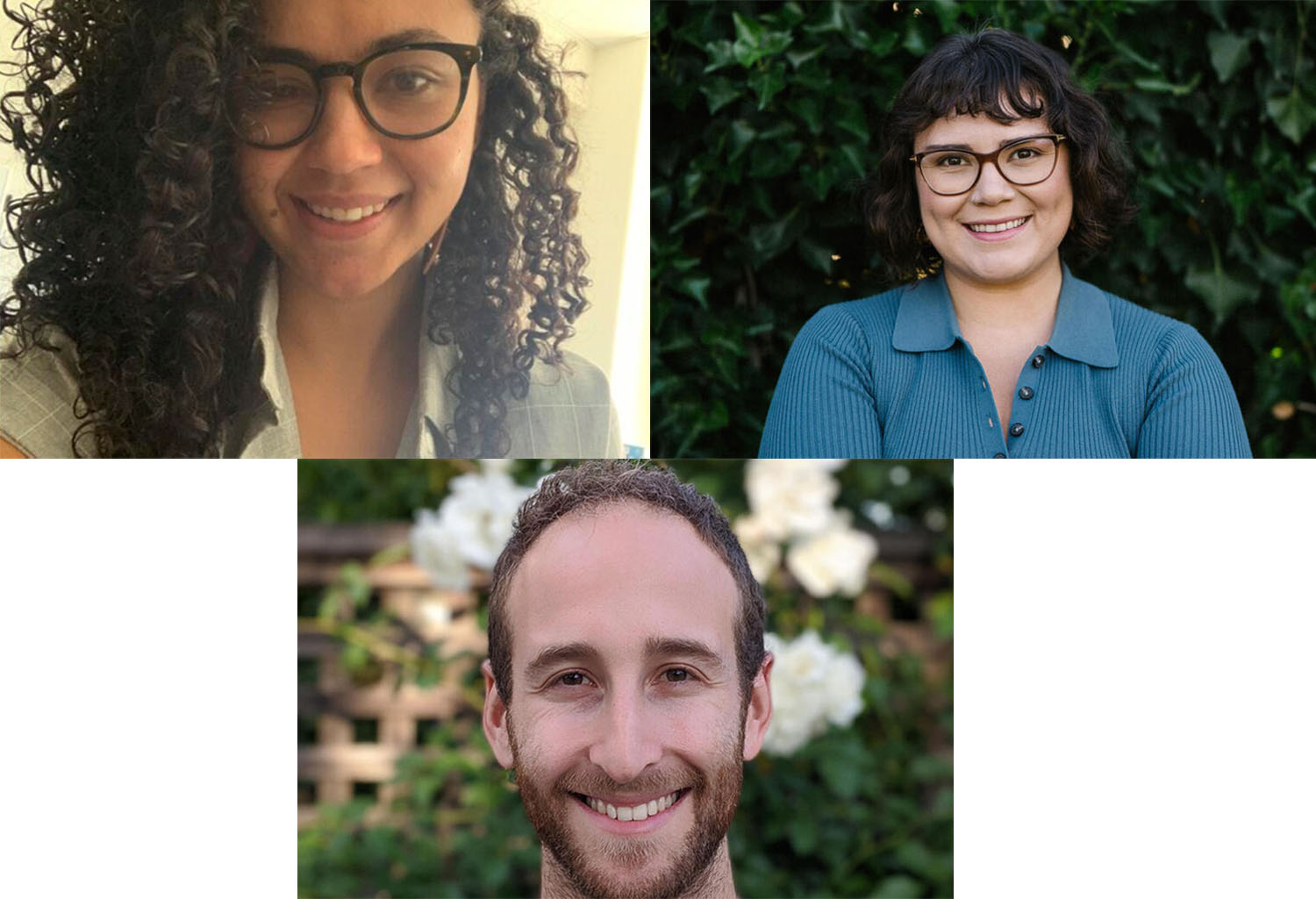
Karol Alzate Londoño is a fifth-year Ph.D. student in the Department of Spanish and Portuguese, and Alejandra Decker and Gabriel Lesser are Ph.D. students in Hispanic Languages and Literatures, all at UC Berkeley. They served as the commentators for “The Archives and Their Forms in the Americas” in January 2025.

Leave a Reply