

Puerto Rico’s Perpetual State of Emergency
By Angela Pastorelli-Sosa
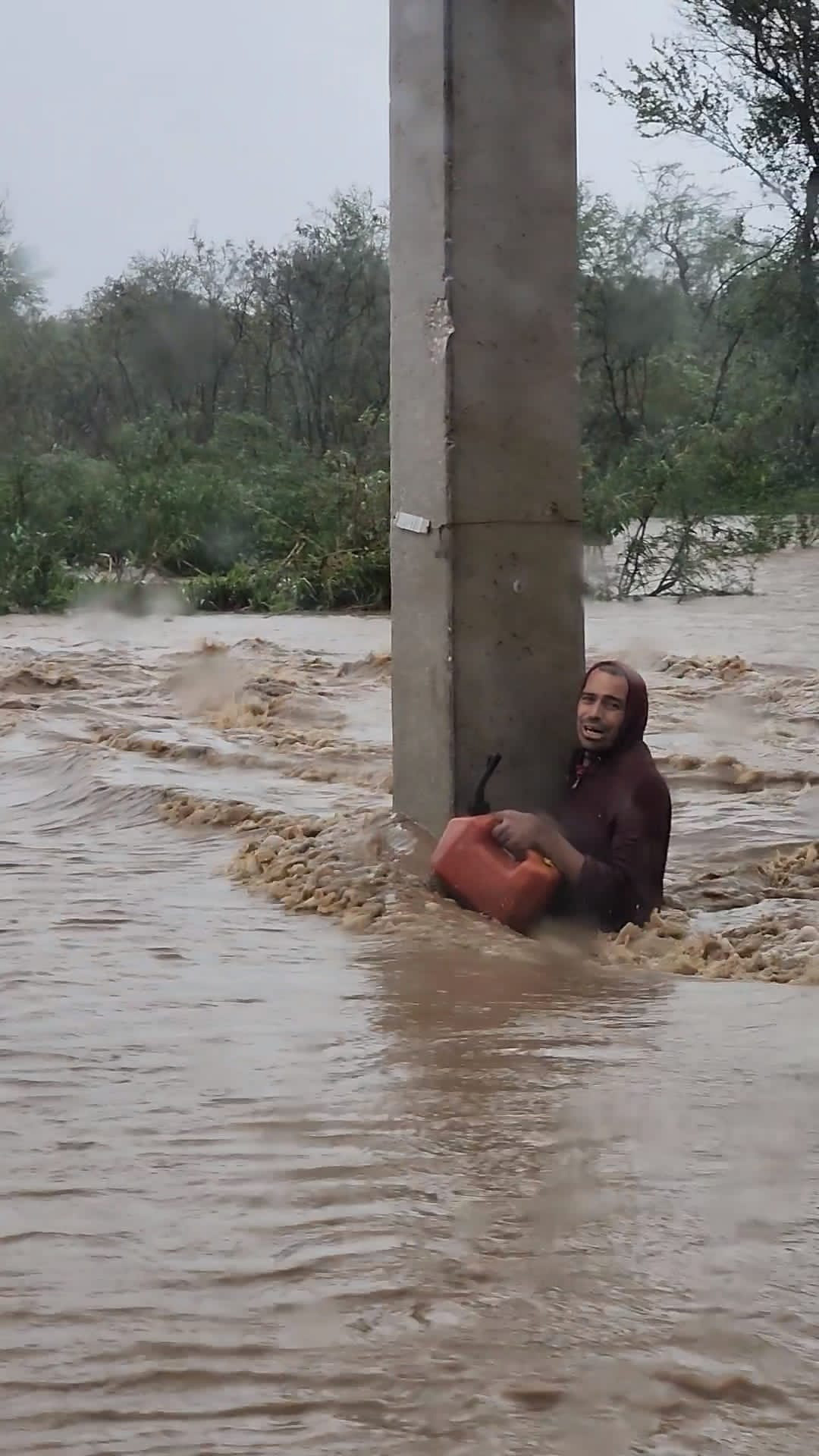
In September 2022, almost five years after Hurricane Maria, Puerto Rico was devastated by Fiona, another fierce hurricane. More than one million residents were without power, hospitals were running on generators, and more than 700,000 people had no running water.[1] While grassroots organizers and independent journalists across the Caribbean and the U.S. shared videos of flash floods and boat rescues in Puerto Rico, the death of a monarch dominated the mainstream news, highlighting the persistence of imperial legacies. The belated disaster relief following Fiona conjured memories of the enormous loss of life and the three-month long blackout following Hurricane Maria. That storm occurred during Trump’s presidency; his disaster relief tour consisted of the former U.S. president minimizing the initial death toll (which rose to 4,645 victims), throwing rolls of paper towels into crowds, and chastising Puerto Rico for how much recovering from the storm would affect U.S. domestic spending–even though Puerto Rico is a U.S. commonwealth. Puerto Rico’s natural disasters are inseparable from other burdens: the island’s poverty and massive debt; climate change; the deforestation of river basins making rural populations more vulnerable to flooding; failing infrastructure; and privatization of electricity imposed by the U.S.[2] In short, the island’s perpetual state of emergency and the lack of disaster relief are inseparable from the longer legacy of intervention in Puerto Rico by the United States.
The origins of U.S. intervention in PR
Puerto Rico is the world’s oldest colony. Christopher Columbus claimed the island, Boriken, for the Spanish Empire in 1493, after which he and his followers enslaved and massacred the island’s indigenous Taino inhabitants.[3] A strong movement for greater autonomy from Spain emerged in Puerto Rico during the nineteenth century, with the first rebellion — El Grito de Lares or the “Cry of Lares”—erupting in 1868.[4] The rebellion was not successful, but in order to relieve the tension throughout the island, a military court granted amnesty to the insurrectionists in 1869.
In 1897, Spain granted Cuba and Puerto Rico, its last two colonies, a broad array of rights including those under Title I of the Spanish Constitution, bestowing all the rights of Spanish citizens and giving universal suffrage to all men over the age of 25. On November 25, 1897, Spain approved the Carta Autonómica, which gave Puerto Rico the right of self-government.[5] The first elections under this new political arrangement were held in March 1898, but Puerto Rico was never able to self-govern because of U.S. intervention the following month. In April 1898, the United States declared war on Spain, in an effort to push Spain out of the Caribbean and the Pacific. On July 25, U.S. troops invaded Puerto Rico in the course of that war’s final campaign.[6]
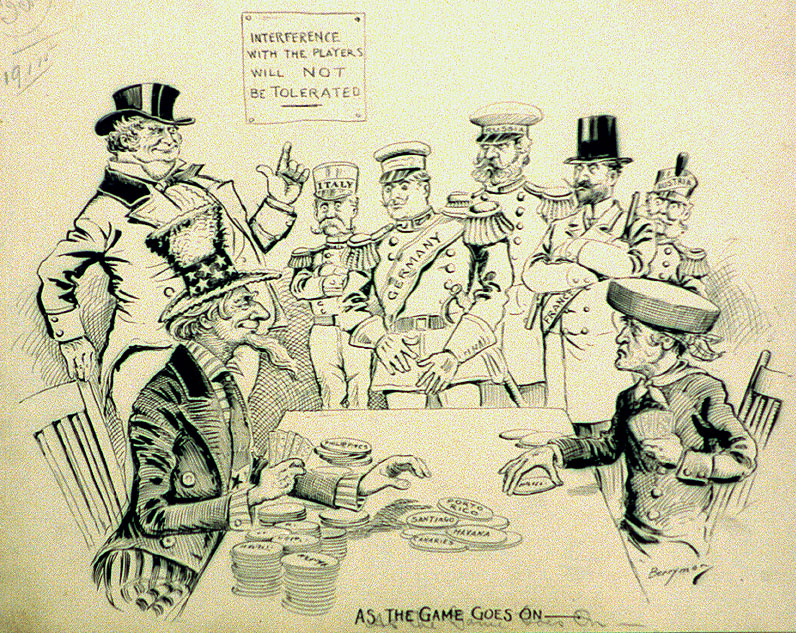
Puerto Rico became a protectorate of the United States following the Spanish-American War in 1898.[7] Many Puerto Rican leaders hoped that U.S. military occupation would result in either an autonomous political arrangement with or complete annexation by the United States.[8] These leaders found U.S. democratic ideals enticing and pushed for U.S. citizenship. Other political parties favored greater self-governance for Puerto Rico, but only the Nationalist Party (founded in 1922), and later the Partido Independentista Puertoriqueño (founded in 1946), called for the island’s absolute political independence and criticized the United States’s exploitative, colonial policies in the Western Hemisphere.[9]
In 1913, the U.S. defaulted on their promise to liberate Puerto Rico from colonialism, when Congress moved to replace the island’s existing peso with the U.S. dollar at a 7/10 discount. This financial manipulation wiped out 40% of the nation’s wealth, forcing small farmers and local businesses into debt and allowing foreign landholders to buy most of the land.[10] Even though the U.S. extended citizenship to Puerto Ricans in 1917, scholar Frances Negron-Muntaner discusses how the United States never intended to absorb the island’s “alien races” into their body politic.[11] The U.S. Supreme Court (1901-1922) drafted a set of doctrines which obscured the colonial status of unincorporated territories, such as Puerto Rico, whose sole purpose was to provide land and cheap labor for military and economic purposes.[12] For example, the U.S. only extended citizenship to Puerto Ricans so that they could be drafted to fight in World War I. In other words, a settler-colonial logic of extraction defines Puerto Rico’s relationship to the United States. The bodies of residents are seen as expendable; while Puerto Ricans can serve in the U.S. military, they cannot vote for the president, nor do they have voting congressional representation.
PR’s commonwealth status and Operation Bootstrap
In the wake of World War II and a global wave of decolonization, U.S. policymakers faced pressure to grant Puerto Rico increased autonomy. In 1946, President Harry S. Truman installed the territory’s first native-born governor. A year later, Congress granted residents permission to elect their own governors. Puerto Rico’s first elected governor, Luis Muñoz Marin, oversaw the transition of the island from a U.S territory into a commonwealth and the neoliberal paradise it is today.[13] In 1952, Puerto Rico became a estado libre asociado (free associated state). As a commonwealth of the United States, Puerto Rico receives little federal assistance and has limited voting power. While the island’s status is arguably exceptionalist, the spatial order dictated by the U.S. has led to poverty, migration, displacement, and gentrification, beginning with Operation Bootstrap.

(Photo courtesy of the Library of Congress.)
Muñoz Marin and Teodoro Moscoso, the first director of Puerto Rico’s Economic Development Administration, designed a series of economic initiatives in the 1940s and 1950s to transform Puerto Rico into an industrialized economy and lift many of the island’s residents out of poverty.[14] The initiatives, also known as Operation Bootstrap, advocated shifting towards an export-based economy, in which the bulk of the island’s production was aimed at the broader U.S. market rather than the smaller local market. The Puerto Rican government believed that the island’s economy could only develop and expand through foreign investment and, as such, many of the initiatives, such as the Industrial Incentives Act of 1947, provided tax exemptions to the corporations who had operations on the island .[15] Along with these exemptions, these corporations were also able to capitalize on the lower costs of labor on the island, which made doing business in Puerto Rico that much more attractive. U.S. manufacturers, mostly in textiles and food processing, flocked to the island during this period to take advantage of the tax incentives and cheap labor in the U.S. colony. Although Operation Bootstrap aimed to boost jobs, the reality was that there was rampant unemployment among the island’s rural workers who could not meet the demands for cheap, industrial labor. As a result, over 40,000 Puerto Ricans migrated annually between 1950 and 1960 to the East Coast of the continental U.S., in pursuit of better-paying industrial jobs in the cities and farm work.[16]
The debt crisis and Hurricane Maria
Scholars have argued that during the 1950s and 1960s, Puerto Rico became a testing ground for what we now call neoliberalism, a policy model that favors private enterprise and seeks to transfer control of economic factors from the government to the private sector.[17] Because Operation Bootstrap supplied U.S. corporations with cheap labor, federal tax exemptions, and little oversight over work conditions, Puerto Rico was able to experiment with “maquiladora-style factories” years before the North American Free Trade Agreement (NAFTA) made corporate offshoring a more global phenomenon.[18] When NAFTA went into effect in 1994, manufacturers began to look for cheap labor elsewhere, in areas such as Mexico’s northern border region. In 1996, the U.S. began to phase out the tax breaks aimed at Puerto Rico, to balance the federal budget and fund an increase in the U.S. minimum wage. The tax incentives that initially lured manufacturers to the island were eradicated between 1996 and 2006, resulting in the flight of U.S. capital flight, with a subsequent loss of income that began to unravel Puerto Rico’s newly industrialized economy.[19] When the global economy collapsed in 2008, officials desperately began to sell the island’s municipal bonds at astronomical interest rates to try to make up for lost government revenue. These municipal bonds were set up to benefit the bond holder, as they are exempt from federal, state, and local taxes, and Puerto Rico would always be held liable to repay them, since as the island’s government cannot declare bankruptcy.[20] The bonds propelled that government into a deeper state of financial precarity and increasing debt. At around the same time as the bond sales, the government also laid off thousands of public sector workers and closed more than three hundred public schools.[21] These austerity measures only exacerbated the island’s economic crisis, increasing Puerto Rico’s debt to more than $70 billion by 2016. That year, the U.S. Congress passed the Puerto Rico Oversight, Management, and Economic Stability Act (PROMESA) and established a Financial Oversight and Management Board, mainly composed of Wall Street executives, to manage the island’s finances and ensure debt repayment.[22] In order to pay back creditors, the board, which is commonly referred to as La Junta, began imposing drastic cuts in essential human services, further devastating an already-devastated island.[23] With the rapid deindustrialization of the island, high structural unemployment, and cuts in funding leading to deterioration of basic infrastructure, the island was no match for Hurricane Maria.

As Negrón-Muntaner points out, Maria exposed the predatory violence upon which contemporary Puerto Rico is built: “a political economy catering exclusively to U.S. corporate interests, a tax structure that exempts almost all-American economic activity, and a local elite that takes what it can at the expense of the larger community’s needs.”[24] The lack of relief spending and humanitarian aid following Maria, along with Donald Trump’s racist, stereotypical tirades about PR being “lazy,” highlighted the central issue with selling the island’s bonds: their triple-tax exemption means the island’s peoples are triply expendable, since they are non-voting citizens — the local, state, or federal governments feel no financial responsibility to these non-voting citizens.[25] In the aftermath of the hurricane, Puerto Rico has been left in a more precarious situation than ever before given that: nearly 3,000 people died in the storm and its immediate aftermath, many more died later from drinking contaminated water; over 200,000 people have left the island as schools remained closed and the sick died in hospitals; unemployment reached 80%; and banks foreclosed on thousands of homes.[26] The austerity-induced vulnerability was ultimately used to justify further privatization in Maria’s aftermath.
Gentrification and LUMA
Recent iterations of colonial capitalism include the increased gentrification of the island and the privatization of electricity. Acts 20 and 22 of 2012 provide tax exemptions to businesses and investors that relocate to, or are established in, Puerto Rico.[27] This means that U.S. citizens can move to Puerto Rico, become bona fide Puerto Rican citizens — which is not difficult because they do not need a residency permit — and have their Puerto Rico-sourced income be exempt from U.S. federal and state income taxes while still receiving benefits such as Medicare and Social Security. What typically happens is that these U.S. citizens relocate easily to Puerto Rico, keep their source of income in the United States (especially with the expansion of remote work that began during the Covid-19 pandemic), and develop high-end rental properties such as AirBnBs that are not subject to income or property taxation.[28] While “ex-pats” profit from these economic ventures, native Puerto Ricans, who as of 2020 had a median household income of $21,058 and experienced a poverty rate of 44%, are increasingly displaced.[29]
In addition to displacement due to rent hikes and a lack of equal housing opportunities, Puerto Ricans are also reeling from the recent privatization of electricity. Puerto Rico’s power utility has been a source of concern for years. Managed by the government-owned Puerto Rico Electric Power Authority (PREPA) until recently, there was consistent under-investment in basic maintenance, which made infrastructure more vulnerable to recurring hurricanes. Hurricane Maria damaged over 80% of Puerto Rico’s electrical grid, and with inadequate disaster and relief funding, the power system did not recover.[30] In June 2021, LUMA Energy, which is co-owned by American and Canadian corporations, assumed control of the power grid. Puerto Ricans spend 8% of their income on electricity in comparison to the average mainland U.S. citizen who spends 2.4%.[31] Despite spending an increasingly disproportionate amount on this essential service, Puerto Ricans continue to report recurring power surges that interfere with critical medical care, disrupt access to education, and destroy property.[32] Activists centering environmental justice and decolonization have pointed out that LUMA’s ultimate goal is to rebuild a centralized transmission system that connects fossil fuel fired plants in southern Puerto Rico to the San Juan metro area.[33] These activists argue that LUMA’s approach, relying on fossil fuels to prop up an antiquated power system, will only contribute to Puerto Rico’s ongoing climate crisis, and they are trying to wrest control of federal disaster funds from LUMA in order to support renewable energy efforts.[34]
A possible end to U.S. Intervention in PR
In July 2022, congresspeople and senators in Washington introduced the Puerto Rico Status Act. This bill would give Puerto Rico the opportunity to reconsider its relationship with the U.S. In comparison to such referendums in the past, which sought to rectify Puerto Rico’s commonwealth status by choosing between statehood and independence, the Puerto Rico Status Act offers three options for a status election vote: full statehood, sovereignty in free association with the United States, or full independence.[35] Although the House Committee on Natural Resources passed the act in late July 2022, Congress did not act on the measure, in part because of intense bipartisan lobbying against the bill.[36] Congress shelved the bill, and the island was subsequently struck by the catastrophic Hurricane Fiona, which wiped out more infrastructure and left parts of the island without power for over a week.
Five years after Hurricane Maria, neoliberalism, colonialism, and climate change have coalesced in Puerto Rico once again to expose the island’s poverty, failing infrastructure, the increased vulnerability of rural populations to flooding due to deforestation, LUMA’s inability to properly manage the island’s power grid, and the slow progress of disaster relief efforts. And along with all of this, Puerto Rico still does not have the opportunity to vote on its status. The Puerto Rico Status Act was reintroduced in the House in April 2023, and the Senate must schedule a floor vote for it to move the approval process forward. The bill suggests that the plebiscite should be scheduled for November 2025.[37] Large parts of the population hope that this plebiscite will lead to the end of U.S. intervention in Puerto Rico; my own personal hope is that it leads to a sovereign status and decolonial future. Only then can the island begin to recover and heal from its perpetual state of ecological and economic emergency.

Angela Pastorelli-Sosa is a Ph.D. candidate in the History of Art Department at the University of California, Berkeley. She works on modern and contemporary art of the Americas, with a focus on the interactions between art, geographic and social space, and racial formation. Angela was a CLACS Graduate Affiliate in 2022-23.
NOTES
[1] Laura N. Pérez Sánchez, “In Remote Parts of Puerto Rico, Hurricane Fiona Made Life Even Harder,” New York Times, Nov. 13, 2022.
[2] Bianca Graulau, “Meet Puerto Rican Journalist Bianca Graulau, Featured in Viral Bad Bunny Video on Injustices in PR,” interview by Amy Goodman, Democracy Now!, November 30, 2022, https://www.democracynow.org/2022/11/30/puerto_rico_blackouts_power_grid_luma.
[3] Michelle Joan Wilkinson, “Haciendo Patria: The Puerto Rican Flag in the Art of Juan Sánchez,” Small Axe 8, no. 2 (2004): 62.
[4] Marisabel Brás, “In Search of a National Identity: Nineteenth and Early-Twentieth Century Puerto Rico,” Library of Congress, accessed May 2, 2023, https://www.loc.gov/collections/puerto-rico-books-and-pamphlets/articles-and-essays/nineteenth-century-puerto-rico/rebellion-of-1868/.
[5] Ibid.
[6] Ibid.
[7] Wilkinson, 62.
[8] Isar P. Godreau, Scripts of Blackness: Race, Cultural Nationalism, and U.S. Colonialism in Puerto Rico (Champaign, IL: University of Illinois, 2015), 12.
[9] Ibid.
[10] Frances Negrón-Muntaner, “Blackout: What Darkness Illuminated in Puerto Rico,” Politics/Letters, March 2, 2018. http://quarterly.politicsslashletters.org/blackout-darkness-illuminated-puerto-rico/.
[11] Ibid.
[12] Ibid.
[13] Wilkinson.
[14] Juan Ruiz Toro, “Puerto Rico’s Operation Bootstrap,” Chapter 12. Strategies for Economic Development, Modern Latin America, 8th Edition Companion Website, Brown University Library, accessed May 2, 2023, https://library.brown.edu/create/modernlatinamerica/chapters/chapter-12-strategies-for-economic-developmen/puerto-ricos-operation-bootstrap/.
[15] Ibid.
[16] Ibid.
[17] Many neoliberal policies support free trade and focus on limiting government spending, government regulation of industries, and public ownership. Neoliberalism’s emphasis on economic efficiency has encouraged globalization, the flow of financial products, goods, technology, information, and jobs across nation-state borders that is fostered through free trade. Critics of neoliberalism and globalization point out that it is the exploitative labor conditions in peripheral countries and former colonies that enable economically powerful countries to access low-cost labor and resources without impediment. The “cheap labor” that is afforded to former imperial powers and metropoles is an extension of colonialism’s extractive logic and slavery.
[18] Alex Standen, “Confronting Colonial Capitalism,” review of The Battle for Paradise: Puerto Rico Takes on the Disaster Capitalists, by Naomi Klein, and Policing Life and Death: Race, Violence, and Resistance in Puerto Rico, by Marisol LeBrón, New Labor Forum, February 2020, https://newlaborforum.cuny.edu/2020/02/01/confronting-colonial-capitalism/.
[19] Ibid.
[20] Greg Depersio, “The Origins of the Puerto Rican Debt Crisis,” Investopedia, January 31, 2022, https://www.investopedia.com/articles/investing/090915/origins-puerto-rican-debt-crisis.asp.
[21] Standen, “Confronting Colonial Capitalism.”
[22] Ibid.
[23] Ibid.
[24] Negrón-Muntaner, “Blackout: What Darkness Illuminated in Puerto Rico.”
[25] Ibid.
[26] Ibid.
[27] Travis Lynk, “Puerto Rico Tax Incentives: The Ultimate Guide to Act 20 and 22, last updated April 12, 2023, https://relocatepuertorico.com/puerto-rico-tax-incentives-the-ultimate-guide-to-act-20-and-act-22/.
[28] “Are Puerto Ricans Being Pushed Out?” Bianca Graulau. December 28, 2021. Video, 15:36:00, https://www.youtube.com/watch?v=YGXtWpCOiC8&ab_channel=BiancaGraulau.
[29] “Puerto Rico,” Data USA, accessed May 01, 2023, https://datausa.io/profile/geo/puerto-rico/.
[30] Gloria Gonzalez, “Fiona’s outages rekindle anger over Puerto Rico’s privatized electric grid,” Politico, September 19, 2022, https://www.politico.com/news/2022/09/19/fiona-puerto-rico-electric-grid-00057637.
[31] Ibid.
[32] Ibid.
[33] Ruth Santiago, ” Hurricane LUMA: Puerto Ricans Fight Big Coal & Privatized Energy Amid Climate Disasters, Blackouts,” interview by Amy Goodman, Democracy Now!, November 3, 2021, https://www.youtube.com/watch?v=RPDtLg8jVJI&ab_channel=DemocracyNow%21.
[34] Ibid.
[35] Nicole Acevedo, “Bill to reintroduce Puerto Rico’s territorial status reintroduced in the House,” NBC News, April 20, 2023, https://www.nbcnews.com/news/latino/puerto-rico-status-bill-house-reintroduced-territory-rcna80628.
[36] Ibid.
[37] Ibid.

Leave a Reply