
By Dennis Best
In completing my Master of Science degree in 2017 as part of the Energy and Resources Group at the University of California, Berkeley, I used spatial data to track the distance of historic fire events to population centers across California. With departmental funding and as part of my doctoral work, I travelled to Central Mexico to visit the States of Jalisco and Michoacán, meeting with fellow researchers examining fire, forest and distributed energy systems. To some extent, I discovered what I had anticipated in the site visits and dialogues I had with researchers at University Nacional Autonoma de Mexico (UNAM) and at the University of Guadalajara. I observed a diverse use of forest, field and food residues at varying scales and developed an understanding of the unique beauty of traditional ways of cooking and the challenges of energy transitions in the context of global change and climate effects. What I did not expect was the discovery of something that increased my commitment to the work that I had begun in examining the gaps in economic and geographic modeling of global human–fire interactions.

As I sat with Professor Enrique Jardel of the University of Guadalajara, one of the premier forestry scholars in North America, talking about resource management and forest fires in Jalisco, he told me something that had a great impact on how I learn and develop my research and my work, something remarkable and unforgettable. Speaking in Spanish, he told me, “Well, you are from here, my research team is not from here.” I had to sit with that while he continued to speak. Yes, it is true my mother came from Jalisco, as did mis abuelos (my grandparents), and I did spend time as a child in my mother’s town, but I was born and raised in northern California, in the Santa Clara Valley. How could I also be from Jalisco?
And I have never forgotten his words, they made me and others I know feel included almost immediately. The others were my ancestors, mi abuela y mi abuelo y mas (my grandmother, grandfather, and more). My grandfather first came to California from Jalisco as part of the Bracero Program in the first years of that war effort. Like many that came after, the program was a mixed blessing for families. Families were separated, sometimes broken, and many braceros lost their lives in transit or as a consequence of harsh and unfair working conditions. For some workers and their extended families, however, things perhaps turned out better. These oral histories are recorded in the Bracero History Archives, as well as in other spaces, places, and family traditions. These stories also exist in our landscape histories, recorded in the trees, stumps, and the soil, in photographic images, artwork, and in other scientific field analysis methods.
Every day, as we understand more about the connections across scales and geographies and explore new responsibilities in stewardship while making space for many diverse peoples and practices, another scholar’s words are brought to mind. On that same trip, Diego Salicrup, a researcher at the Reserva Biosfera Mariposa Monarcas (Monarch Butterfly Biosphere Reserve) emphasized to me the importance of building and restoring trust between peoples when it comes to field research in fire ecosystems and forest management. On his advice, in 2018 I made a brief site visit to that biosphere reserve in Michoacán, an important migration site for the North American Monarch. Along the way, stories of migration, connectivity, belonging, and safe transit were foremost in my mind.
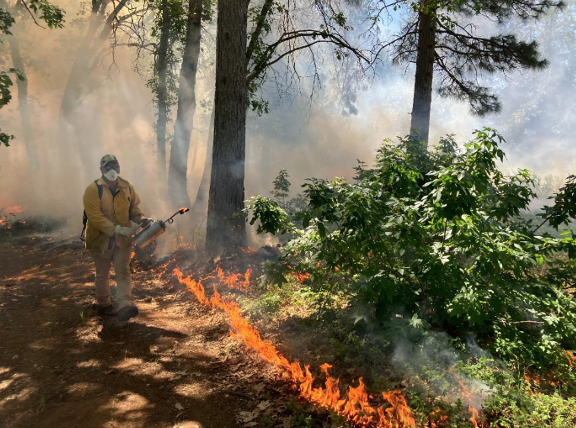
In 2023, as a PhD candidate and Graduate Affiliate of the Center for Latin American Studies (CLAS) at UC Berkeley, I focused on expanding work that I presented at the 2021 Association for American Geographers (AAG) Conference, entitled “Bracero Burning,” an economic geography of fire, examining the origins and institutional histories of the Bracero migrant labor program during the mid-20th Century. This work investigates the institutional and ecological impacts of this policy on the use of fire across North American geographies. Transformations in how systems internalized or used fire interacted with the availability of labor and the migrations that are foundational in California’s economic history.
Specifically, my geographic work examines the labor migration policies and their origins in the context of the use of traditional fire practices on the landscape and the “internalization of fire” through the rise of industrial farming and increased industrial intensity across economies and landscapes of North America. This internalization was supported by the expanding migrant labor workforce and centralization of markets and networks. My work examines historical archives and uses ethnographic field knowledge to understand the practices and tradeoffs in labor intensity and land use, the nature of transport systems, and implications for shifts in fire ecology and other indicators in the post-World War II period. While I was at CLAS in spring 2023, I also initiated a Fire Research Working Group, soliciting feedback from scholars of Nahuatl and other areas of inquiry on the developing language of fire across disciplinary academic frames related to our evolving interpretations of geographic and environmental histories. Gracias y Tlazocamati to the staff at the Center for Latin American Studies (CLAS) at UC Berkeley, the University of Utah y los otros! Timmoitazceh!
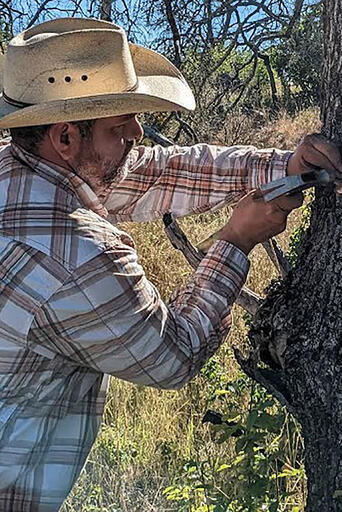
Dennis Best was a CLAS Graduate Affiliate in 2022-23 as an economic geographer working at the intersection of fire ecology and decision. His most recent work is framed by considering historic immigration policies, operational decisions, labor and resource management in landscapes across fire ecologies of North America. Dennis received his MS in Energy and Resources at UC Berkeley in 2017 and his BA in International Relations and East Asian Studies at the University of California, Los Angeles.

Leave a Reply