
By Carmen Muñoz
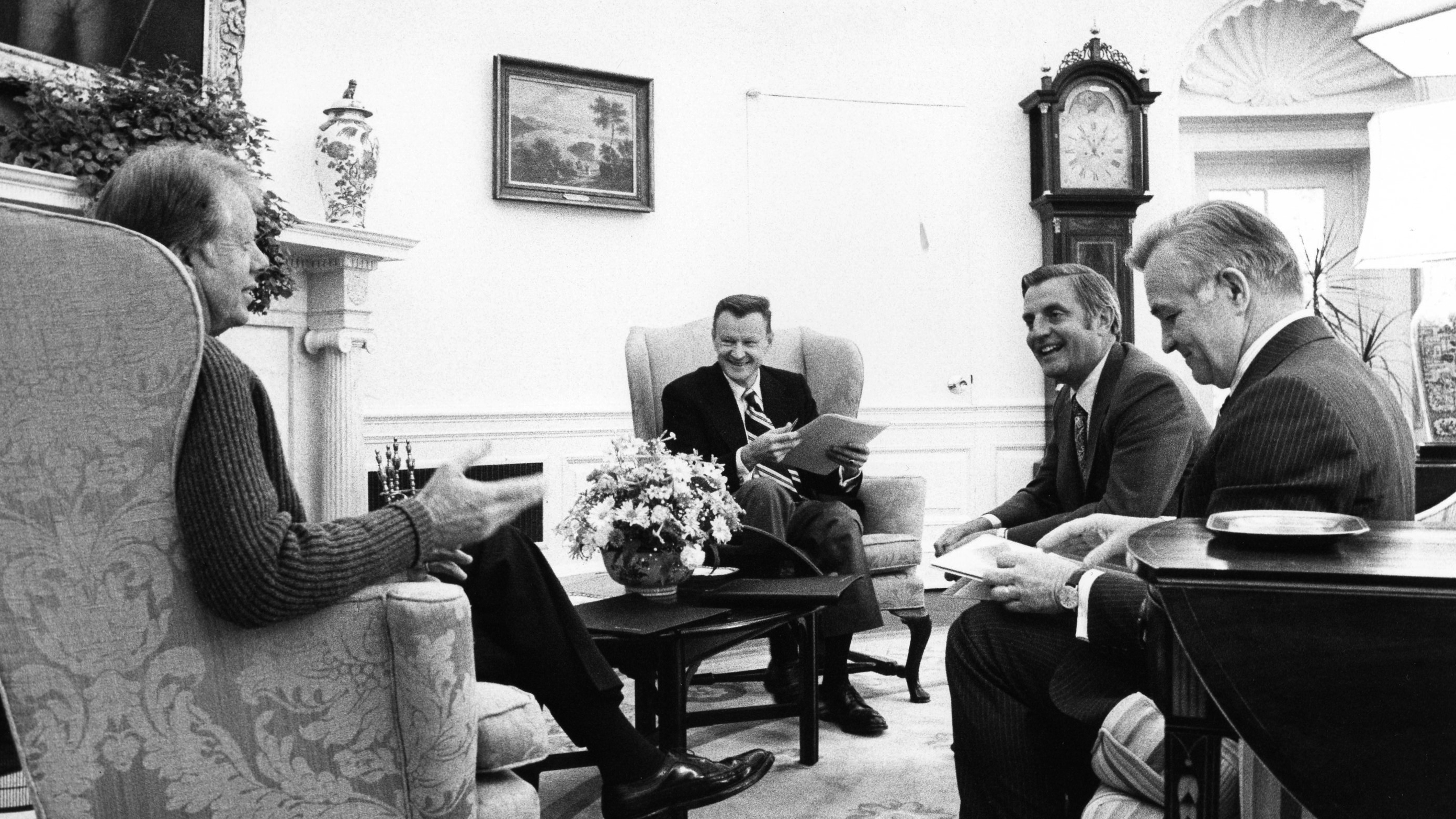
Jimmy Carter will be the subject of much commentary in the coming months. 1 Discussions of his political life frequently juxtapose his perceived presidential failures with his general esteem as an ex-president. Carter redefined what being an ex-president can mean, and set a high bar for what can be accomplished post-presidency. Yet, his presidency is assessed as at best unfinished, and at worst, failed. One thing not often said is that his foreign policy was visionary.
The Carter Administration had an important vision for the way in which the United States should interact with the world, and represented in many countries the values that Americans are supposed to espouse. This was perhaps most visible in Latin America, where he aspired to change U.S. assumptions and policies with a new foreign policy agenda. Carter’s Latin America Doctrine stressed non-intervention, human rights, globalism, bilateralism, and the diversity of the region. This shift away from the zero-sum game which had dominated relations with the region largely stands as the paradigm for U.S. policy toward the region today.
For decades, the U.S. relationship with the region was grounded in the Monroe Doctrine, which resulted in repeated actions to protect U.S. interests in its “backyard.” The Cold War fight against communism added a new ideological justification for interventionist policies. For Latin Americans, the principles of peace, sovereignty, and individuality were central to their identity. Carter came to represent the possibility of a new era of U.S.-Latin America relations, moving away from the paternalistic, interventionist, and realpolitik policies of previous presidencies. It also helped that Jimmy Carter was the first president able to speak Spanish since Thomas Jefferson.
To demonstrate his administration’s change in direction, Carter invited Mexican President José López Portillo to be his first state visitor to Washington in February 1977. Carter also sent his wife, Rosalynn, to seven nations throughout Latin America in May and June 1977, where she gave speeches expanding on many of his principles. Carter himself made two tours of the region during the first half of 1978. 2
President Carter presented his new foreign policy approach toward Latin America in a speech to the Organization of American States on Pan American Day, April 14, 1977. 3 Three basic elements would guide U.S. policy: first, a high regard for individuality and sovereignty; second, a respect for human rights; and finally, a focus on “issues which affect the relations between the developed and the developing nations.” 4
Following this speech, Carter signed Protocol I of the Treaty of Tlatelolco, Latin America’s pact on the nonproliferation of nuclear weapons, and the American Convention on Human Rights. 5 He also began applying pressure to non-democratic nations and those that violated human rights. This initiative was taken seriously abroad: in Haiti, for example, president-for-life Jean Claude Duvalier released political prisoners and improved atrocious jail conditions just after Carter’s election in 1976 (and then regressed after Carter’s re-election defeat in 1980.) 6

Once in office, Carter also immediately prioritized treaty negotiations with Panama over the status of the Panama Canal, which he hoped would signal the beginning of a new chapter. The Republican Party, however, adopted the Canal agreements as a partisan issue and injected them with symbolic meaning, igniting a politically charged national debate over their ratification. Ronald Reagan exploited the issue in his 1980 presidential campaign and regularly stated, “We bought it, we paid for it, it’s ours and we’re going to keep it.” 7 Many Americans felt that relinquishing the canal was an unnecessary surrender, and an admission of a decline in U.S. power. Carter, however, repeatedly stressed to Americans that, “We do not have to show our strength as a nation by running over a small nation.” 8
The Canal issue contributed to Carter’s precipitous drop in voter approval: Gallup reported support falling from 75 percent in March 1977 to 40 percent in mid-April 1978. 9 Carter nonetheless stuck to his policy, recognizing that it was time to re-evaluate Theodore Roosevelt’s Big Stick Diplomacy and the original treaty of 1903, which had not been seen or signed by Panamanians. 10 As National Security Advisor Zbigniew Brzezinski noted, for Panamanians the treaty was an “act of emancipation and not just a settlement of the canal issue.” 11
After heavy campaigning by the Carter Administration to secure majority approval in both Houses, the treaty entered into force on October 1, 1979, giving Panama full control of the canal on December 31, 1999. 12 Although this battle proved politically costly both to Carter and the senators that supported it, the Panama Treaty was perceived around the world as proof of a new phase in U.S. relations with Latin America, and by extension the Third World. A joint statement by the presidents of Mexico, Venezuela, Colombia, Costa Rica, and Jamaica praised “the spirit that has guided President Carter in his handling of the canal negotiations and his timely understanding of the relationship between a happy conclusion to the talks and the strengthening of friendship and cooperation in the hemisphere.” 13

But his efforts to recast the U.S. relationship with Latin America did not stop with Panama. One of Carter’s most ambitious goals was to explore the normalization of diplomatic relations with Cuba. Carter recognized the diplomatic price for isolating Cuba and the ineffectiveness of the embargo in advancing U.S. interests. He also did not want U.S.-Soviet issues to dominate his foreign policy toward and relationship with Cuba, and felt that normalization of relations could be used as leverage for Cuban concessions on the basis of reciprocity.
No president – until President Barack Obama – made such a concerted effort to normalize relations with Cuba. Carter was the only president to issue a Presidential Directive explicitly calling for a new course of policy: “I have concluded that we should attempt to achieve normalization of our relations with Cuba. To this end, we should begin direct and confidential talks in a measured and careful fashion with representatives of the Government of Cuba.” 14
In the following years, Fidel Castro and Carter were in contact via letters and intermediaries. In a letter to Castro on February 7, 1978, Carter stated, “As you know, I have hoped it would be possible for you and me to move towards full normalization of relations, and I would like to see progress made in removing the obstacles that impede forward movement.” 15 Castro responded on February 26, 1978, stating, “I received your personal memo with great esteem. I truly appreciate the gesture and highly value the manner in which, in contrast to previous leaders of your country, you have decided to establish this constructive dialogue with us.” 16
Carter took some important first steps down the long path toward normalization. In January 1977, he terminated SR-71 reconnaissance overflights of Cuba, which had been in operation since the missile crisis in 1962. 17 Carter also removed travel and spending restrictions, allowing 110,000 Cuban exiles to visit Cuba in 1979. 18 U.S. and Cuban representatives conducted the first direct negotiations since diplomatic relations were broken in 1961, discussing fisheries and maritime agreements. 19
In May 1977, Carter and Castro agreed to open interest sections in third country embassies (Czechoslovakia in Washington D.C. and Switzerland in Havana), which opened on September 1, 1977. 20 In an effort to increase cultural exchanges through sport, in 1977 a basketball team from South Dakota became the first American sports team allowed to compete in Cuba since 1960. 21 In January 1978, Cuban Border Guard and U.S. Coast Guard representatives met in Havana to discuss cooperation in maritime rescue, drug interdiction, and anti-terrorist efforts. 22
Perhaps the most significant accomplishment was the release of thousands of Cuban political prisoners, after a sixteen-year period in which Castro had not given amnesty to a single such prisoner. Despite many diplomatic and logistical challenges, Carter emerged as an ally and a voice for those who were incapable of standing up for their own rights.
While in office, Carter received countless letters attesting to the impact of his human rights policy. Ofelia Lima, the mother of a Cuban imprisoned since February 1964, smuggled a homemade Christmas card signed by all the political prisoners in the Boniato prison out of Cuba. 23 The handwritten card stated, “We, Cuban political prisoners, send our appreciation for your constant concern for the freedom of all political prisoners and for your courageous defense of Human Rights all over the world.” 24
The popularity of Carter in Latin America which resulted from his shift in foreign policy and commitment to human rights is often overlooked, overshadowed by the crises that later defined his presidency. When fifty-two Americans were taken hostage in Tehran during Iran’s tumultuous Islamic Revolution in November 1979, and the Soviet Union invaded Afghanistan a month later, Carter’s foreign policy took a decided shift. As the Cold War flared, critics launched attacks against Carter, arguing that his “idealistic” and “naïve” foreign policy was the cause of the recent events. In a public opinion poll taken in mid-1980, 75 percent of Americans gave Carter an overall negative rating, and 82 percent disliked his foreign-policy decisions. 25 The remainder of Carter’s presidency was consumed in securing the release of the hostages and mobilizing a traditional security agenda.
Robert Pastor, Carter’s Latin American specialist on the National Security Council, posited, “Carter’s policies can be viewed as trying to define a post-Cold War world a decade too soon.” 26 When Carter entered the White House, he did not want to view all foreign policy issues through the lens of the Cold War. But between the events of 1979 and his re-election campaign, Carter had to abandon many of his foreign policy objectives, forced to adopt a more aggressive stance toward the Soviet Union and Cuba.
As Carter scrambled to cope with domestic pressures and multiple crises around the world, he was forced to pay decidedly less attention toward Latin America than he had in the beginning of his presidency. With an increase of Cuban troops in Africa in 1979, Carter’s hope to establish diplomatic relations with Cuba became politically unrealistic. The Mariel Boatlift – the mass emigration of Cubans to the United States by boat in 1980 – ended the possibility of negotiations with Cuba.

Carter was elected and came to Washington because, after the Vietnam War and Watergate, the American public sought a president who embodied American values of peace and integrity. Carter left Washington because the American public sought a president who embodied U.S. power and strength. Despite the troubles with Iran and the Soviet Union, Carter’s administration represented an important moment in U.S. foreign policy toward Latin America that is often overlooked, because his brief presidency fell between the much more “memorable” presidencies of Richard Nixon and Ronald Reagan. But Latin Americans have not forgotten.
Thanks to Jimmy Carter, Latin Americans felt something profound had changed in the United States – if just for a moment. The Carter Administration recognized the need to embrace the diversity of the region. This was lost in the next presidency; after returning from a trip to Latin America in 1982, President Reagan told reporters, “Well, I learned a lot. You’d be surprised. They’re all individual countries.” 27 Carter also avoided emphasizing the asymmetries of power between the U.S. and Latin American countries and talking about American exceptionalism as defined by American military prowess and influence.
Carter’s foreign policy and the significant treaties and agreements he brought to fruition between the U.S. and Latin American nations during his presidency were in many ways ahead of their time. As Pastor reflected, “The Carter administration did not achieve as much on a North-South agenda as it had hoped, but it accomplished more than Congress would support.” 28 Although those policies were at times inconsistent and did not survive the Cold War, they were a break from the assumptions of previous presidents, and largely stand as the paradigm for U.S. foreign policy in Latin America today.

In this sense, Carter was a visionary: he imagined a new relationship with the hemisphere at a time when there were few key interests in the region to drive this change. Unlike Obama in 2014, Carter did not face regional political pressure and had few economic incentives to impel policy changes in Cuba. Obama will get lasting credit for reestablishing relations with Cuba, but Carter should be credited with attempting an ideological shift, ultimately made untenable by Cold War tensions, that was nonetheless ahead of its time and right on target.

Carmen Muñoz is a diplomat at the U.S. Department of State. She has a B.A. from UC Berkeley, and an M.S. in Foreign Service and M.A. in History from Georgetown University. Carmen volunteered at CLACS when she was an undergraduate student.
References
[1] The views reflected in this article are my own, and do not reflect those of the U.S. Department of State.
[2] Robert A. Pastor, “The Carter Administration and Latin America: A Test of Principle.” The Carter Center, July 1992.
[3] Public Papers of the Presidents: Jimmy Carter, 1977 vol. I (Washington D.C.: U.S. Government Printing Office, 1977), 610.
[4] Ibid. 615.
[5] Robert A. Pastor, Whirlpool: U.S. Foreign Policy Toward Latin America and the Caribbean (New Jersey: Princeton University Press, 1992), 62.
[6] Ibid. 50.
[7] Gaddis Smith, Morality, Reason, and Power: American Diplomacy in the Carter Years, 1st ed. (New York: Hill and Wang, 1986), 112.
[8] Jimmy Carter, “Denver, Colorado Remarks and a Question-and-Answer Session at a Briefing on the Panama Canal Treaties,” 22 October 1977. Online by Gerhard Peters and John T. Woolley, The American Presidency Project. <http://www.presidency.ucsb.edu/ws/?pid=6836> (20 August 2015).
[9] Adam Clymer, Edward M. Kennedy (New York: William Morrow and Company, Inc., 1999), 268.
[10] Carter, “Denver, Colorado Remarks and a Question-and-Answer Session at a Briefing on the Panama Canal Treaties.”
[11] Zbigniew Brzezinski, Power and Principle: Memoirs of the National Security Advisor, 1977-1981 (New York: Farrar, Straus, Giroux, 1983), 137.
[12] Jimmy Carter, Keeping Faith: Memoirs of a President (Toronto; New York: Bantam Books, 1982), 184.
[13] “Latin Leaders Praise Panama and U.S. for Progress on Canal.” New York Times 7 August 1977. The New York Times Archive. Web. 27 August 2015 Accessed.
[14] Jimmy Carter, “Presidential Directive/NSC-6.” 15 March 1977. Jimmy Carter Library. <http://www.jimmycarterlibrary.gov/documents/pddirectives/pd06.pdf> (21 August 2015).
[15] Letter, Jimmy Carter to Fidel Castro Ruz, February 7, 1978, “Cuba –[2/78-4/78]” folder, Box 10, Brzezinski Collection, Geographic File, Jimmy Carter Library.
[16] Letter, Fidel Castro to James Carter, February 26, 1978, “Cuba –[2/78-4/78]” folder, Box 10, Brzezinski Collection, Geographic File, Jimmy Carter Library.
[17] Wayne Smith, The Closest of Enemies (New York: W.W. Norton & Company, 1987), 101.
[18] Pastor, Whirlpool, 49.
[19] Memorandum, C. Arthur Borg to Brzezinski, March 28, 1977, “CO 38” folder, Box CO-20, WHCF-Subject File, Jimmy Carter Library.
[20] Smith, Morality, Reason, and Power, 116.
[21] Smith, The Closest of Enemies, 107.
[22] Confidential, “CO 38” folder, Box CO-20, WHCF-Subject File, Jimmy Carter Library.
[23] Letter, Ofelia L. Lima to President Carter, March 10, 1980, “CO 38” folder, Box CO-21, WHCF-Subject File, Jimmy Carter Library.
[24] Letter, “Presidio Politico Cubano” to President Carter, November 25, 1979, “CO 38” folder, Box CO-21, WHCF-Subject File, Jimmy Carter Library.
[25] Walter LaFeber, The American Age: United States Foreign Policy at Home and Abroad: 1750 to Present, 2nd ed. (New York: Norton, 1994), 702.
[26] Pastor (1992).
[27] Paul Slansky, The Clothes Have No Emperor (New York: Simon & Schuster, 1989), 55.
[28] Pastor, Whirlpool, 62.

Leave a Reply