
By Leandro Torres
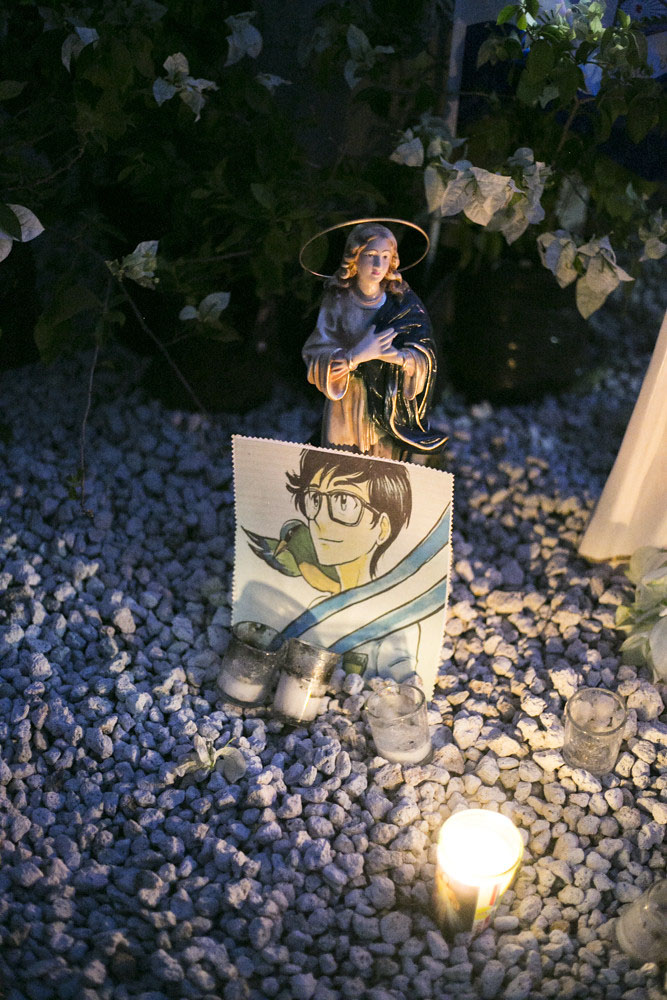
“It hurts to breathe.” These were the last words of Álvaro Conrado, a 15-year-old Nicaraguan student shot to death by government paramilitary forces in April 2018. Conrado was just one of thousands of civilians who took to the streets to protest against the government’s proposed reforms to Nicaragua’s social security program. These reforms would increase worker and employer contributions while reducing payouts by five percent, and could worsen the economy of the country — already the second poorest in Latin America. The government led by President Daniel Ortega and his wife, Vice-President Rosario Murillo, deployed paramilitary forces to suppress demonstrations and denied medical attention to injured protesters at public hospitals. The Inter-American Commission on Human Rights reported that this violence left a toll of at least 212 people dead, 1,337 injured, and 505 individuals deprived of their freedom. The Ortega regime eventually rescinded the introduction of the reforms in an effort to reestablish peace and order in the nation. These initial protests, however, marked the beginning of a series of human rights violations perpetrated by the regime to this day.
The protests also highlighted the political dissatisfaction with the centralized authoritarian regime of Ortega and his political party, the Frente Sandinista de Liberación Nacional (FSLN, Sandinista National Liberation Front), which controls all branches of government and have enacted constitutional changes for political gain. Political agreements, clientelism, coercion, and corrupt practices were essential tools in achieving this political takeover. This institutional subordination has allowed Ortega to run for president indefinitely, and also to appoint his family members and allies to key governmental posts. It enabled the National Assembly to pass laws that limit fundamental freedoms, including freedom of speech, assembly, and press. Crucially, it has also resulted in a lack of independent and impartial tribunals. Arbitrary courts often punish President Ortega’s political opponents. These unconstitutional changes generated vexation among people, who channeled their frustration through peaceful protests in hopes of achieving political change.
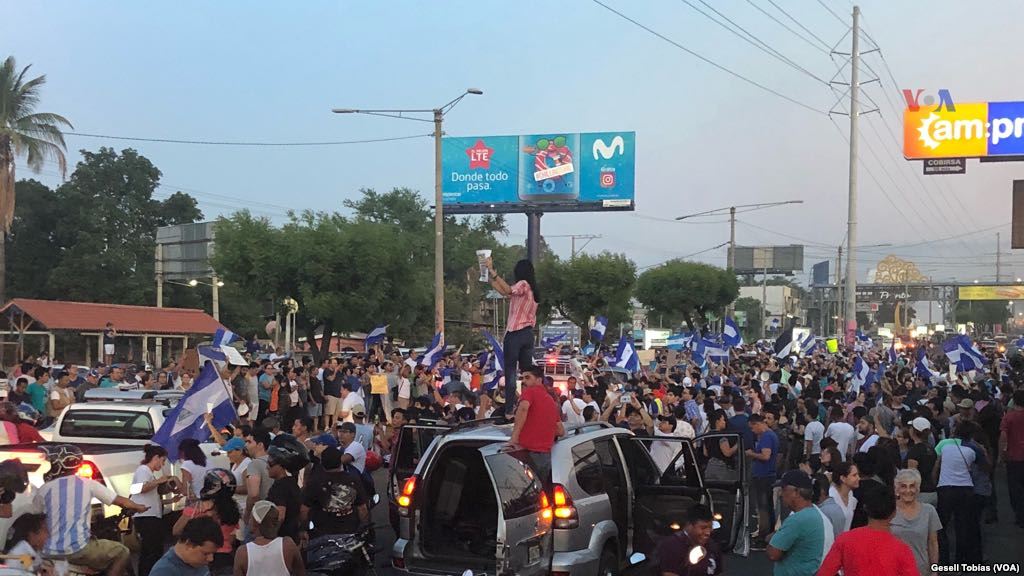
However, such change has never happened. A month after the protests, President Ortega invited the Catholic Church to become a mediator between the government and opposition groups. Members of the Church accepted and held a televised national dialogue, providing a forum for the contending parties to address pressing issues, including social unrest and human rights violations. The opposition proposed to move the presidential elections forward from 2021 to 2019. The Ortega government rejected the change, leading to an impasse and interruption of the negotiations. Subsequently, the regime persecuted and prosecuted opposition leaders and clergy members who had condemned the government’s inhumane actions.
Authorities charged and prosecuted protesters for violating Law No. 1055: “Ley de Defensa de los Derechos del Pueblo a la Independencia, Soberanía y la Autodeterminación para la Paz” (Law of the Right of the People to their Independence, Sovereignty, and Auto Determination for Peace). This law went into effect on December 22, 2021, and it states that all Nicaraguans who attempt to overthrow the government, alter the constitutional order, or encourage acts of terrorism are “traitors to the homeland.” As a result, more than 200 people were imprisoned, including ex-members of the FSLN, very popular potential opposition presidential candidates, student leaders, and even Bishop Rolando Álvarez, who condemned the regime’s actions and served in the Mediation Commission.
Meanwhile, the international community has pressured Ortega’s government to stop the abuses. The United Nations Human Rights Council and the Organization of American States issued resolutions urging the Nicaraguan government to reinstitute the rights and freedoms of political dissidents. Countries such as the United States, Canada, and the United Kingdom—some of Nicaragua’s biggest economic partners—have enacted a series of economic sanctions to put pressure on the regime. Such measures worsened the country’s economy, generating high levels of unemployment and an unprecedented exodus of people to the United States, Spain, and Costa Rica. However, the sanctions did prove effective in securing the release of some political prisoners. On February 2, 2023, the Ortega-Murillo regime released 200 political dissidents to the United States. While at first this action seemed like a positive step, shortly after their release, the government announced the former detainees would be stripped of their citizenship.
Political prisoners also suffered severe violations of their human rights during their imprisonment. Student leader Lesther Alemán described extreme mental, emotional, and physical abuse. Dora María Tellez, an ex-FSLN commander, also expressed how her physical and mental health deteriorated during her arbitrary detention. However, since their country left the Organization of American States (OAS) in 2022, political prisoners and all other Nicaraguans are unable to access international tribunals in order to press charges against the Ortega regime.
Nicaragua’s current situation reflects a dramatic erosion of the human rights afforded its citizens. By gaining absolute control over the state’s domestic institutions and isolating the country from international justice systems, the Ortega-Murillo administration has undermined the rights of all Nicaraguans and their personal freedoms to express their political dissatisfaction.
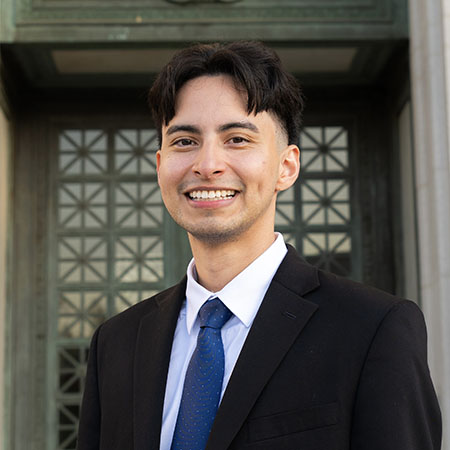
Leandro Torres is a fourth-year undergraduate at UC Berkeley majoring in Global Studies and Spanish & Portuguese. He is passionate about human rights, international affairs, and public policy. After graduating in spring 2023, Leandro will head off to New Jersey to participate in the Public Policy and International Affairs Summer Institute at Princeton University.
Please note: All posts on the CLAS Blog are the opinions and statements of the author, and do not necessarily reflect the views of either the UC Berkeley Center for Latin American Studies or the University of California.

Great article Leo, thank you for sharing!
This was very well-written and informative. Thank you Leo!
Thank you for uplifting these voices demanding accountability and more !
This was very well-written and informative. Thank you Leo!
Leo, this article is so powerful. Thank you for using your voice to bring attention to the ongoing current events in Nicaragua.
We need to wake up and stop pretending everything is ok. Thank you Leandro for this article is so informative.
A very well written article! As well as insightful to the current political situation happening in Nicaragua. Good job Leandro.
Hegemonic spirit that escapes by the throes of power mongering. “A month after the protests, President Ortega invited the Catholic Church to become a mediator between the government and opposition groups.” Whats the point if it’s one sided? Thanks for the article.