
By Alex Reep
Surrounded by an orchestra of cilantro, oregano, and citronella, I’m seated on the concrete floor of a bustling market listening to campesino (farmer) Luz Dila, describe her routine: she wakes up at midnight, hops on her horse, trots about her farm gathering the bushels of freshly-cut herbs and produce, loads the bushels onto horseback, ties up her horse at the main road, and catches a bus to the market at 3 am. Three hours later, she arrives at the Galería, tastefully arranges her produce on plastic crates, and waits for consumers to arrive. People are still sipping their first coffee of the morning and Luz has been here for hours. I hadn’t thought about the remarkable crop diversity presented at her feet until she describes her farm, the cultivation process, and what it takes for the food to arrive with her. I’m struck by how much of the process I’ve overlooked and taken for granted.
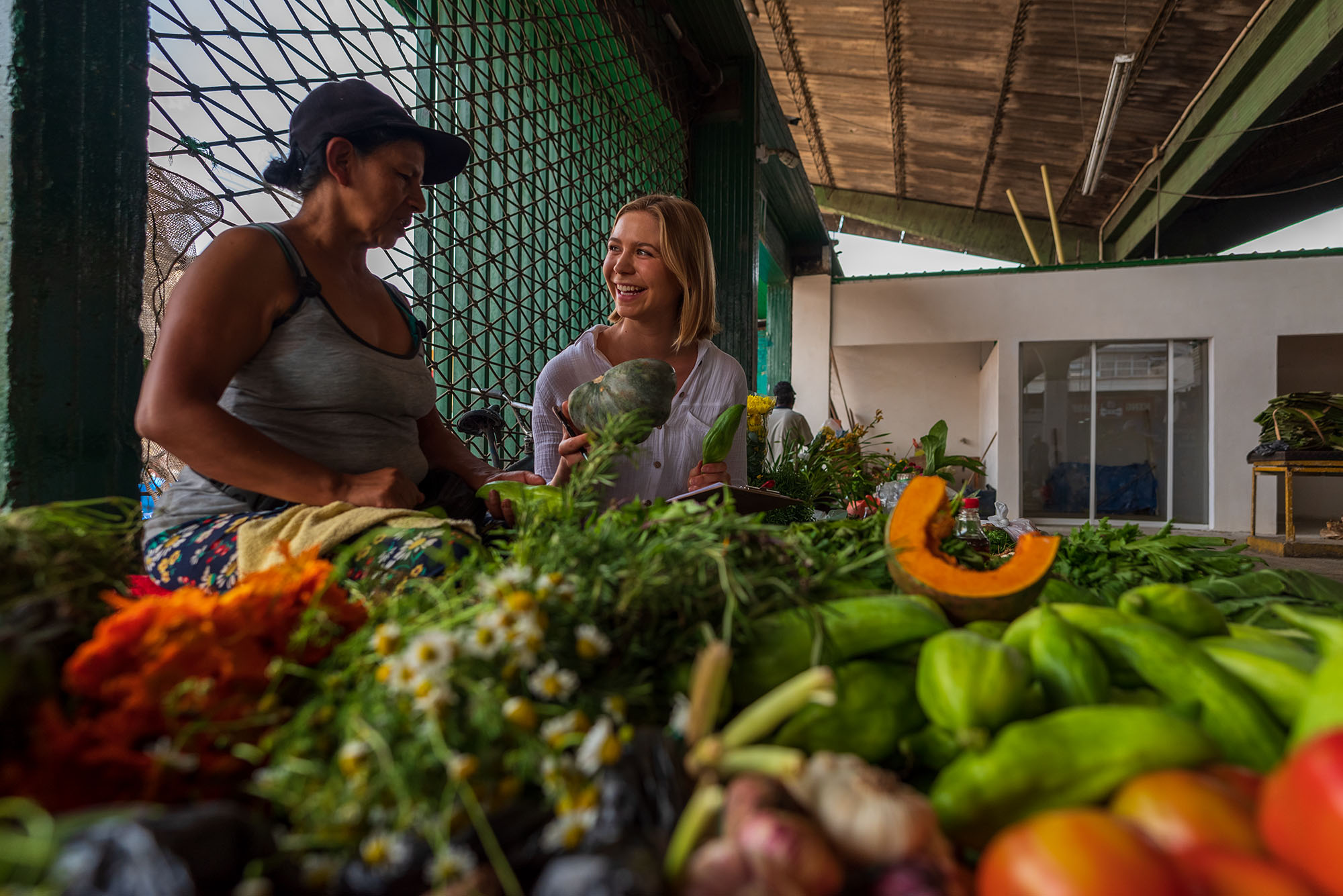
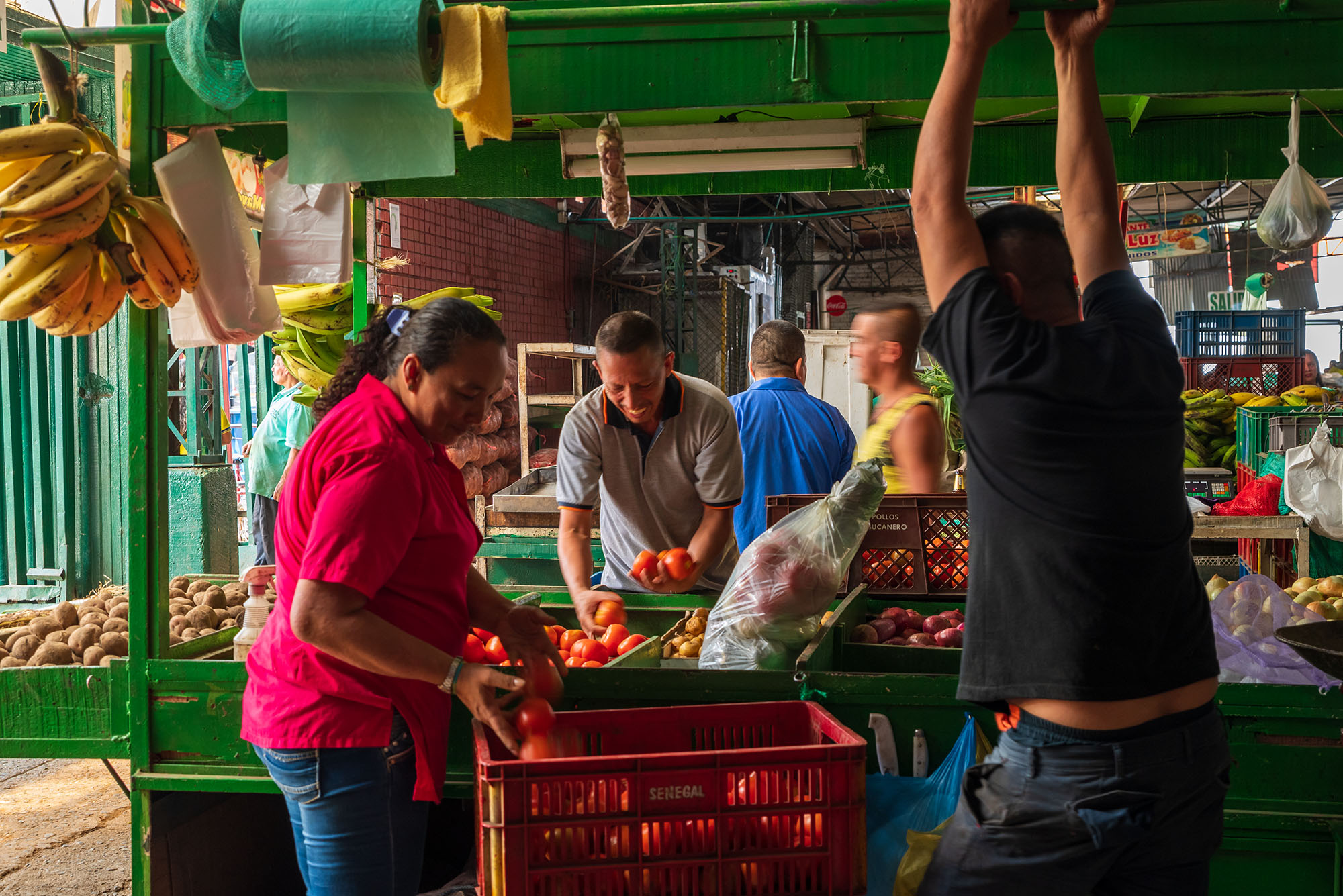
On a typical day in a traditional Colombian food market, the “Galería,” a shopper can go from having a chat with a campesino about the land they steward to enjoying a filling meal based on a family recipe. They can step back and admire all walks of life converging in the hunt for low-cost, high-quality, traditional ingredients. Galerías are major players in the city’s “food environment” – the space where consumers make the food choices that are a part of their daily lives. The relative affordability, accessibility, convenience of preparation, and desirability of ingredients in the Galerías all play a significant role in determining peoples’ food choices, diets, and consequently nutrition and health.
The city of Santiago de Cali is fortunate to have six traditional food markets, the Galerías: Porvenir, Alameda, Santa Elena, La Floresta, Alfonso Lopez and Siloe. These Galerías offer more than food — they are local epicenters of social, cultural, and economic development, which offer employment opportunities and healthful ingredients used to preserve local gastronomic traditions. The widespread sugarcane plantations in the Valle de Cauca and a pervasive lack of cold chain storage have resulted in decreased agricultural diversity and an increased reliance on imported shelf-stable foods (1). As a result, the Galerías have become people’s most affordable option for accessing fresh food. They are a unique space in which campesinos and other vendors sell produce directly from farms, making the Galerías the meeting point between the city and countryside, and one of the only places where urban consumers can directly encounter the origin of their food.
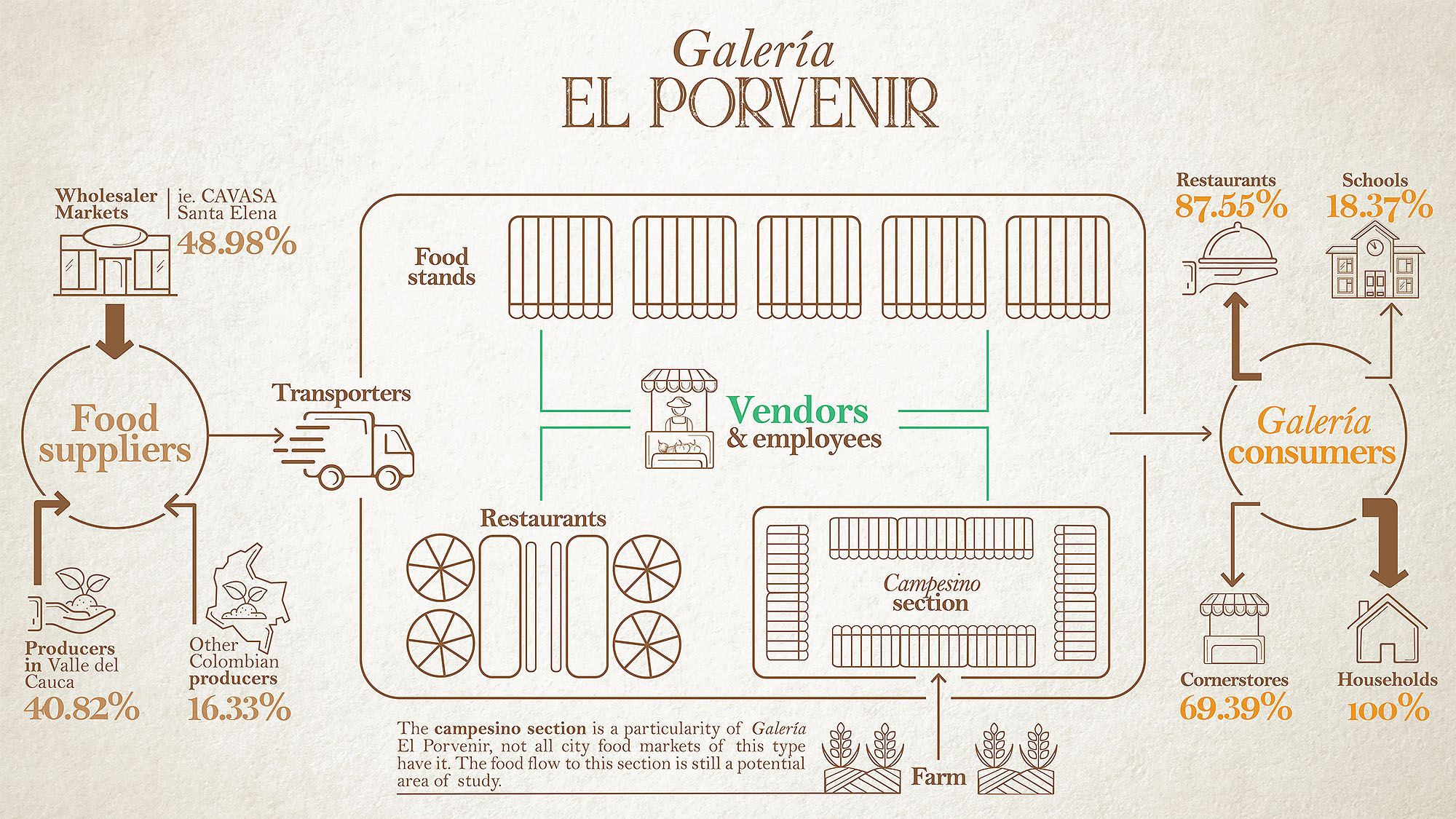
Across Latin America, there are big data gaps on food systems, particularly on the food flows through traditional market channels. What can we learn from one market in a specific city in a middle income country? With the support of a Tinker Foundation and CLAS-funded research grant, I spent two and a half months in 2022 working as a researcher with the Alliance of Bioversity and CIAT, interviewing 116 market vendors and consumers in the Galería El Porvenir marketplace in Cali, Colombia. These conversations offered insight into what food is being offered, what is in high demand, where the city’s ingredients come from, and where they’re going. Beyond food flows, the interviews explored: markets’ capacity to feed people with time and budget limitations; the price and perception of quality of the food being offered; and what elements of these traditional markets should be considered in the development of policies to promote healthier and more sustainable diets.
PROFILE OF A GALERÍA CONSUMER & VENDOR
The average Galería consumer is a middle-aged Mestiza woman who buys ingredients for her household in a lower income neighborhood of the city—very likely only one or two kilometers from the market itself. She likes shopping in the Galería because she appreciates the low prices, proximity to home, personal relationships with the vendors, and the freshness of the produce and meats. When she can’t find what she’s looking for at the Galería, she’ll visit a supermarket to find grains or processed foods because there’s greater variety and the stores are open longer hours.
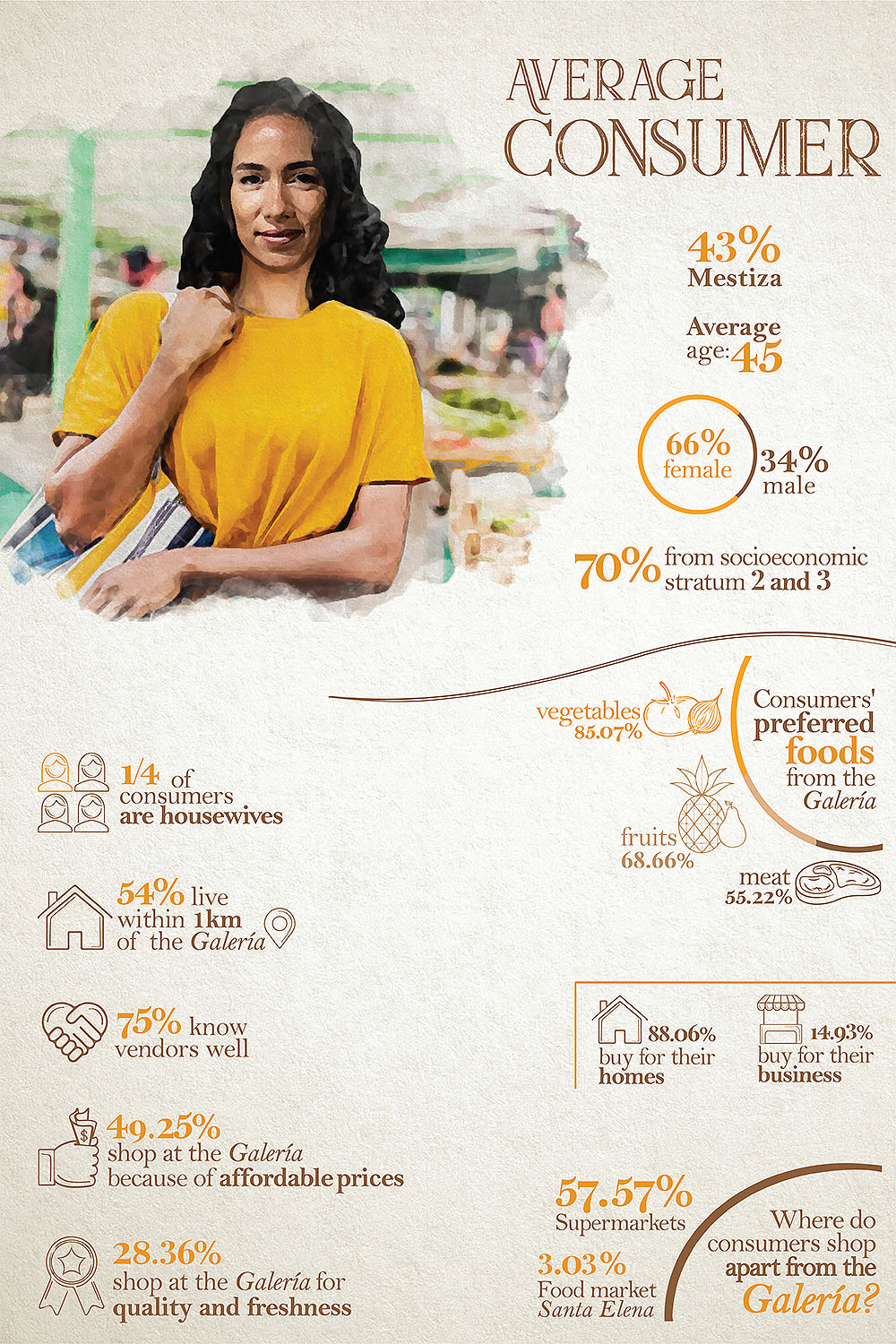
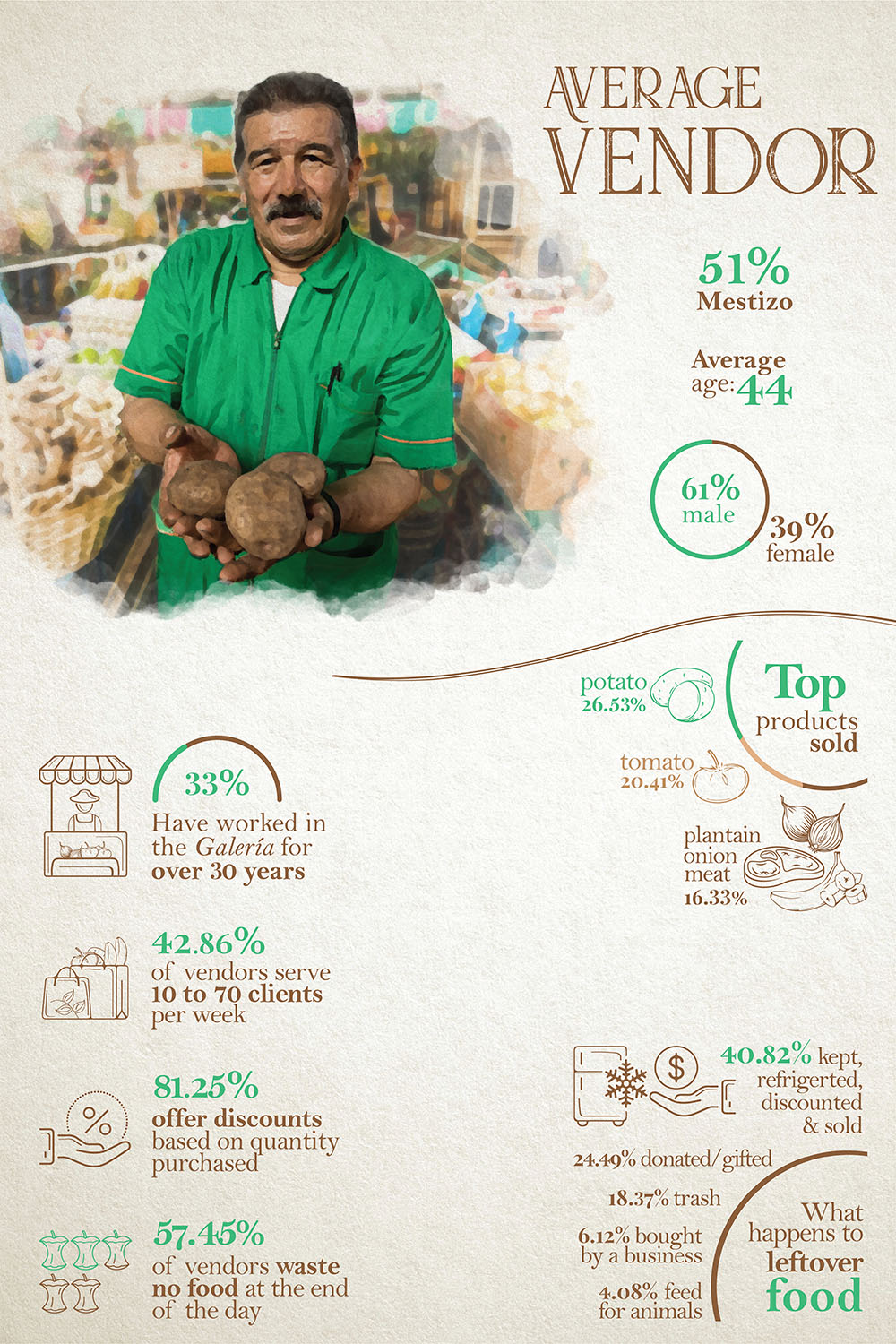
(Images by Carolina Polo.)
The average Galería vendor is a middle-aged Mestizo man, with a primary or secondary school education, who has owned his food stand for over 30 years and doesn’t sell anywhere else. He sources his products from merchants he likely doesn’t know well, in Cali or just outside Cali—particularly the wholesale markets CAVASA and Santa Elena. In an average week, he’ll sell to between 10 to 70 customers. The greatest threats to his business are the rising price of products, the high cost of transportation, and competition from supermarkets and other vendors in the Galería. He wastes very little food, if any at all, because leftovers are discounted or donated.
RESULTS & DESIRABLE FUTURE ACTIONS
● Addressing Budget Limitations: Vendors want to revitalize the Colombian tradition of shopping at the Galería by improving the appearance of and experience within the space. Of the surveyed vendors, 74% agreed that the best way to attract more consumers is to find a way to lower prices. Vendors proposed creating a union of Galería vendors to compete with big markets that benefit from larger purchasing power, in addition to having the Galería’s administration staff coordinate with intermediaries to facilitate sourcing food products for vendors (who typically work and negotiate alone). Finally, many consumers recognized that the more middle-men involved to bring the food to the market, the costlier the food product. Beyond an appreciation for fresh produce from the campo (farm), a consumer explained that “intermediaries cause prices to rise, so it would be better to buy directly from campesinos.”
● Assessing Price Fluctuations & Food Quality: Shoppers in the Galería tend to be hyper-aware of changes in price (month to month, week to week, stall to stall), in addition to how the causes of unstable prices affect food quality and availability. Forty percent of surveyed consumers attributed price fluctuations to increasingly variable weather conditions, where extreme sun dries fields and rain storms destroy crops, accelerate rot, and debilitate highways. One patron summarized, “the climate is changing a lot, so the prices are changing too.” Beyond rain, complications from the COVID-19 pandemic and roadway shutdowns during the national strikes of 2021 have caused record-level transportation and supply chain disruptions in Cali over the past two years. One consumer noted that “after the pandemic and national strike, everything changed. All prices started rising, prices rise every time we shop, and very few things become more affordable. Now, we’ve become accustomed to buying and using less – rationing.” Further, several interviewees connected the 2022 war in Ukraine with the rising prices of agricultural inputs like fertilizers and pesticides, and thus the cost of everyday ingredients. “Ultimately,” one consumer summarized, “(prices) all depend on the globe’s socioeconomic and sociopolitical situation.”
● Promoting Healthy Diets: Approximately half of surveyed vendors (51%) and consumers (53%) emphasized the importance of improving the infrastructure, appearance, and hygiene within the Galería as means of keeping food products safe and competing with supermarkets. Forty percent of consumers mentioned a need for greater educational campaigns to teach the public about what food is nutritious, where their food comes from, the benefits of eating healthfully, how to buy fresh ingredients on a budget, and how to prepare food in a safe way that saves time and minimizes waste. Given their unique ability to serve and nourish people with time and budget limitations, one consumer noted that Galerías can strategically help us “increase our recognition that we are what we eat and that we’re lucky to have rich soil and nutritious agricultural products.”
KEY TAKEAWAYS
The Galería offers an opportunity for people of all backgrounds to find fresh ingredients and to learn more about their local food system. Despite the fact that the majority of food vendors source their products through intermediaries, rather than directly from small scale producers, the majority of the workers have family connections with the countryside and they bring ancestral knowledge and rural traditions to the Galería. Everyday consumers were also extremely knowledgeable about the influence of global hyperinflation, the effect of Colombia’s export-heavy economy, and the impact of wars, strikes, and supply chain disruptions. People of a wide range of educational and socioeconomic backgrounds discussed the consequences of agroindustry and monoculture cropping systems on Colombia’s fragile biodiverse ecosystems.
A consistent theme from conversations with both market consumers and vendors was a deep appreciation for food products from campesinos – which are a valuable component of the Galerías. People expressed that public policies and governmental subsidies should support campesinos directly in order to reduce agroindustry monocultures (and, thus, the use of chemicals in Colombian agriculture), increase the availability of organic produce for market consumers, and support agricultural livelihoods as a means of protecting the countryside from rural violence by offering productive alternatives for young people. Vendors recommend recognizing the campesinos in the Galería by adding signs in the campesino section advertising that it’s an ecological or organic market. The leader of the Asociación de plaza de mercado porvenir (Asopor, Porvenir Marketplace Association), Yeisy Duran, added that, “everyone should help the campo, because it sustains us all.”
PRIMARY LESSON: TREASURE THE GALERÍA
The marketplace paints a picture of a segment of Colombian life in this place and time: the crops grown in the Valle del Cauca this season, the myriad of people that influence the city (from the Pacific Coast to the Western and Central Andes), and the ingredients that feed the restaurants and citizenry of Cali. Lessons from the Galería el Porvenir case study can be applied to public policy initiatives to address the barriers that food producers face at establishing long-term economic profitability, in addition to the barriers consumers face in accessing fresh, affordable, and nutritious food. The Galería is a unique space that combines campesinos, chefs serving traditional comfort food, knowledgeable and experienced vendors that know the best of their product, and consumers from diverse sectors of Colombian society. It reminds us that our consumption is an opportunity to promote conservation: when we buy local products grown in the unique environmental conditions surrounding our city, we promote small-scale farmers’ efforts to preserve ingredients that color our collective palates. There’s a reason why Galería is a term used for both food and fine art.

Alex Reep is a Master of Development Practice candidate in the Goldman School of Public Policy at the University of California, Berkeley specializing in sustainable agriculture and food security. Her research has been supported most recently by the UC Global Fellowship for Agricultural Development and the Consultative Group on International Agricultural Research (CGIAR). She holds a BA in Urban Studies and Planning and a BS in Environmental Systems from UC San Diego.
Alex is the recipient of a 2022 Tinker Summer Research Grant. LinkedIn.
- Aronson, S. 2019. Cali’s Food Systems: A Diagnostic Synthesis to Determine Priority Action Areas for Sustainable Food Systems. Cali (Colombia): International Center for Tropical Agriculture (CIAT).

Leave a Reply