
By Tessa Wood
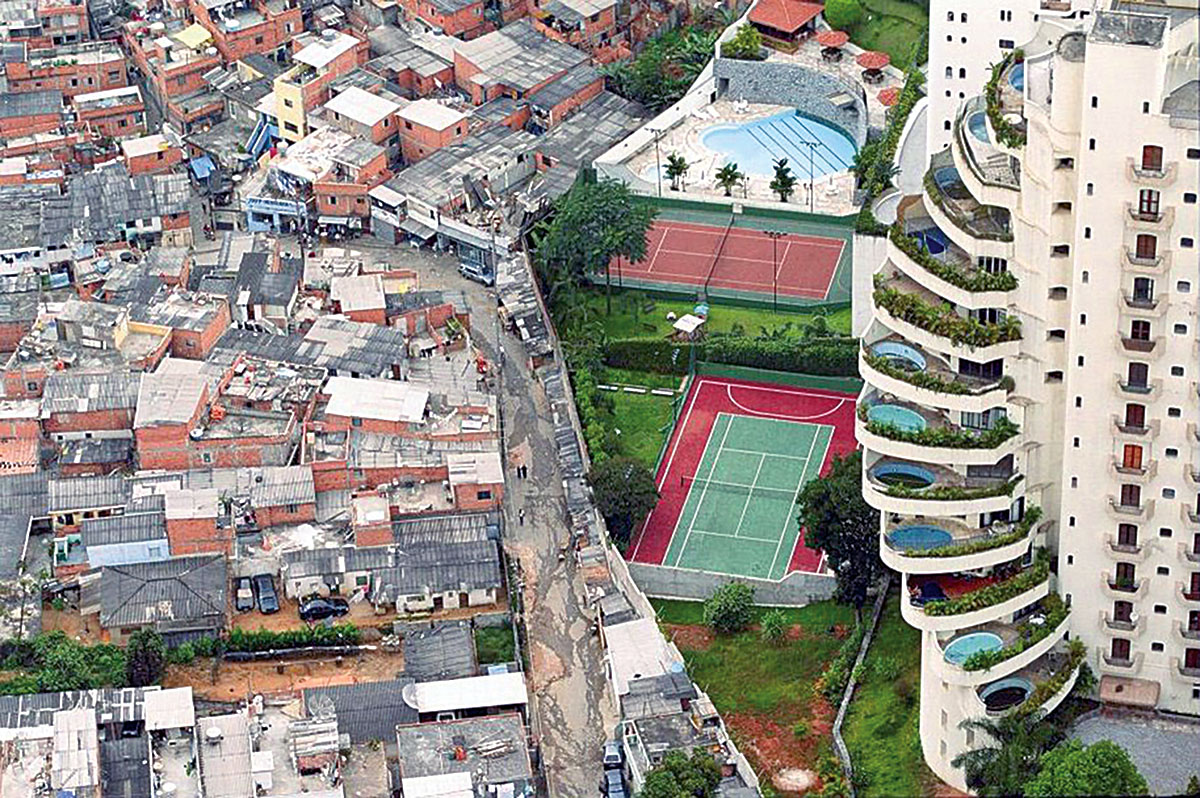
In 2004, a photograph from Brazil became famous globally for its depiction of a center and a periphery that directly faced each other, calling the viewer’s attention to their physical proximity. The Brazilian photographer Tuca Vieira had captured an image of São Paulo’s elite neighborhood of Morumbi next to the lower-income neighborhood of Paraisópolis which, despite its cultural specificity, attracted worldwide attention due to its shock value. The seemingly indiscriminate popularity of images of poverty such as Vieira’s raise questions about representation: to whom are they really addressed, given that there is little control over who receives them, and what kind of dialogue can they establish with this audience? The fine line between sensationalizing poverty and ethically exposing it to promote social change is particularly relevant here, making even more relevant the parallel question of who produces representations of poverty: who wants to produce and consume them, and who has control over the narrative created about them?
From the mid-twentieth century onward, the development of literatura periférica (peripheral literature) in Brazil has dealt with many of the same questions that arise organically from the process of representing racial and class inequalities. Literature creates a productive point of entry into these questions because of its ability to add a cultural explanation to otherwise “objective” documentary images. In particular, peripheral literature is a movement that directly addresses this question of who produces a given perspective because it is defined as much by the authors who write it as by what they write.
Peripheral literature, although at times a contested category, refers to literature produced by primarily Afro-Brazilian authors from favelas and other marginalized urban areas in Brazilian cities who write about issues in their communities, especially urban violence, racism, labor exploitation, and poverty. An early work of peripheral literature, Carolina Maria de Jesus’ Quarto de despejo (translated in English as Child of the Dark, 1960), already had a major global impact, becoming an international bestseller translated into fourteen languages. In the 1990s, following improvements in living conditions in favelas, more contemporary authors such as Ferréz (Reginaldo Ferreira da Silva) helped solidify this literature into a semi-canonical position in Brazilian literature. These more recent works have also been influential in international criticism, being translated and circulated in the U.S. and Europe as well as within Brazil.
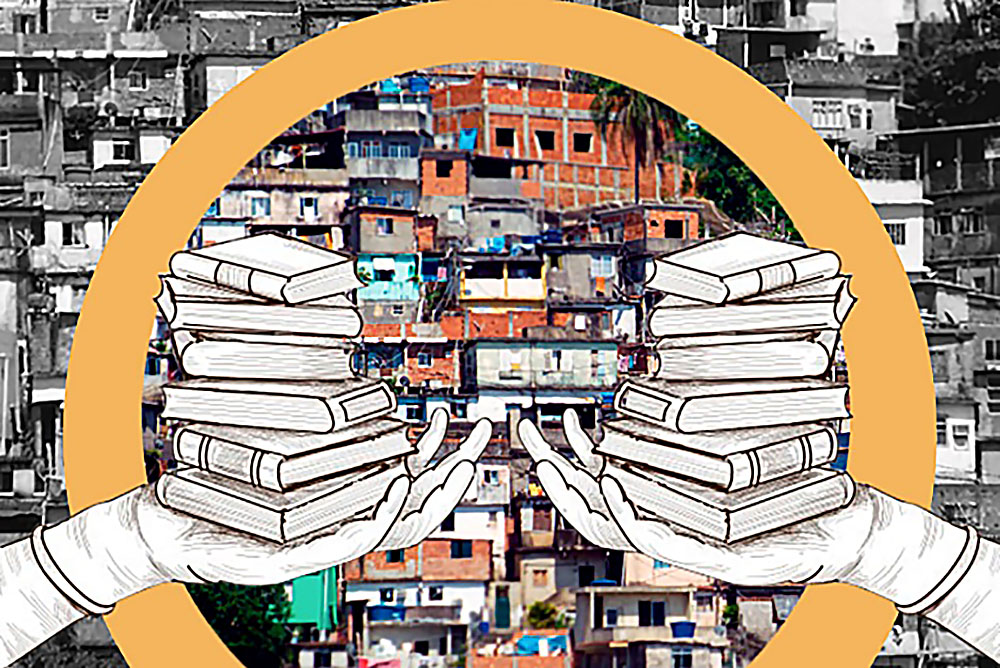
During my Tinker Summer Research Grant project, I sought a broader understanding of issues surrounding cultural production and structural inequalities in contemporary Brazil. I wanted to understand how peripheral literature interprets the confrontation or apparent disconnect that exists globally between mainstream intellectual perspectives and perspectives marginalized from academic and cultural production, using this literary movement as a starting point to investigate more overarching questions of race, gender, and cultural citizenship in the Americas, topics that will inform my future research projects.
I aimed to familiarize myself with the works of the most well-known authors associated with peripheral literature, such as Carolina Maria de Jesus, Ferréz, Paulo Lins, Allan da Rosa, and Geovani Martins, as well as with current academic discussions surrounding the movement. At the same time, I conducted interviews with academics in relevant areas to see how their past research interpreted these questions. Because intellectual authority is typically derived from high levels of formal education, yet many peripheral literature authors position their authority to represent their communities as coming from the experiences of educationally disenfranchised populations, I asked myself how this demographic of authors related to their intended public and how their intended public related back to them.
Although the virtual research necessitated by summer 2022 travel advisories made me rethink my methodology as it ruled out direct archival research, it ultimately expanded the range of perspectives that I could access. The limits of online access and library resources did not overly harm my literature review. In fact, virtual research was particularly helpful when I conducted interviews, allowing me to easily access a wider range of sources. Throughout the summer, I was able to conduct informal, informational interviews with academic sources who connected me to other appropriate resources, recommended lesser-known authors and texts, and shared with me access to texts from authors who are not widely circulated in the U.S. or even within Brazil. To give just one example, a contact introduced me to Comovida como o diabo (2019), a digital collection of poems I could not otherwise have accessed by Juliana Sankofa (the artistic name of the Afro-Brazilian poet Juliana Cristina Costa), whose writing on racism and gender bias embraces confrontation as a method of reacting to discrimination. Her poem “Livros em promoção” speaks to reading in particular as a site of conflict:
Sociedade transformou livro em privilégio E depois diz que quem não ler é porque não quer Sério!? A vida está aí Nas janelas e ruas das favelas Na rara pausa da vida Alguém ler o mundo e sente dor Enquanto isso Dizem que está faltando leitura “O povo não ler” | Society made books a privilege And then they say when someone doesn’t read, it’s because they don’t want to Really?! Life is right there In the windows and streets of the favelas In the rare pause in life Someone reads the world and feels pain Meanwhile They say what they need is to read “People don’t read” |
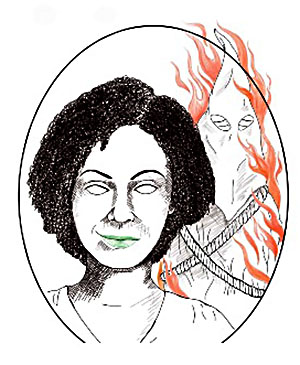
This poem addresses the relationship between access to literacy and intellectual authority that was at the heart of my research project. The speaker directly mocks the commonplace discourse that marginalized populations lack an interest in literature by highlighting the educational and financial barriers that make it difficult to have the academic preparation necessary to study literature in the first place. At the same time, it introduces the idea of experience, of a kind of sociological observation of the speaker’s life and community (“reading the world”), as an alternative source of intellectual authority. Having access to extremely contemporary and lesser-circulated sources from Brazil gave new dimensions to my research project, enabling me to see how cultural discussions continue to evolve around this topic through non-traditional publishing venues. It also demonstrated how digital and other new forms of media allow young, racialized, and gendered perspectives to be heard, albeit not always to reach a large audience.
The more I learned, the more clearly I could define my questions and areas that I needed to examine further. Across my readings and interviews, several recurring unresolved questions emerged. The first was the need to better define what is considered peripheral literature – the bestselling works from leading publishers to which I had previously been exposed were often perceived as “too canonical” to be truly peripheral, and the international success of authors such as Ferréz and Geovani Martins were perceived as having distanced these authors from the marginalized communities they represented. The nuance of these ideas revealed an underlying contradiction to me: on one hand, there are multiple levels of periphery and of access to the resources necessary to be published and be heard, which limits and distorts the perspectives which can reach a wide audience. On the other hand, the idea that the authors from disadvantaged backgrounds who reach the largest audiences are by definition too successful to accurately represent their communities can also be a tool used to downplay their artistic and sociopolitical contributions. Another related but distinct theme was that the language we use to describe peripheral literature can itself be limiting – not only was it at times unclear which authors belonged to this movement, but a clear definition could prove to be a barrier to observing key parallels within Brazilian literature and with other national literary traditions, especially Spanish American literature which responds to fundamentally similar issues. These related concerns about labeling and boundaries highlighted the importance of drawing comparisons between thematically related literatures from different national traditions going forward, especially with regards to studying conceptually similar but culturally different Latin American literary traditions dealing with poverty and racism.
My approach to studying how perceptions of intellectual authority relate to cultural production in contemporary Brazilian literature this past summer made me realize that it is through these authors’ interactions with those with access to a culture perceived as more legitimate, whether through describing actual human contact or central and peripheral groups writing to and about one another, that the cultural distance between them is produced. The interactions also pointed to the contradiction of visibility in that, although marginalized communities tend to feel invisible in the problems they face as individuals, they become hyper-visible in the stereotypes ascribed to them by others. In doing so, the peripheral literature authors I studied often challenged the typical ideas of representation and self-representation as discrete categories. Destabilizing rigid divisions between center and periphery through interpersonal interactions while reinforcing them on a more cultural level, marginalized subjects by definition must represent others’ projections onto them. These considerations have also led me back to the need to compare based on content, not national or linguistic boundaries. After exploring a wide range of Brazilian authors whose audiences varied, yet whose concerns responded to the same issues, there remains the need to explore these questions more broadly and comparatively across Luso-Hispanic literatures.

Tessa Wood is a Ph.D. student in Comparative Literature at the University of California, Berkeley specializing in modern Latin American literatures. Her research has been supported most recently by awards from sources including the California State University Chancellor’s Doctoral Incentive Program, the UCB Center for Race & Gender, and the UC Chancellor’s Fellowship. She holds a B.A. in Romance Languages and Literatures and Ethnicity, Migration, and Rights from Harvard College.
Tessa is a recipient of a 2022 Tinker Summer Research Grant. LinkedIn, Twitter.

Leave a Reply