
By Laura Álvarez López
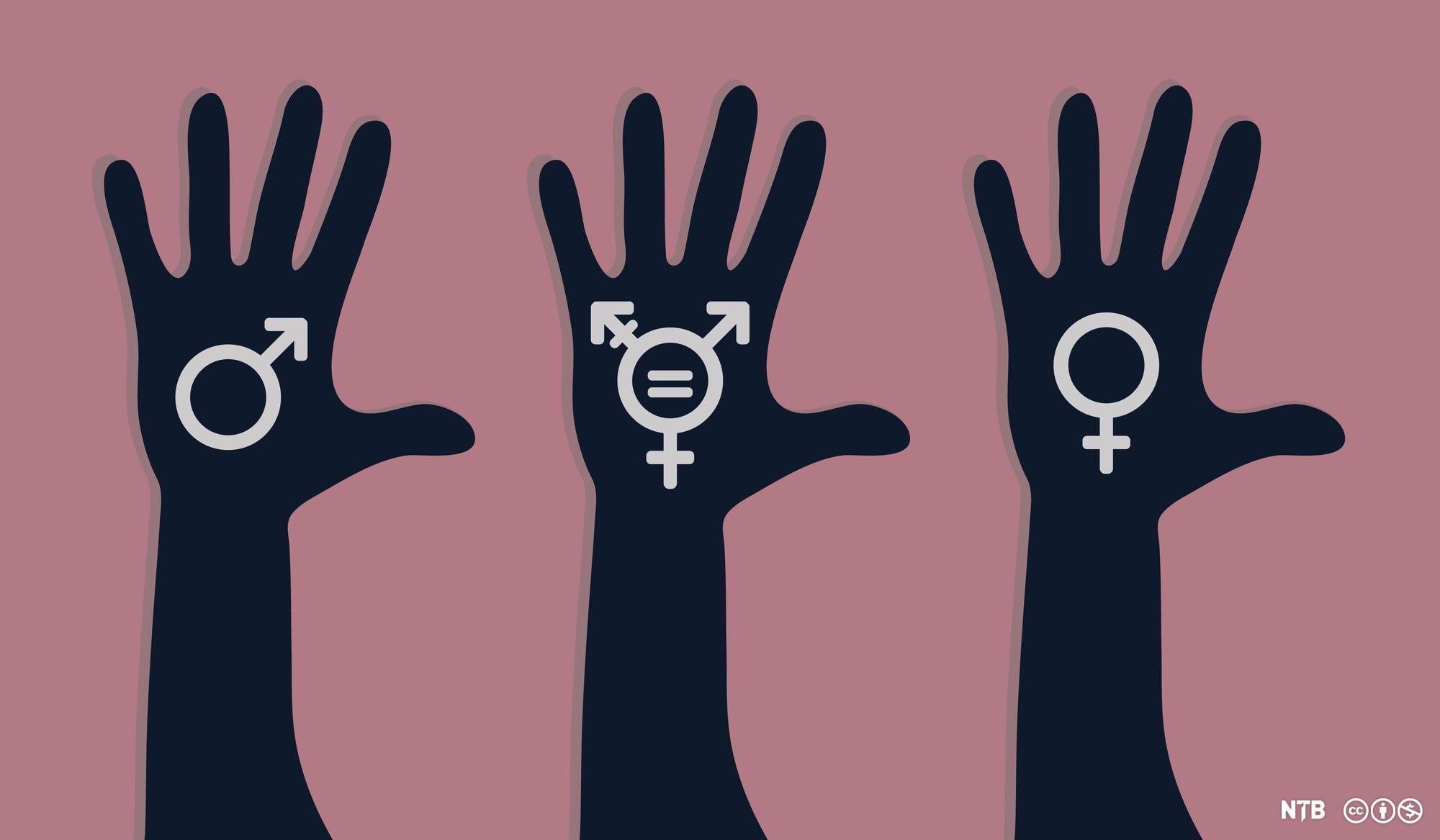
The use of gender-neutral language has been debated for at least fifty years. In most Romance languages, a binary system of feminine and masculine gender marks is used for nouns, adjectives, pronouns, determiners, and demonstratives. When referring to a group of more than one gender, or if gender is unknown, the rule is to use the masculine as the generic form. Over those fifty years, proposals have been presented to avoid the generic use of the masculine construction in contexts in which making both women and non-binary individuals more visible is relevant. In response to these efforts, numerous conservative Latin American politicians have presented bills in their Parliaments attempting to ban the use of inclusive forms in Portuguese and Spanish. This has happened in 2021 and 2022 in Argentina, Brazil, Chile, Mexico, Peru, and Uruguay, according to news reports. Some of these bills have been enacted; in Buenos Aires, the use of gender-neutral forms has just been prohibited in schools.

In a nutshell, the arguments brought forward to defend such initiatives are generally based on scattered references to a French decree from 2021 that, following the recommendations of the French Academy of Language, prohibits the substitution of gender neutral for masculine generic linguistic forms in educational settings. The reasoning given was that neutral innovations are seen as linguistic obstacles in language acquisition, especially for children with learning disorders. In the same vein, a report on inclusive language by the Royal Spanish Academy argues against innovative neutral endings (as in todes, todxs or tod@s, meaning ‘all’), and instead promotes solutions that “do not violate the linguistic system” (as in todos y todas, meaning ‘all men and all women’). When referring to those examples, politicians seem to ignore that neutral forms are accepted in official documents in many countries, including Australia, Belgium, Canada, Sweden, and Venezuela. They also fail to mention established institutions that do accept neutral language; the Swedish Academy of Language, after a long debate, included a neutral pronoun (hen) in its dictionary in 2015. In Norway, the Norwegian Language Council accepted the same pronoun in June 2022. In Swedish and Norwegian, as in English, gender-neutral pronouns represent a very useful tool for those who want to express diverse gender identities in contexts where they consider it to be relevant or necessary.
In Latin America, most banning bills were introduced by conservative and ultra-conservative politicians. Their arguments for imposing these new policies, that the use of inclusive forms inhibits language acquisition and creates barriers to effective communication, lack evidence; there are no scientific studies to support such claims. In contrast, research shows that the use of generic masculine forms reflects power relations in androcentric societies and contributes to maintaining inequalities. That is the case of the recent work by Pascal Gygax and colleagues studying mental representations of gendered forms in languages such as French or Spanish. Likewise, the theoretically-based studies by Brazilian linguist Luiz Carlos Schwindt reveal appropriate endings could easily be adopted as neutralizing forms in Portuguese. Leading advocates of prohibition systematically omit such findings from their discussions.
In sum, the arguments used against gender-neutral language by Latin American politicians do not display much novelty. Research on arguments about gender-fair language shows that the same arguments regarding harm to communication, acquisition, and the ungrammatical nature of neutral forms have been repeated by politicians in diverse geographies and have ideological roots. An illustrative example brought forward by an ultra-conservative member of the Uruguayan Parliament suggests that Spanish is not sexist because the word pianista (piano player) that looks like a feminine form (with feminine gender mark –a) can refer to both men and women who play the piano. This example was put forward in a television debate to argue that masculine forms are not always used as the generic construction, and consequently, standard Spanish is an inclusive language. However, the case in this anecdotical example is built on a false premise. Language cannot be sexist because it would not exist or have rules without its speakers, who position themselves through language by using some forms and not others.
A law proposed in Chile banning the “distortion of language” represented by gender-neutral constructions.
Understandably, politicians are not often specialists in language sciences. However, their work should at least include acquainting themselves with research on the phenomenon they are about to ban, in order to present informed and solid arguments in defense of their own bills. The most striking feature of these bills, however, in these times of increasing democracy and freedom of expression, is that they argue there is a need to stop “ideologies from contaminating language,” to quote directly from the Chilean and Uruguayan bills. This goes clearly beyond language morphology. These politicians are promoting an ideological struggle while claiming to be sincerely concerned with education and language acquisition. But their own words disclose that they are primarily combatting the ideologies of all those who support the UN 2030 Agenda, for example. In his inaugural speech in January 2019 and subsequent actions, current Brazilian President Jair Bolsonaro encouraged the fight against “gender ideology” without further definition, probably referring to ideas that go against his own ideology concerning the role of what he understands as “family” and “tradition.” In that same speech he claimed: “We are going to unite the people, value the family, respect religions and our Judeo-Christian tradition, combat gender ideology, and preserve our values. Brazil will once again be a country free of ideological ties.” Accordingly, what the banning bills propose, based on similar ultra-conservative ideas, is to reverse the growth of inclusive linguistic practices and stop further development with respect to gender equality, fighting against the 2030 Agenda. And if laws start by prohibiting forms of expression we never know how much further censorship will reach. Similar cases – rather frightening ones – can be found throughout history. One recent example is the proscription of the use of the words “war” and “invasion” in Russian mass media.
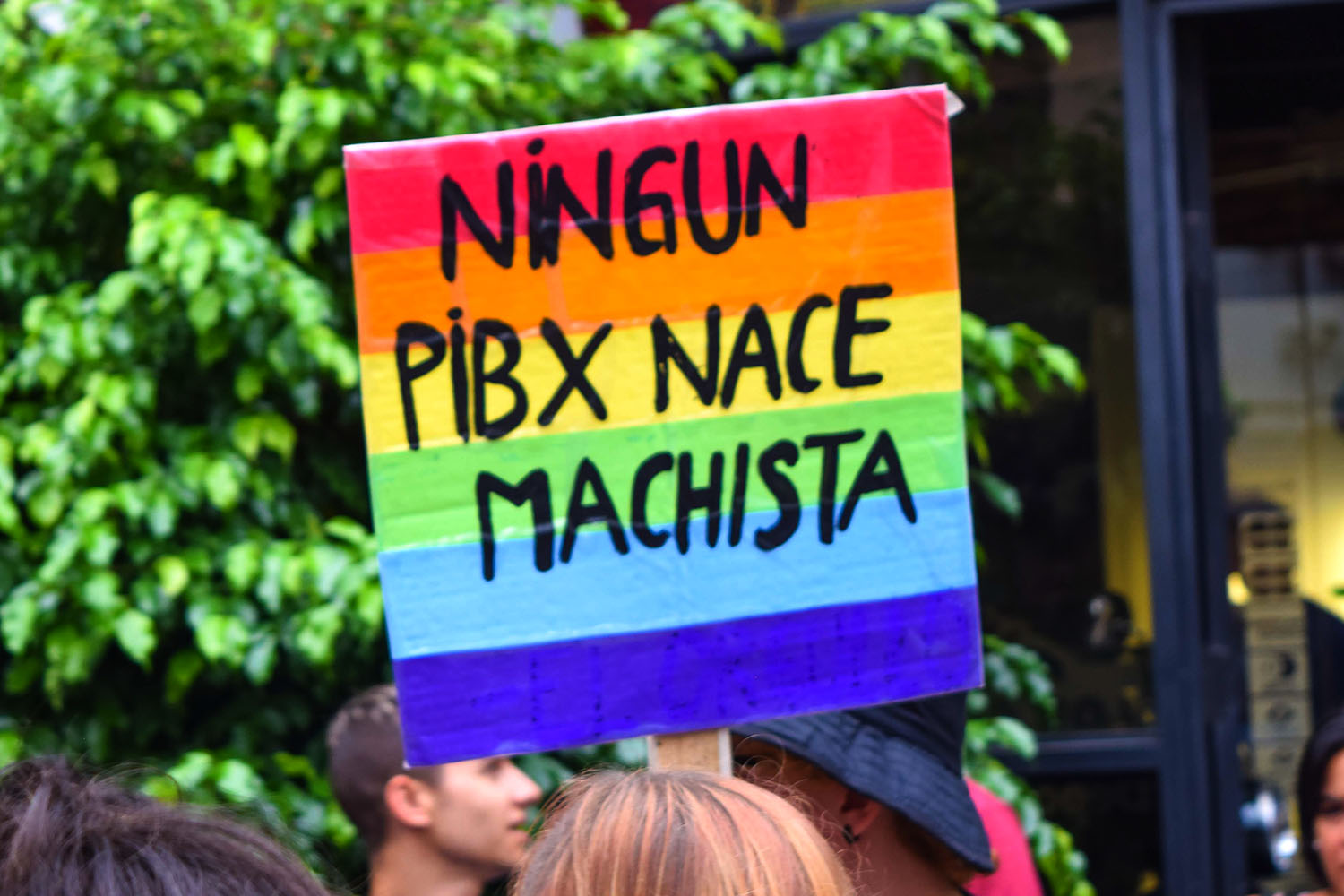
From a sociolinguistic perspective, language plays a central role in the reproduction of inequalities. Language, with its importance for transforming power relations, is a vital concern of the most conservative sectors in society. Language matters. That is one of the main reasons why language-in-education policies should be discussed in public debates, allowing all citizens to hear the best arguments of politicians, practitioners, speakers, and researchers. Research has shown that the public exchange of arguments can promote deeper reasoning and generate creative solutions that adapt more easily to the reality of each community. Such open discussions usually enable the implementation of measures and recommendations from authorities, if the aim is to create laws that can contribute to a more democratic, inclusive, equal, and equitable society. To that end, it makes no sense to ban forms of expression. The political actors proposing these bans are trying to legitimize their own ultra-conservative ideas as non-ideological by fighting against something they describe as “ideology”.

Laura Álvarez López is Professor of Portuguese at Stockholm University, and will be a Visiting Scholar in the Department of Linguistics at UC Berkeley in Fall 2022. A sociolinguist, she studies social and linguistic factors that cause language variation and change, especially in multilingual contexts where speakers of Portuguese, Spanish and African languages have lived side-by-side.
Related reading: “The Work of the Gender in Language Project“, by Ben Papadopoulos, from The Berkeley Review of Latin American Studies 2022

Leave a Reply