
By Yessica Mox

Being invisible for Central Americans means being neglected by their home country as they die at the hands of gangs. Historically, white elites have taken power and created laws that benefit themselves. This pattern continues today, especially as Indigenous people are displaced by extractive projects. Many people have to decide whether to leave or stay; the irony is that either choice does not guarantee prosperity or life. Entire families migrate, or sometimes only one parent; nonetheless, the trek through unknown territory is deadly. My family’s experience with this journey began in Guatemala with gangs threatening their lives. They had no other choice but to leave to survive. When they speak about the journey, it is always with sadness and fear. Leaving behind your home, family, and friends is not an easy task, especially when you know you might not come back. They emphasize that it was much more difficult for them because there were two borders to cross. It meant more walking, hiding, and a greater possibility of not making it to the southern border of the U.S. After they finished telling their story, the silence was deafening, as we reflected on the painful memories. Fear was and is the most prominent feeling, and it has not ceased as they try to navigate a country that discriminates against and oppresses them. Often the idea of the “American Dream” and the United States being a place of refuge can be misleading, because immigration policies do not reflect those ideals. The struggles of many immigrants do not end once they cross the border; on the contrary, they are just beginning as they try to build a life in this country. My family’s lived experience is one case in millions of others coming from the same region for the same reasons: to survive.
When Central American migrants are forced to leave their home country for the U.S., they try to remain as invisible as possible to reach the U.S. border. The invisibility they seek helps avoid deportation, but it results in narcos and bandits preying on their desperation to reach the border. The Beast by Óscar Martínez is a novel that touches upon the migrant journey through the migrant trails. He focuses on Central Americans by interviewing them and traveling with some. He states, “A migrant passing through Mexico is like a wounded cat slinking through a dog kennel: he wants to get out as quickly and quietly as he can” (200). Many migrants face threats throughout their journeys, including kidnappings and possibly death. The criminalization of migration has resulted in migrants being forced to be inconspicuous to avoid Mexican officials, because they lack documentation. As organized crime has grown more powerful, the key actor is the group Los Zetas, who take advantage of migrants’ vulnerability. Martínez notes, “They’ve monopolized crime—kidnappings, extortions, murder, drug trafficking, retail, pirated movies, migrant guides” (243). Los Zetas have built a business empire, and as long as people migrate, they will continue to earn money. Martínez reports, “it’s more profitable to kidnap forty people, each of whom will pay between $300 and $1,500 in ransom money” (198); meaning that it is for profitable to kidnap than kill them because migrants are desperate, and their families are willing to pay ransoms. In The Beast, Martinez states, “These are the kidnappings that don’t matter. These are the victims who don’t report the crimes they suffer.” (198) Even if these kidnappings happen near the authorities, narcos pay them to stay silent. The issue has worsened as U.S. authorities increasingly send migrants back to Mexico. A news article interviewed a handful of Central American migrants who claimed they were kidnapped, raped, and tortured by Mexican cartels (Bonmatí). Data from immigrant groups show 6,356 kidnappings, acts of abuse, and attacks from February 2021 toAugust 2021 (Bonmatí). In Bonmati’s research, the ransoms range from $600 to $20,000, and if migrants or their families don’t pay, they are killed. As the cartels see the increased desperation of migrants, these acts only become more frequent.
If migrants successfully cross the border, they experience isolation because of their undocumented status. They try to hide. Some migrants are willingly or unwillingly made invisible through the process of migration. Undocumented migrants are advised to lead a quiet life, to remain hidden because they do not have legal status, where one wrong move can mean deportation. Taking physical space in the U.S. is an empowering experience, because they were invisible in both their home countries and on the migration trails. But the hostile rhetoric against migration in the U.S. produces feelings of shame, perpetuates the notion that migrants need to hide to live a safe life. There are communities around the country that combat this invisibility by creating spaces for their community. The mercado in Los Angeles, California, is one example of indigenous migrants breaking the notion that they must conceal their identities. They don’t want to be made invisible by their migration experiences, and emphasize visible forms of indigeneity and traditions. In U.S. Central Americans, Karina Alvarado, Alicia Ivonne Estrada, and Ester Hernandez analyze histories and transnational memories, highlighting how migrants continue their traditions thousands of miles away from home. When investigating the “mercado” phenomenon, they state, “the public space where the mercado is located allows for visual forms of cultural affirmation to take place” (173). It is a form of expression that creates a “second home” for most migrants, who miss their traditional foods, clothes, and other touchstones. It becomes a “survival strategy” and a physical embodiment of the life that they lost leaving their home countries to survive (167). Central Americans celebrating their way of life shatters the invisibility that is reinforced by the process of migration. They are recreating spaces in which they can express their culture. For Indigenous migrants, these spaces are tremendously important, because they offer connection and solidarity with other community members, with events and cultural expressions shared with other migrants from their region.

These spaces exist, but they are not always accessible, especially to people who do not live in an area with a large Central American population. In my experience, it has been challenging to connect with these spaces, because I did not grow up with a large Central American community. Most of my knowledge and awareness came from my parents and grandparents. Tamales de hoja, atol de elote, pepian, and chuchitos are just some of the favorite foods I grew up eating. I didn’t feel very connected to my culture. When I got older, I wanted to know more about Guatemala, its history, and culture. Although much of my knowledge came from articles and books, learning directly from my grandparents gave me a broader perspective on what it meant to grow up in Guatemala, especially during the most violent years of the civil war. Both my mother and grandmother grew up wearing cortes and huipiles; they showed me pictures and told me stories of going to different fiestas. My family continues to miss the food, ingredients, and herbs native to Guatemala. As an alternative to mercados, we have found small businesses within our area that carry snacks, frozen hierbas, and other imports from Guatemala. To some, these items may seem insignificant. For my family, it means a great deal, enjoying the food they grew up eating and interacting with other community members who understand what it means to be Central American. Migrants continue to resist the invisibility that is forced upon them. Mercados and small businesses bring visibility to cultural practices and traditions that can become lost as migrants seek refuge in this country.
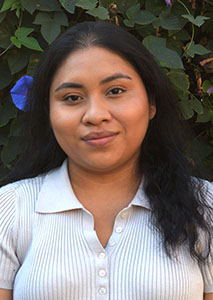
Yessica Mox, a fourth-year at UC Berkeley studying Political Science and Ethnic Studies, is passionate about immigration and education policies. She hopes to be able to work in these respective fields and bring representation to voices that often are left out of the conversation. Yessica will be graduating this spring and will head off to Washington D.C. for a summer internship.

Leave a Reply