
By Adriana P. Ramírez
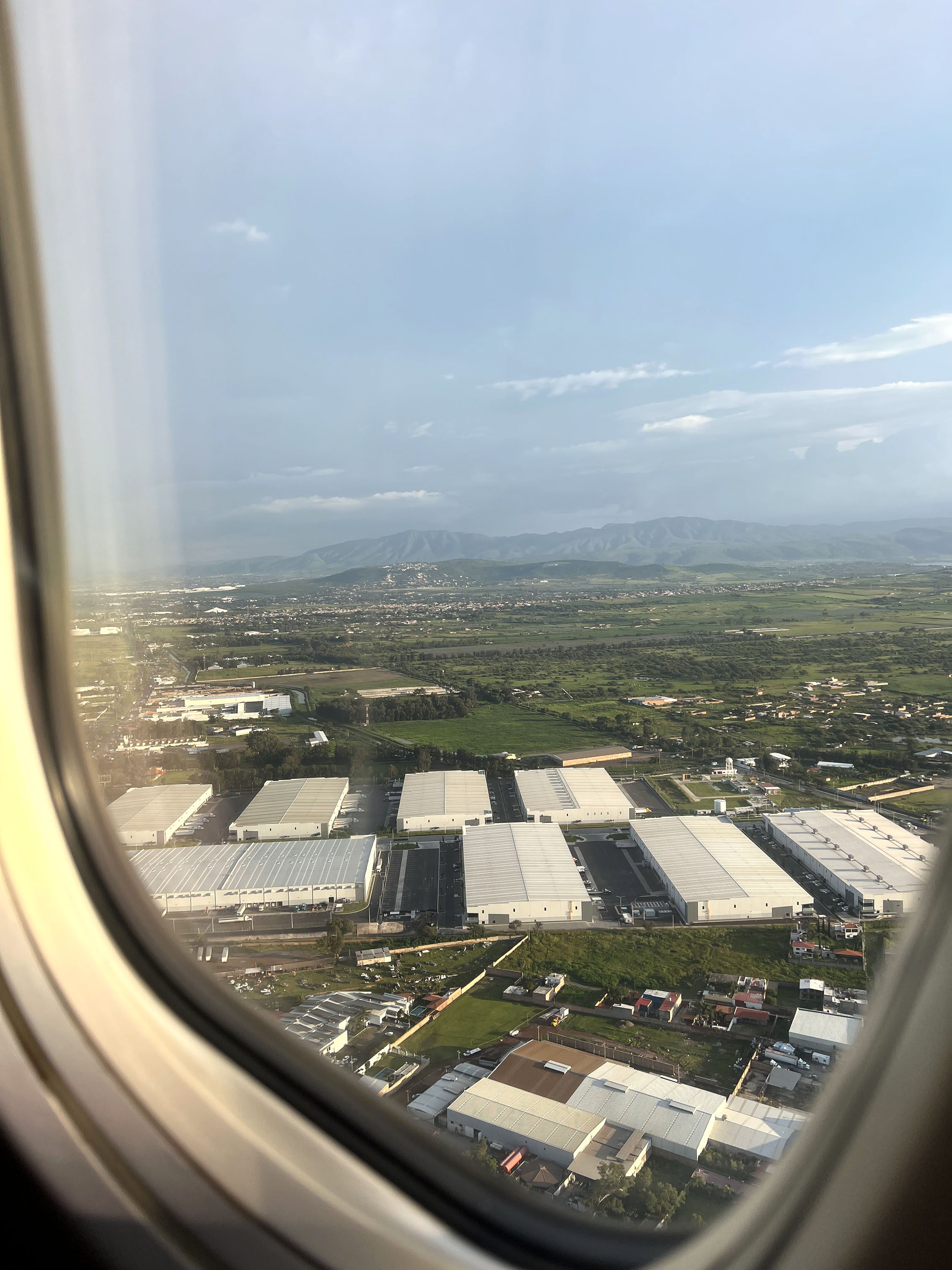
At 12 years of age, it was Vicente’s1 first time on an airplane and last time in the U.S., his home since infancy. After much familial deliberation, he had decided to return to Mexico with his mother and sibling, knowing his undocumented status would make returning to the U.S. nearly impossible. As he sat ready for takeoff, staring out the window, the pilot announced a problem with the plane. Everyone had to disembark. Expecting to be in Mexico already, Vicente and his family found themselves in a Holiday Inn near the airport instead, awaiting a new flight. Once in the hotel, Vicente’s mom expressed her doubts about leaving. “What if we stay here?” she asked. “Your brother can leave and come back, but you and I, what are we going to do?” Vicente reminded her they had already sold everything, the house, their belongings. His mom suggested staying with her comadre (child’s godmother or close friend), beginning again, like when they first arrived in the U.S. But what might have brought Vicente relief weeks earlier now brought him discomfort. “I don’t want to struggle,” he told her. “Let’s go to Mexico. We have nothing here…” His mom finally agreed. The following morning, they flew to Jalisco, Mexico.
Vicente is one of the 98 young returnees I interviewed during my fieldwork in Mexico between 2022 and 2023. He and the rest of my respondents are part of the hundreds of thousands of both U.S.-born and undocumented children who leave the U.S. to enter Mexico with at least one of their parents. Between 2000 and 2020, for example, the number of U.S.-born minors in Mexico doubled from 258,000 to 681,876 (Masferrer 2021; INEGI 2020).
When we think about migration, we often hear in the media about people coming to the U.S., their lives after doing so, and the varying opinions people have of them. Increasingly, we hear about the inhumane and violent detention and deportation of migrants. Less is known about the other side of migration; what happens when folks return to the country they once left in search of opportunity, especially when children are involved. Emerging work has begun to examine what happens to children who stay in the US but are separated from their parents due to deportation or what happens when children are brought to the home country of their parents, a place many have never been, or they left so young as to only vague memories of it, if any (Boehm 2016; Hamann et al. 2018; Jacobo Suárez 2016; Jacobo Suárez and Jensen 2018; Medina and Menjívar 2015; Sánchez Garcia and Hamann 2017; Zúñiga and Giorguli Saucedo 2020).
Nevertheless, there is a critical period that remains largely unexplored in our conversations about “return” migration: the time between when children learn they are leaving the U.S. — days, weeks, or years before departing — and their actual departure. This heavy emotional transitional phase, the liminal space of knowing you must leave but not having left yet, shapes children’s migration experiences in ways we are only beginning to understand. This became evident in my interviews with returning migrant youth in Mexico: the significance of this in-between time, its heavy emotional toll of learning they must return, and how they and their accompanying parent(s) approached this emotionally charged period. What became clear is that how children experience leaving the U.S. depends on three interconnected factors: first, the reasons for returning; second, whether parents can prepare them for the transition; and third, the degree of agency children have in the decision.
Understanding why families returned to Mexico is essential to understanding children’s migration experiences, as the circumstances of return set in motion fundamentally different trajectories for children. Many children return because their parents face compounding difficulties in the U.S., such as constant fear of deportation, workplace discrimination, limited economic mobility, and concerns about their children growing up in what they perceive as a hostile environment. While the media and state may distinguish between voluntary return and forced deportation, the reality is that the conditions of immigration enforcement in everyday life for mixed-status families makes returns to Mexico hardly voluntary; some scholars refer to this as compulsory return (Roberts; Menjivar & Rodriguez 2017).
Other families were de facto deported (Hamilton et al. 2023). Fifteen of the young people I interviewed returned to Mexico only after immigration authorities detained and deported their fathers. For these children, the constant fear of deportation — for their parents and sometimes themselves — became a reality when they witnessed ICE taking away their fathers, not knowing when or if they would see them again. After this took place, they also watched their mothers struggle to find their fathers and make ends meet without the household’s main income, ultimately facing uncertainty about what came next. They witnessed state violence against their families, experienced sudden separation from parents, and processed the criminalization of their loved ones.
This was the case for Leo, who was born in Mexico but grew up in Southern California until age 12, when his father was deported. Now 22, he recalled during the interview the immediate impact of his father being detained: “That was a time when I really felt down. After that day, I didn’t feel happy… it felt like a huge letdown. I wasn’t myself anymore. I felt lost.” When his father’s immigration case suddenly failed, Leo’s mother decided to return to Mexico to reunite the family. Learning of the impending return, Leo shared: “The day when my mom gave us the news, it was more of a letdown. You feel more sad. You feel more …”. He paused for a long time while looking down at the table and continued: “… more lost, [you] feel nervous. You don’t know what’s about to come. I think, again, I had to go through that process of overthinking, you know, not paying attention in class.” He was not only sad about losing his father in such a violent and sudden way, but also nervous and overthinking in his day to day, suggesting he was feeling extreme sadness for the anticipated loss of his life and community in the U.S., as well as anxiety about where his life was heading, in advance of the impending return to Mexico to reunite with his father.
Mothers forced into these situations face the choice to either stay in the U.S. without their husbands or return to Mexico with their children and restart their lives. Leo’s mother decided on the latter. Describing his feelings once he found out they were returning to Mexico, Leo shared: “I didn’t want to do anything. I think video games were the only thing distracting me.” Leo’s response to the fear and sadness he experienced because of his father’s deportation and finding out he himself would be returning to Mexico was to disassociate through video games, the only activity that could provide temporary relief from his emotional turmoil. Playing games distracted him from what would constantly be on his mind: “And for me, it was difficult because it was the last time I was going to be in a school in the U.S., the last time with my friends…”. His mom planned to return to Mexico at the end of the U.S. school year, giving him some months to contemplate that the “last time” for many things was coming. This underscored the weight of the life-altering move ahead and the end of a deeply valued chapter of his life.
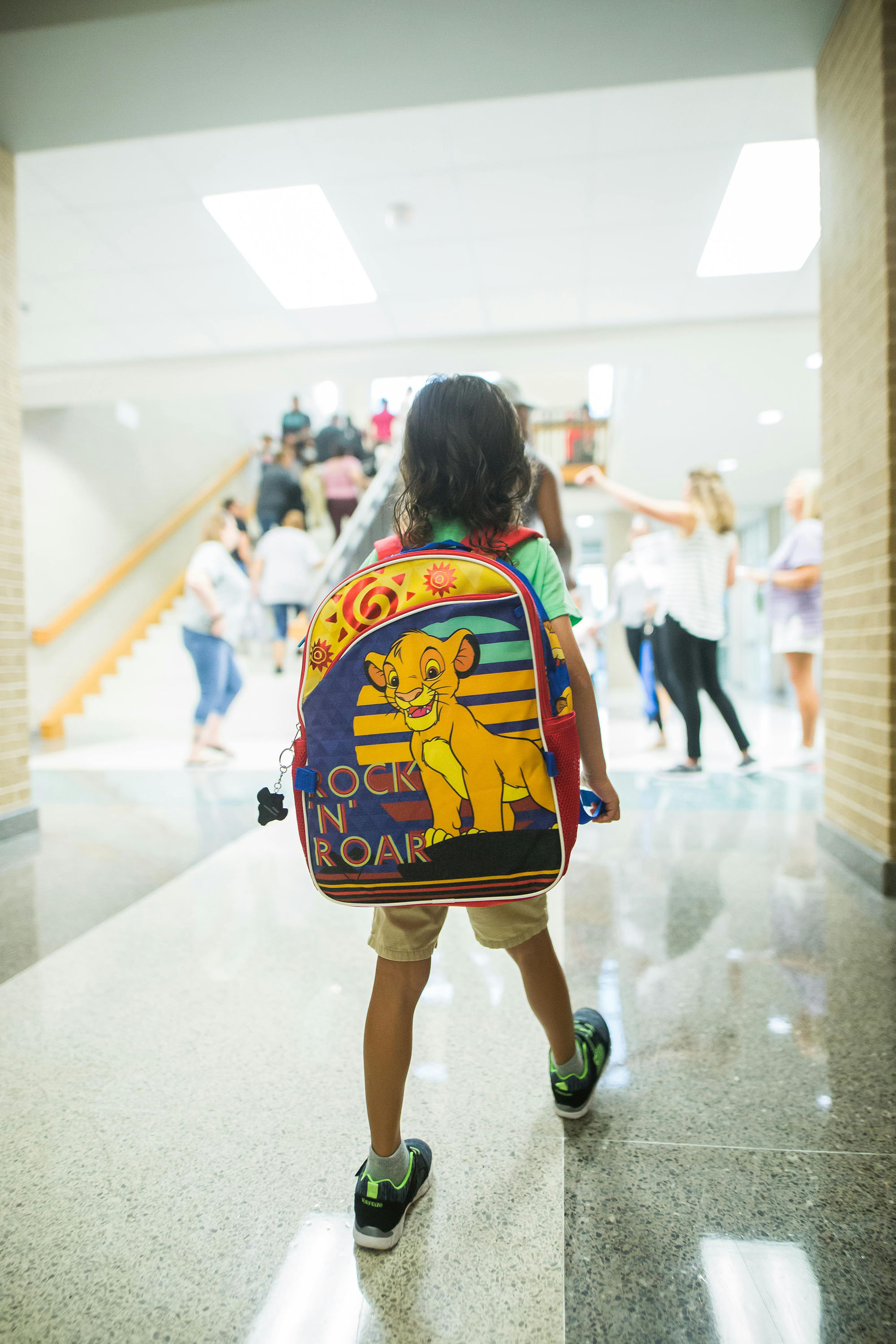
For children facing de facto deportation, accepting the forced uprooting from the only home they have known proves nearly impossible, creating a psychological struggle that can persist for years and may never fully resolve. Aside from coming to terms with his “last times,” Leo added: “You don’t know if you’re coming back [because you are undocumented] … I didn’t want to accept it…”. These feelings of loss are deepened when children are aware of their undocumented status in the U.S., its impact on their daily lives, and the limitations that status imposes on whether they will be able to return.
For children, accepting loss is not an immediate process but rather one that unfolds gradually over time. Leo ended his memory of this specific moment with: “I mean, going to Mexico, what can I say now? It’s like a huge restart… So I had to accept it, years later… It’s hard to accept.” Perhaps the most telling is his admission that acceptance took “years,” revealing that the trauma of de facto deportation is not a momentary crisis but an ongoing process of psychological adjustment. His use of the present tense in his last statement, “It’s hard to accept,” despite 10 years having passed, suggests that some aspects of this loss may never be fully reconciled, reflecting the lasting emotional scars that de facto deportation can leave on young people’s sense of stability and belonging. The state’s deportation of his father thus inflicted a double trauma: not only a violent separation from his father, but the forced uprooting of Leo’s entire life, dismantling 12 years of stability and belonging in the only home he truly remembered. Children like Leo, who experienced deportation, carry the additional weight of witnessing state violence and processing trauma that can shape them for years to come.
The difference between compelled and forced return creates distinct emotional landscapes for children. Contrary to those who experienced forced returns, parents who planned their return were more likely to prepare their children for the move, which in turn shaped their migration experience differently. About half of the families in my study with planned returns intentionally prepared their children through various strategies: parents informed their kids of the temporary nature of their lives in the U.S. and their eventual return to Mexico, where the parents claimed they belonged; taught them Spanish after school; facilitated connections with extended family members; and introduced their hometowns through storytelling, YouTube videos of traditional fiestas, and Google Earth virtual tours.
Return preparation was highly gendered labor: mothers assumed primary responsibility for teaching their children Spanish in the months and years before departure, understanding that successful (re)integration into Mexican schools and society depended on this linguistic foundation. Rosa’s mother began teaching her Spanish once a week about a year before their return, then intensified to daily hour-long sessions in the final months. Most mothers had basic education and no pedagogy training, underscoring the ingenuity they had to develop and adapt for success in this work. However, the magnitude of the task surfaced in managing not only their children’s emotions and frustration with the Spanish language, but also their own feelings and frustration in the process of teaching their children a language that came “naturally” to them.
Children are often thought of as having no agency in the decision to migrate. However, some parents include their children in the decision, ultimately asking them if they want to return. This was the case for Luke, who was born in the U.S. and lived in the Los Angeles area until the age of 10, when his parents decided to return to Mexico. He described how his parents gave him a choice: “They asked me if I wanted to stay [with my uncles], [they said] there was no problem [because] I had papers,” he recalled. “But it wasn’t the same as being with your parents, right? So, more than anything, because I was little [I decided to return with my parents].” While there is some measure of empowerment and care in the parents’ approach, giving their children agency in the decision to stay or leave the U.S., as Luke emphasizes, he was a 10-year-old child who could not picture being away from his parents.
For undocumented children, the weight of choice can be even heavier. Months prior to Vicente, who I introduced in my opening vignette, deciding to board that plane with his mother and sibling, he learned three devastating truths simultaneously: he was undocumented; his family was returning to Mexico; and, unlike his U.S.-born siblings, it would be extremely difficult for him to return. With his best friend’s mother offering to adopt him, Vicente initially thought of staying. But as his mother’s departure approached, the reality of separation became unbearable. “… I started feeling really sad. I said, ‘You know what? I’m going to leave because I was really young and I was going to feel alone.’” Vicente’s most difficult experience of living in the U.S. was having to make this decision. This impossible choice — hardly a choice at all — is one that the failed immigration system forces upon children like Vicente. Parents, recognizing the life-altering weight of this decision, try to mitigate its burden by giving their children some say in the matter, yet they know no amount of agency can make that choice any easier. Vicente, along with others in this position, was burdened by the gravity of this decision, where the unbearable prospect of being separated from their parents as a child ultimately outweighs all other considerations.
Even once the choice to leave the U.S. and return to Mexico has been made and families have prepared for this transition, the permanence of return for many mixed-status families makes it very difficult to follow through. Some get cold feet right up to the moment of return, like Vicente and his family. The weight legal status carries affects not only the choice to leave the U.S., but also the ability to act on it. Return migration decisions, even when planned, remain fragile until the very moment of departure.
The period before return matters because it impacts what follows: children’s emotional well-being, their educational trajectories in Mexico, and their sense of belonging. By centering children’s experiences during this critical transition, we see that “return” is not a single border crossing but an extended process beginning with difficult conversations, makeshift Spanish lessons, and sometimes, the sudden absence of a parent taken by immigration authorities.
These are the moments that shape how young people understand themselves, their families, and their place between two countries for years to come. Until we recognize this invisible journey, we cannot fully understand the complexity of return migration or provide adequate support for the children living through it.

Notes
- Pseudonyms were used to protect the identities of respondents. ↩︎
References
Boehm, Deborah A. 2016. Returned: Going and Coming in an Age of Deportation. California Series in Public Anthropology. Oakland, California: University of California press.
Hamann, Edmund (Ted), Víctor Zúñiga, and Juan Sánchez García. 2017. “Identifying the Anthropological in a Mixed-Methods Study of Transnational Students in Mexican Schools.” Current Anthropology 58(1):124–32. doi:10.1086/690054.
Hamilton, Erin R., Claudia Masferrer, and Paola Langer. 2023. “U.S. Citizen Children De Facto Deported to Mexico.” Population and Development Review 49(1):175–203. doi: 10.1111/padr.12521.
Instituto Nacional de Estadística y Geografía (2020). Censo de Población y Vivienda.
Jacobo-Suárez, Mónica. 2017. “De Regreso a ‘Casa’ y Sin Apostilla: Estudiantes Mexicoamericanos En México.” Sinéctica (48):0–0.
Masferrer, Claudia. 2021. Atlas of return migration:: from the United States to Mexico. El Colegio de Mexico AC.
Medina, Dulce, and Cecilia Menjívar. 2015. “The Context of Return Migration: Challenges of Mixed-Status Families in Mexico’s Schools.” Ethnic and Racial Studies 38(12):2123–39. doi: 10.1080/01419870.2015.1036091.
Roberts, Bryan R., Cecilia Menjívar, and Nestor P. Rodriguez, eds. 2017. Deportation and Return in a Border-Restricted World: Experiences in Mexico, El Salvador, Guatemala, and Honduras. Immigrants and Minorities, Politics and Policy. Cham: Springer.
Zúñiga, Victor, and Silvia E. Giorguli Saucedo. 2024. The 0.5 Generation: Children Moving from the United States to Mexico. Oakland (Calif.): University of California Press.

Adriana P. Ramirez is a Ph.D. candidate in the Department of Sociology at UC Berkeley. Her research interests revolve around migration, citizenship, Latin America, political sociology, and race and ethnicity. Her current work examines how young return migrants adapt to different spheres of Mexican society and formulate their identity and sense of belonging across contexts of reception in the states of Oaxaca and Jalisco.

Leave a Reply