
By María José (Majo) Navarrete Méndez

That early morning, the clouds were already warning us that we wouldn’t return to the field station with dry clothes. The rain in the páramo (alpine tundra) was so intense that I could barely keep my eyes open to see the path. I had to lower my head, keep my gaze down, and trust that my feet would keep moving, driven by the thought of a hot cup of coffee and dry clothes. How incredibly motivating the thought of such simple rewards can sometimes be!
By then, my team and I had been walking for approximately seven hours, climbing more than 1000 meters in elevation. Sometimes we walked, and other times we rode on the backs of our mules, all the while awed by the beauty of the mountains. Having grown up in the Andes, I had never experienced anything like it — seeing the ocean from such a high peak! And despite our exhaustion, we were in high spirits, knowing we had accomplished our mission of finding the beautiful harlequin frogs hidden in the highlands of the Sierra Nevada de Santa Marta (SNSM).
The Sierra Nevada de Santa Marta is the highest coastal mountain range on Earth, located on the Caribbean coast of the Magdalena Department in Colombia. Its intricate geological history and the unique climatic conditions of its towering peaks have resulted in exceptional biodiversity. The SNSM’s species assemblages are utterly unique, because the significant geographic separation from the Andes and the isolation provided by the surrounding lowlands allow the Sierra Nevada de Santa Marta to function like an island. Here, populations become isolated, undergo speciation, and adapt to specific climatic conditions, resulting in a phenomenon known as endemism.

The diversity of amphibians in the Sierra Nevada de Santa Marta is particularly striking, not only in the number of species but also in the abundance of individuals. Unfortunately, such large population sizes are becoming increasingly rare worldwide for most amphibian species. For example, many species of the highly endangered harlequin frogs of the genus Atelopus in Central and South America have faced severe population declines over the last few decades, with some even categorized as extinct. However, this is not the case for Atelopus in the SNSM. Unlike the more than two-thirds of harlequin frogs categorized as Critically Endangered or Possibly Extinct by the International Union for Conservation of Nature (IUCN), Atelopus species from the SNSM exhibit stable, healthy, and abundant populations that have shown resilience over the years. What makes the Atelopus of the Sierra Nevada de Santa Marta so unique that they seem to have escaped the severe amphibian extinction crisis affecting other parts of the world?
The most widely accepted hypothesis for the mass die-offs of amphibians is a fungal pandemic caused by chytridiomycosis, an infection that can be lethal to frogs, as it affects their skin, disrupting normal gas exchange and interfering with respiration. Remarkably, Atelopus species in the Sierra Nevada de Santa Marta appear to have somehow escaped the chytrid fungus, though the mechanism behind their apparent resistance remains unclear. One potential factor that might confer resistance to chytridiomycosis is the presence of potent neurotoxic compounds known as guanidinium alkaloids, including the enigmatic Tetrodotoxin (TTX), found in some Atelopus species. While these alkaloids are primarily thought to deter predators, some species may have repurposed them to prevent infections from pathogens.
Several studies have reported TTX and unique TTX-analogs seen nowhere else in nature from 13 of the 99 formally described species of Atelopus, with 9 of these corresponding to Central American species. However, the vast diversity of harlequin frogs occurs in South America, with 65 species occurring in Ecuador and Colombia alone. A comprehensive study of Atelopus toxicity will provide additional evidence for understanding the ecological role and the biological significance of guanidinium alkaloids, a more complete evolutionary history of the TTX-bearing phenotype in animals, as well as the potential for further novel insights into one of the world’s most imperiled amphibian groups.

I flew to the Sierra Nevada de Santa Marta in search of two of the four endemic Atelopus species: the Sierra Nevada harlequin frog (A. laetissimus) and the San Lorenzo harlequin frog (A. nahumae). I decided not to pursue the search of the starry night harlequin frogs (A. arsyecue), as it is considered a sacred animal by the Wayuu people, an Indigenous community in the Sierra Nevada de Santa Marta. Access to Wayuu territory is highly restricted, and invasive sampling methods are prohibited. Beyond my own research, my trip allowed me to show respect to Indigenous communities and build trust with local researchers, who guided me through the process of accessing the populations for which I had permits.
During my trip, I visited two localities across two different mountains. San Lorenzo and San Pedro, situated at elevations of 2,500–2,600 meters, were home to A. laetissimus and A. nahumae. I also visited a third locality, habitat of A. carrikeri to do a preliminary assessment of the status of the population in the highlands of the Sierra Nevada at 3,500 meters above sea level.

All trips began at sea level in Santa Marta, traveling by car to a drop-off point, and completing the journey hiking. The expeditions were both physically demanding and logistically challenging, particularly due to my sampling methodology. I needed to flash-freeze and store swabbed samples and skin tissues in liquid nitrogen at -80ºC. Using a 17-liter liquid nitrogen tank, which weighs up to 30 kilograms when full, transporting this equipment up into the mountains required assistance. I was able to rent mules from local people to help carry the tank and transport my samples.
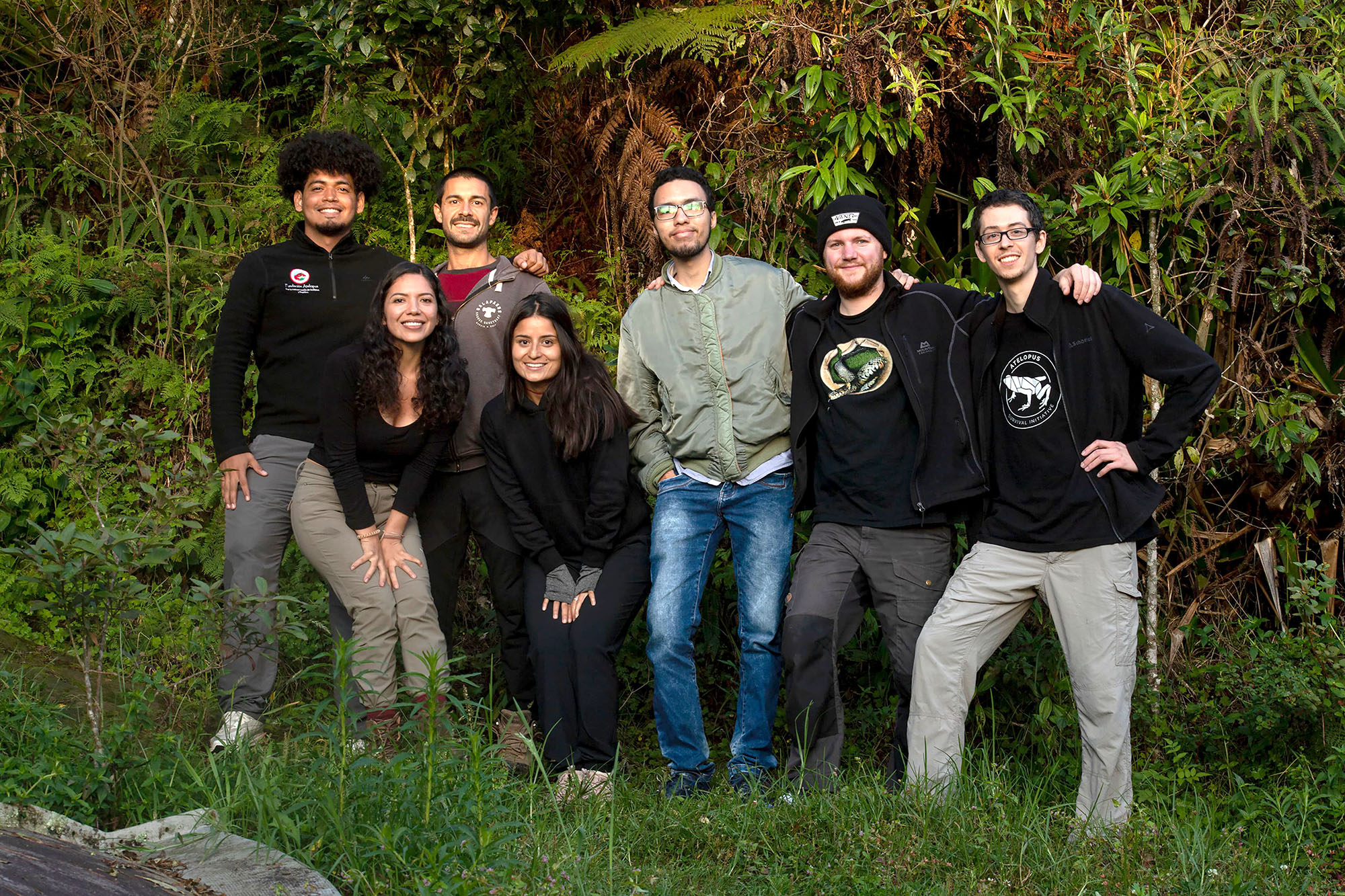
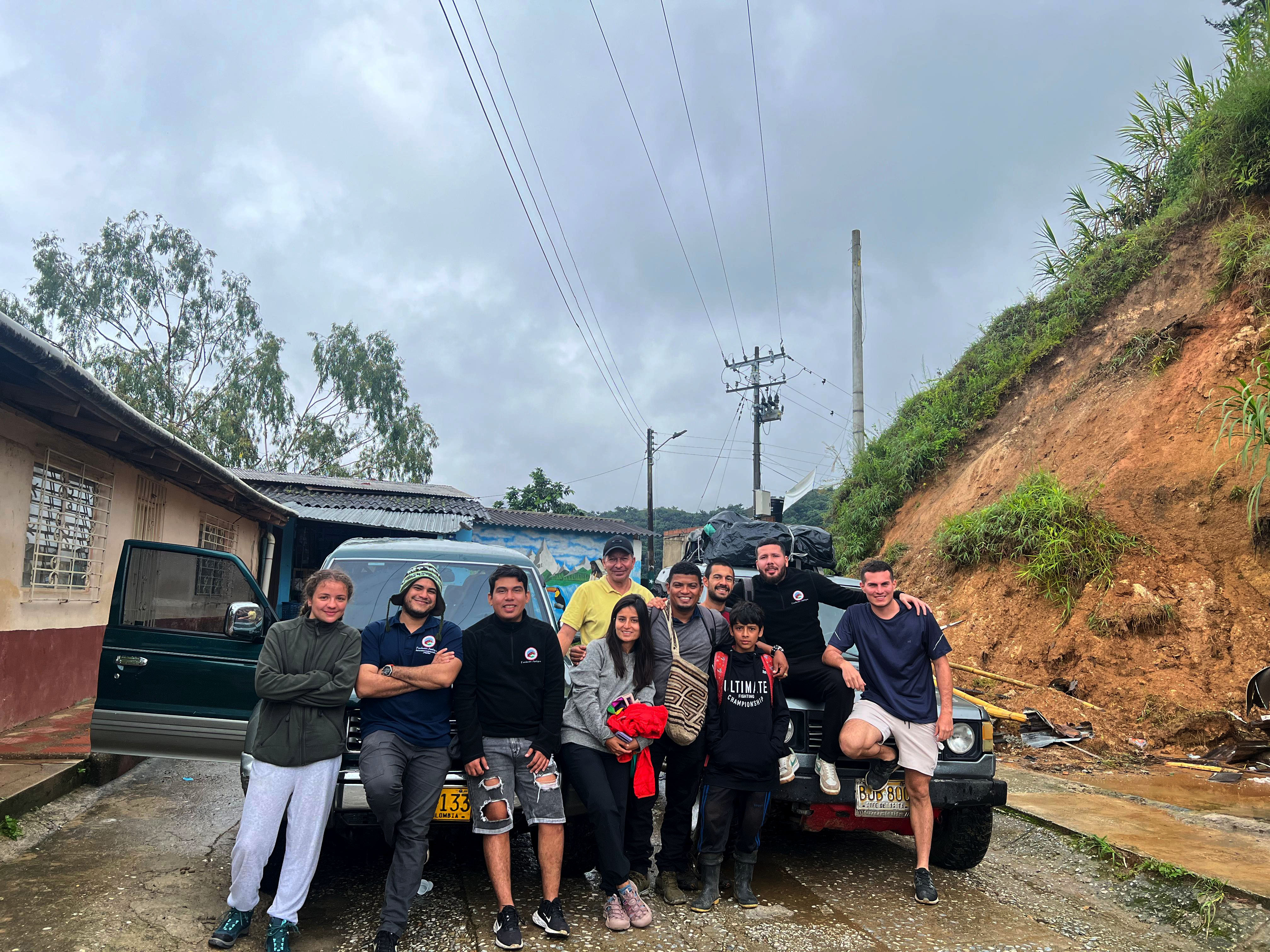
The expeditions were particularly demanding, sometimes requiring eight-hour hikes up steep mountain trails. The mules played a vital role in transporting essential equipment, including the liquid nitrogen tank needed for preserving samples. I would not have been able to cover the mule expenses and reach the localities to collect samples for the preliminary assessment of the species’ toxicity without the support I received from CLACS. With it, I successfully obtained 18 skin samples and swabs from the two Atelopus species in Santa Marta, while also identifying which populations were most accessible and abundant for future in-depth collection and analysis of their chemical defenses and microbiome composition.

The trip also strengthened collaboration with my fellow researchers from Universidad del Magdalena and biologists from Fundación Atelopus who are dedicated to studying and protecting these frogs. From them, I learned where to look for the frogs and important behavioral information on the species, as well as about their research projects on uncovering the genetic diversity of the species, experiments on mate choice, diet preferences, and bioacoustics. In return, I had the opportunity to share the methodology for biopsy collection with undergraduate student Luis Polo and Aldair Barros, a master’s student. This methodology is not only useful for toxin detection, but also is suitable for DNA and transcriptome analysis, as well as disease detection and experimental infection of samples.

I am sending the samples for chemical analysis and toxin detection using liquid chromatography with fluorescent detection (LC-FLD) and high-resolution liquid chromatography-mass spectrometry (HR-LC-MS). The results from these analyses will be integrated with the data I have already obtained and analyzed from Ecuadorian Atelopus species, and continue to advance my research.

This expedition to the Sierra Nevada was profoundly enriching for both my scientific and personal development. Navigating the logistical challenges of fieldwork offered valuable insights, not only into the natural history of the frogs I study but also into the invaluable knowledge of local people who intimately understand their land and its species. The importance of collaborating with local researchers and communities cannot be overstated; it has greatly influenced the work ethic I aspire to carry into my future career. Furthermore, the data obtained during this trip is instrumental to my dissertation, enabling me to explore the evolutionary history of chemical defenses in Atelopus frogs and the environmental factors driving toxin acquisition and maintenance. I also hope that findings from this research will illuminate the potential role of toxins like TTX in amphibian resilience to chytridiomycosis. The samples and data collected from the Sierra Nevada de Santa Marta are essential for advancing future research in biodiversity conservation and amphibian health.

María José (Majo) Navarrete Méndez is an Ecuadorian biologist and a PhD candidate in the Department of Integrative Biology at UC Berkeley. Her research focuses on exploring the origin and evolution of chemical defenses, with a particular emphasis on guanidinium alkaloids such as the enigmatic Tetrodotoxin, found in the highly endangered frogs of the Atelopus genus. Her work aims to elucidate the mechanisms of toxin acquisition and to integrate her findings into conservation efforts through collaboration with institutions and researchers in Ecuador and Colombia.

Leave a Reply