
By Yessica Porras
The following is an abstract of an essay on paper reliquaries I wrote during my tenure as a Graduate Student Affiliate at CLAS. The essay, titled “A Journey on Paper to a Sacred World: Manual Manifestations of Devotion in The New World,” explores the use and creation of paper reliquaries to fill the void left by the lack of guidance from European nuns in Nueva Granada. The use of relics as a conduit of virtual pilgrimages established connections between local and distant sacred sites. CLAS gave me the space to develop the research and writing, including a complete Spanish translation.
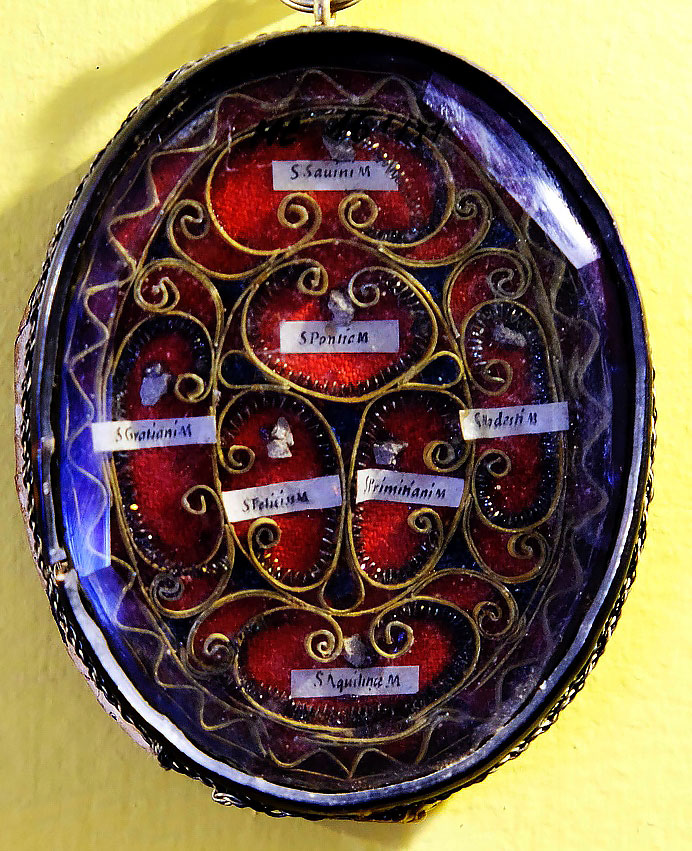
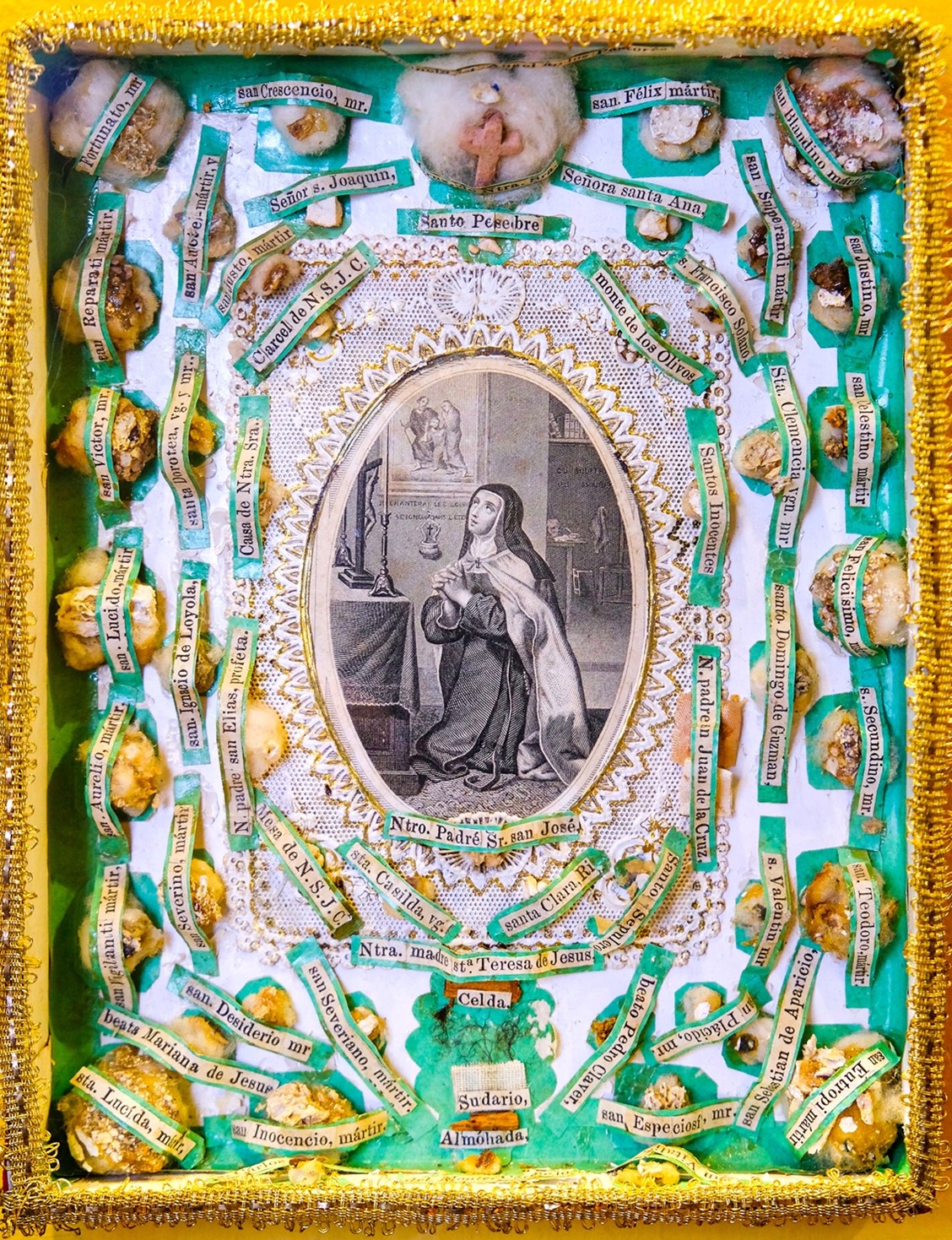
Strips of paper were transformed into flowers, leaves, and paths that enclosed relic fragments, fashioning personal reliquaries used by nuns in Europe and the New World convents. The Carmelite Museum of Villa de Leyva, Colombia, holds a collection of over thirty hand-sized paper reliquaries. The twisted and juxtaposed pieces of paper invite the holder to follow a pathway through the object (Fig.1-2). These paper paths are reminiscent of a walk in a garden where leaves, flowers, and vines define the space. These reliquaries also form linear pathways that, like maps, go in multiple directions to lead the viewer to a specific site. The pieces of paper create the perception of an unruly garden that transforms when it is followed up close into an intimate space that leads you to sacred relics. These strips of paper allow for the organization of the relic fragments creating a unique female space. Furthermore, paper reliquaries signify female labor, devotion, and their journey into a cloistered life.
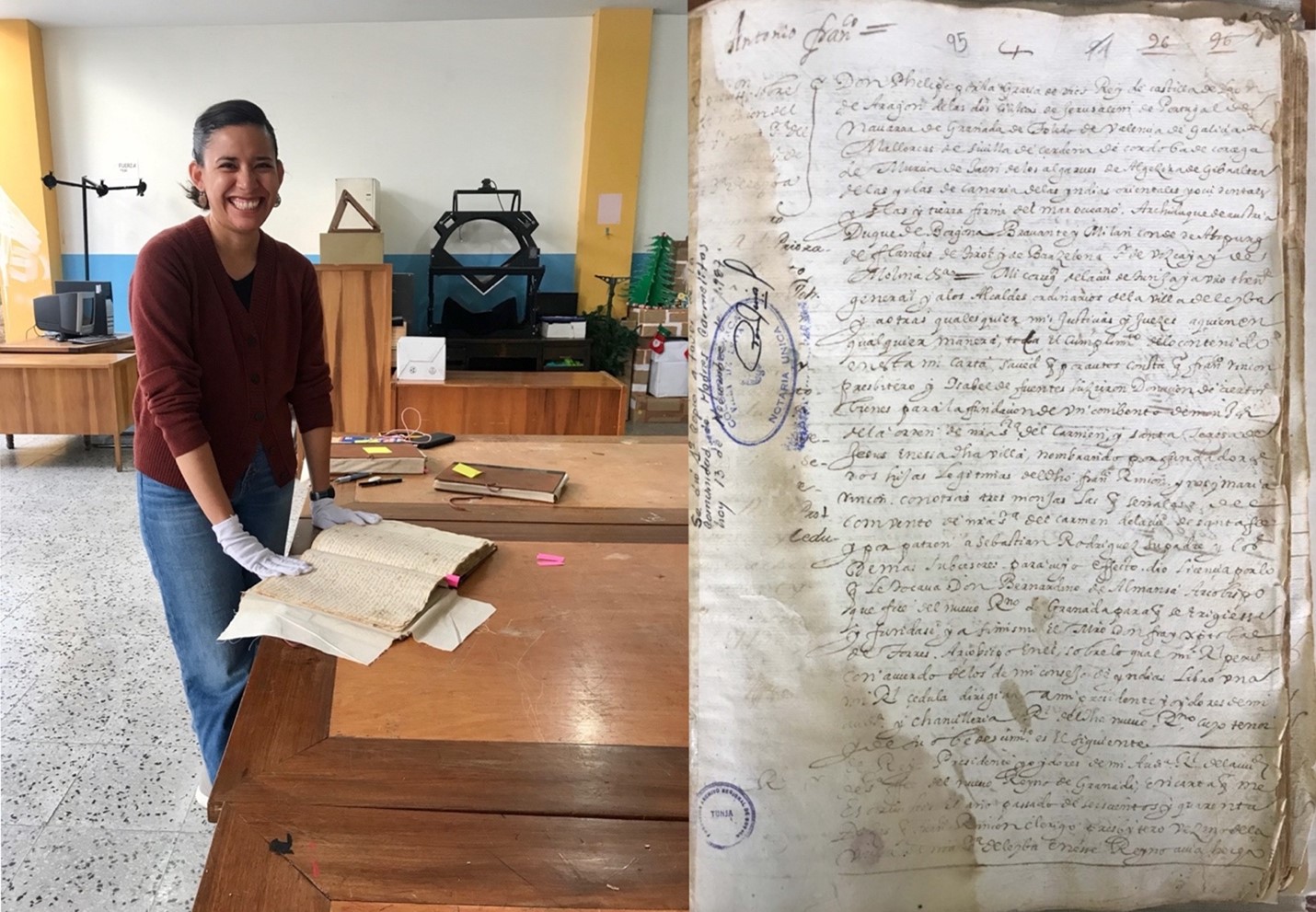
The Carmelite convent in Villa de Leyva was founded in 1645 by Father Francisco Rincon; the convent was built as a space for his daughters and for women from of other prestigious families. The public notary, Joseph Cavallo, describes the circumstances of the convent’s foundation (1646) (Fig.3): “The main maidens are descendants of conquerors. In the beginning, they named as the convent’s founding members Rincon’s two legitimate daughters, Ynes and Maria Rincon, with three other nuns from the Convent of Carmen de Santafé.” During the colonial period, most women who contributed to the construction of convents intended to either move into the convent or send members of their families to it. Wealthy local women of European descent established the first convents in Nueva Granada. Even though they requested help from the nuns in Spain to set up the new institutions, their petitions were ignored.
This study on paper reliquaries is part of a cumulative visual process where layers of symbols, meaning, and prayer are juxtaposed as religious expressions of devotion and memory. Relics occupied a salient place in the convent’s collections. They were imbued with the sanctity of sacred figures and remote sites asserting their holiness of the new religious spaces, igniting shared imagined spaces through the making and circulation of intimate devotional objects. Relics became the link between the physical and spiritual distance between Nueva Granada and the Holy Land. They were directly connected with the practice of pilgrimage, where travelers would take souvenirs such as building fragments from historical sites, and even measurements were transformed into valuable relics that circulated throughout Europe and eventually into the New World. The paper strip shapes morphed into intimate visual and haptic roads that take the viewer through prayer-activated paths. These paper roads form a journey where relics stand as physical and spiritual stations that hint at sacred moments, people, and places. They are a mnemonic instrument of devotion that brings closeness to other nuns in Europe who, like local nuns, could not visit sacred spaces or were not able to meet, but shared a life of closure and religious commitment.
I encountered these reliquaries during a field research trip to Colombia, where I was in search of mural paintings in convents and churches for my dissertation project. Paper reliquaries like the mural paintings from my dissertation transport the viewer outside enclosed spaces with unexpected visual and historical connections. My work at CLAS allowed me to set the foundation for my dissertation writing. My essay on paper reliquaries in Nueva Granada is part of an upcoming publication in Spain under the title “Un viaje en papel a un mundo sagrado: manifestaciones manuales de devoción en el Nuevo Mundo” (“A Journey on Paper to a Sacred World: Manual Manifestations of Devotion in The New World”).
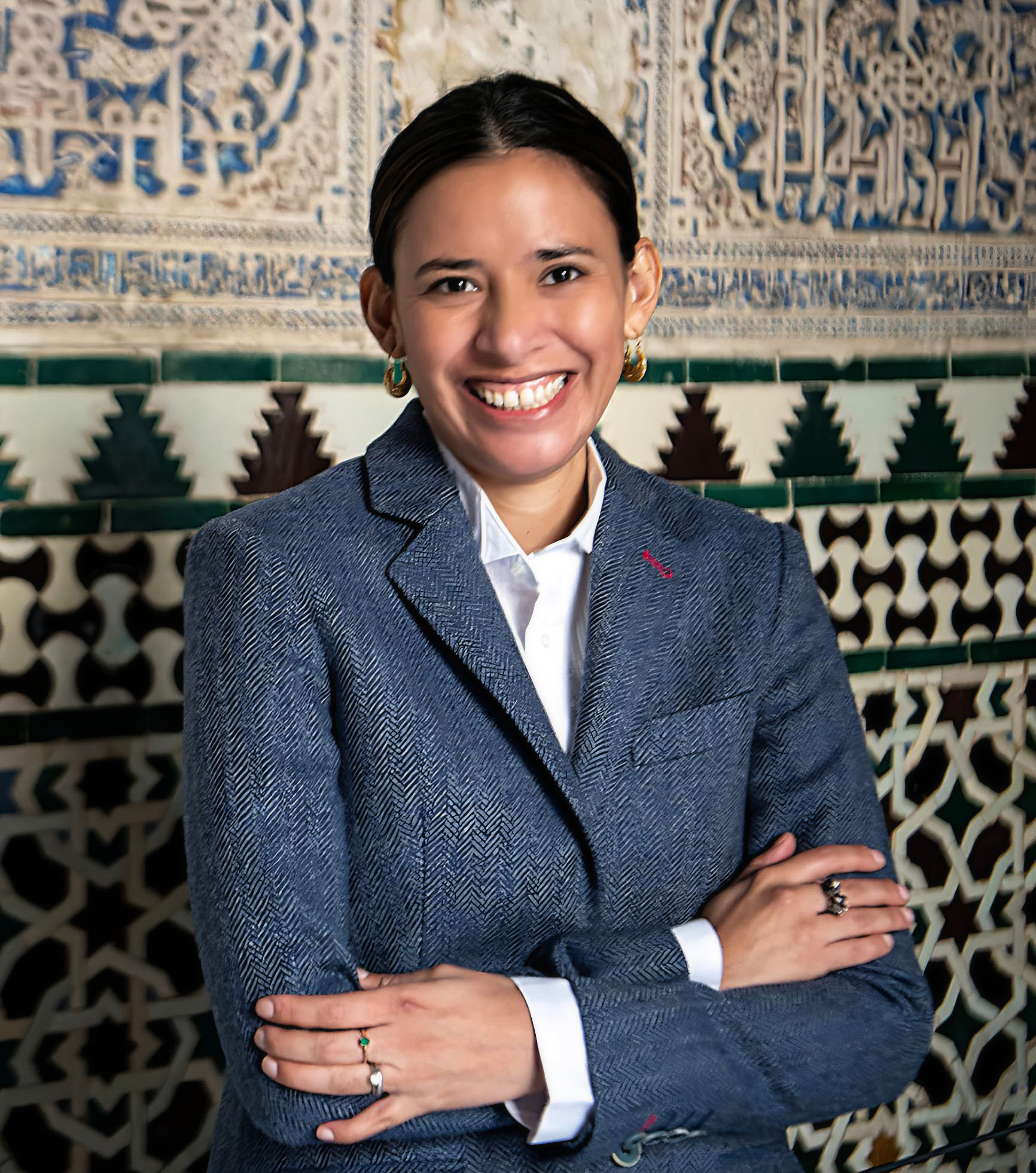
Yessica Liliana Porras is a doctoral candidate in the Department of Art History at the University of California, Berkeley. She is in the final stage of her dissertation, which focuses on the study of colonial wall paintings in churches and convents in the Northern Andes (Colombia and Ecuador) and how they create a palimpsest of memory, time, and space. In 2019 her teaching was recognized with the Outstanding Graduate Student Instructor Award at UC Berkeley. Her essay “Un Viaje en Papel a un Mundo Sagrado: Manifestaciones Manuales de Devoción en el Nuevo Mundo” was recently published in Spolia Sancta: Reliquias y Arte Entre El Viejo y El Nuevo Mundo (2023). Yessica’s fieldwork and dissertation writing was supported by the Social Science Research Council, Dissertation Research Fellowship (IDRF), UC Dissertation Year Fellowship, and the Thoma Foundation Research and Travel Award for Art of the Spanish Americas.
References
[1] Notaría de Villa de Leyva 47, Fol. 95-99, 95v, AHRB.
[2] Jaramillo de Zuleta, En Olor Santidad: Aspectos Del Convento Colonial 1680-1830 (Bogotá: OP Graficas, 1992), 14
[3] Santafé, 124, N.8, Fol.3, 1–3v, AGI.
[4] Kathryn M. Rudy, Virtual pilgrimages in the convent: imagining Jerusalem in the late Middle Ages, Disciplina Monastica 8 (Turnhout: Brepols, 2011), 108.

Leave a Reply