
By Tilden Mitchell

Over the course of my CLAS research project in Ecuador during the summer of 2023, I have grown accustomed to going with the flow and expecting the unexpected. Despite embracing this general philosophy, there were days that still surprised me with their unforeseen twists and turns. June 2nd was one of those days.
One day earlier, I received word that Mr. Rodrigues would be draining one of his shrimp ponds and harvesting the remaining shrimp. I had come to Atacames in Ecuador to better understand environmental contamination caused by shrimp farming, looking specifically at antibiotic resistance in humans, which can be spread either through the consumption of raw shrimp or through the environmental contamination of water.
Today was supposed to be a great day to collect water samples, as the highest concentration of environmental toxins are released during the draining of a shrimp pond in preparation for a new cycle. I arrived on the scene with my water sampling bags, pipettes, antiseptic wipes, and reactive agents, ready to strike when the moment was right.
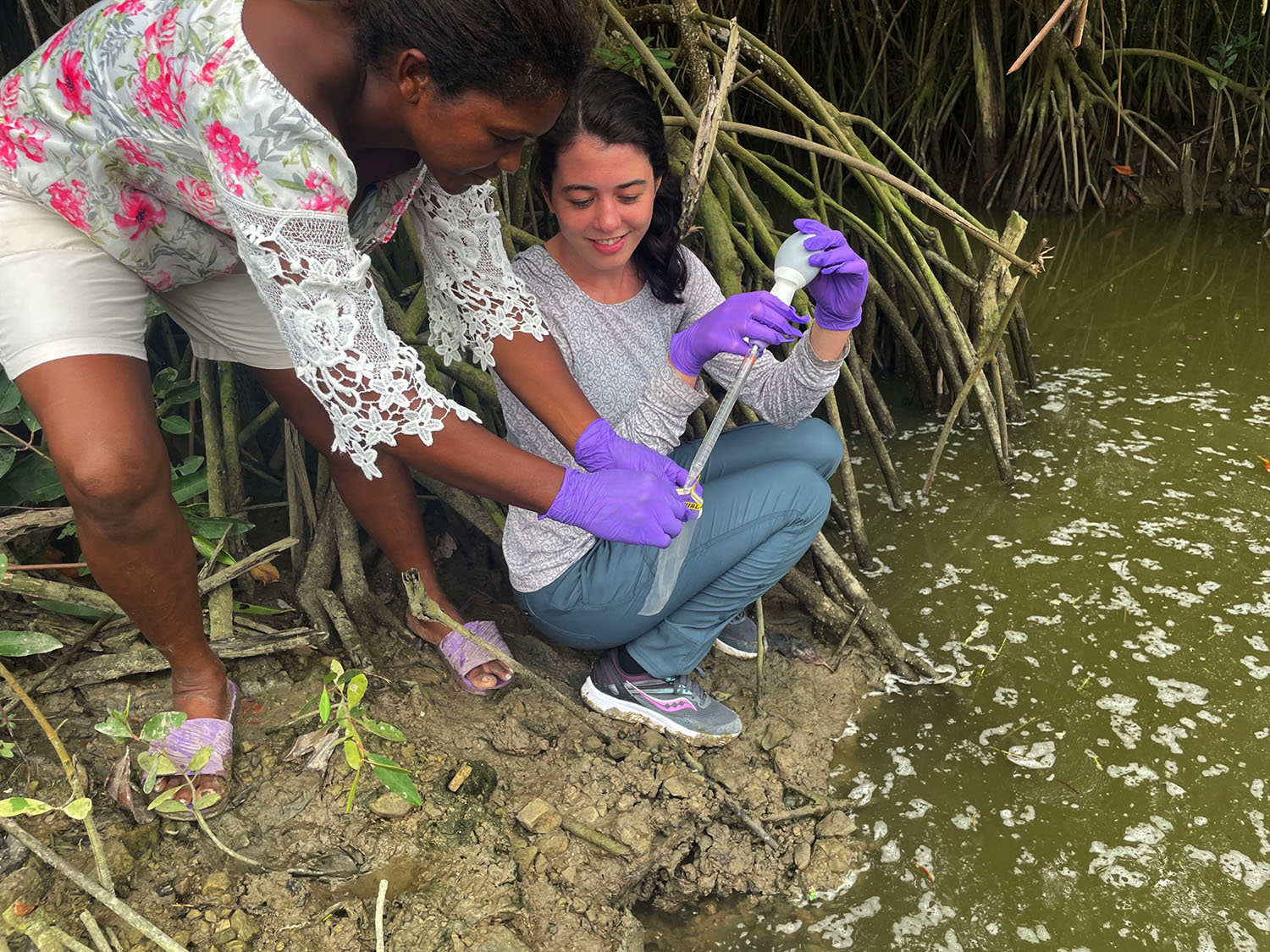
Suddenly, from behind me I heard someone yell, “Corre, Corre!! (Run, Run!!)” I whipped around to see three men running towards me with nets and buckets. They brushed past me and clambered barefoot down the side of the bank and into the shrimp pond. With water up to their waist they cast their nets into the water and pulled out heaping nets filled with shrimp and fish. In the commotion, I did what any good researcher would do – I started to ask questions.

I knew already that the shrimp farms along Ecuador’s northern coast were often backed by shady financing, that local environmental regulations didn’t seem to apply to them, that they blatantly polluted waterways lined with mangrove forests, and that, in Atacames, they were located next to the most historically disadvantaged and low-income neighborhoods, those with the least power to advocate for themselves. What I didn’t know is that Mr. Rodrigues, the owner of this particular shrimp farm, regularly allowed locals to come fish in the pond at the end of each production cycle. People bustled around me, grabbing more buckets and helping each other in opening nets, as more and more gathered shrimp slapped and jumped in the pails.

There was another rumbling sound behind me, and Mr. Rodrigues himself drove up in a mud-splattered truck. He introduced himself and we chatted about his ideas for improving production yields, reducing chemical use, and the increasing global market for shrimp. All of my previous ideas of the reality of shrimp farms on Ecuador’s coast were turned on their heads. With barely a second to let this sink in, it was time to move on and collect other water samples from other shrimp farms farther downstream on the Atacames River.
Doralis Perlaza, my field research partner and a local resident, had arranged for a local fisherman to guide us down the river. I showed up on the riverbank to find a jovial older man with an oar and a very tiny plastic boat, with a single plank of wood laid across the middle. I held my breath and wobbled onboard, with Doralis squeezing in after me. We pushed off the bank of the river and I was immediately engulfed by what felt like a nest of mangrove branches. Compared to the open fields of the shrimp ponds, the river channel was dark, cool, and tranquil. Mangrove roots shot into the water from every angle, soaking up nutrients and chemicals as we glided by. Overhead, birds chirped and swooped and on the banks, if you looked closely, you could spot blue crabs here and there gnashing their claws. The water did look green, and obviously contaminated, with bits of plastic floating here, a diaper floating over there, but I was stunned by the tranquility that I never knew existed right behind a very chaotic part of town.

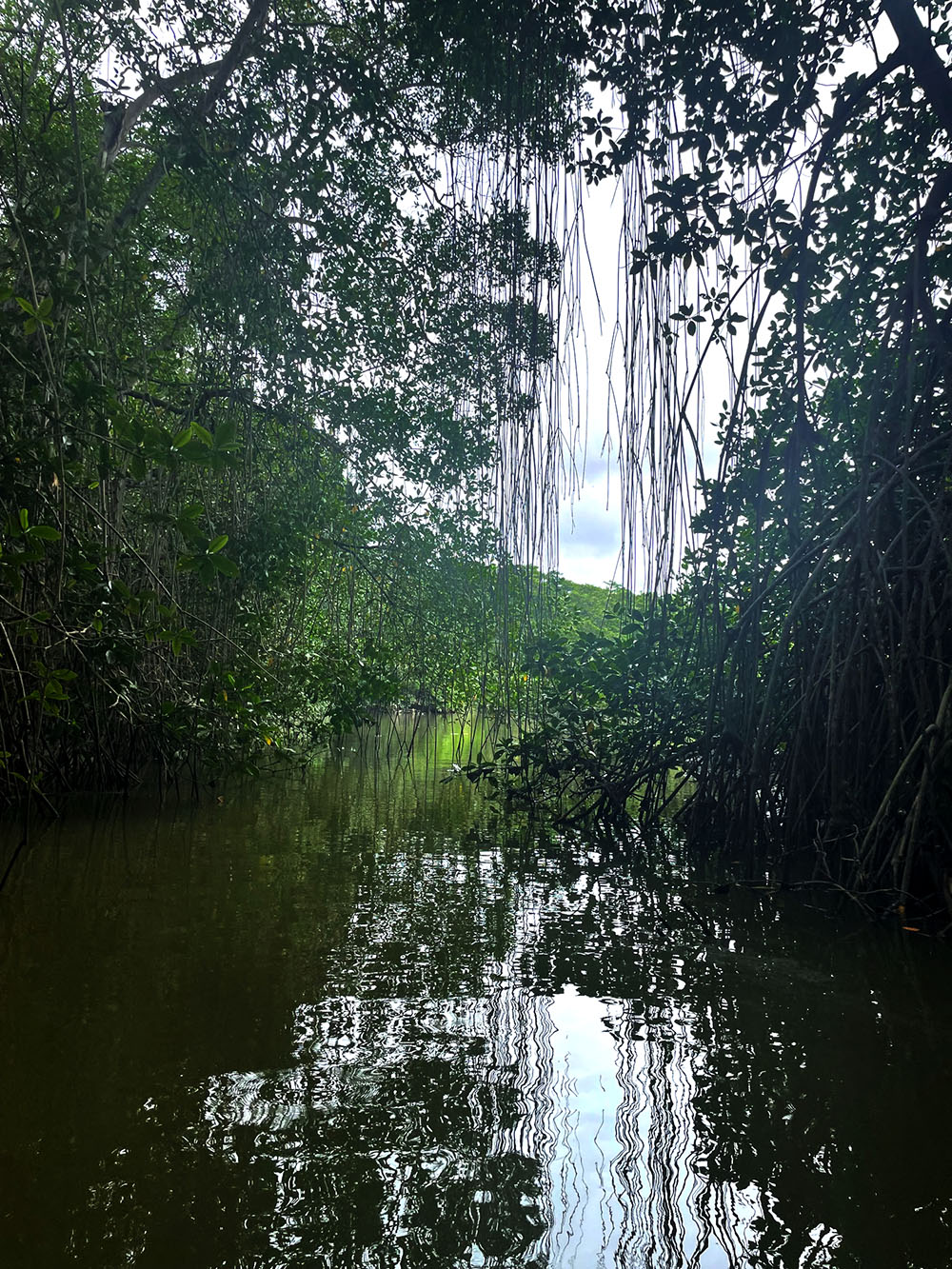
We meandered deeper down the channel. Around one bend we spotted a large excavator scraping up one side of the bank, mangling mangrove roots left and right. I was told this earthmover was hired by Mr. Fernando, another shrimp farm owner, who was looking to widen the river so that his shrimp ponds would have better access to the salt water that flowed up the river at high tide. Farther along the river, our fisherman guide called out a friendly greeting to someone on the banks, while in a hushed voice I was told that those men worked for another shrimp farm, and were throwing out leftover shrimp on the banks of the river rather than allowing local people to fish the extra shrimp. Our journey continued on like this, offering new insights at every turn.
I was overcome with the feeling that this was a once in a lifetime experience, not only because this would be the first and last time I would dare to sit in such a precarious and tiny boat, but also because it was clear to me that I was witnessing this river at a critical moment in time. The pollution from the shrimp fisheries was blatant, but life still flourished. Yes, the number of fish that the fisherman could catch was decreasing every season, but life had not yet been totally extinguished from this place. The work could be done, and this ecosystem could be restored.

The importance of working towards this goal suddenly sank in. As we paddled out of the mangroves, I finally understood how my research could move the needle slightly, working within the complex network of realities facing this small coastal community in Ecuador.

Tilden Mitchell (she/her) is a second-year Global Environmental Health, Masters in Public Health (MPH) student. Before coming to UC Berkeley, Tilden worked as a National Geographic Explorer in Ecuador, conducting research on Environmentally-Induced Displacement and exploring sustainable solutions to loss of home. At UC Berkeley, her work and research include USAID-funded consulting projects in Malawi, Ethiopia, Uganda and Ecuador focusing on water, sanitation, hygiene issues, antibiotic resistance, and community transmission through water estuaries.

Leave a Reply