
By Sergio Aguayo

Mexico is living through a unique reality. Andrés Manuel López Obrador’s victory has created opportunities to modify the rules of the political system and attack the corruption and violence that are corroding the core of the country.
Behind López Obrador’s success is the peaceful strategy taken by part of the political, social, and cultural left. This is particularly notable because although the left suffered massacres, assassinations, electoral fraud, and slander, they resisted the temptation of violence and corruption.
In 1968, leftist parties and associations were illegal, irrelevant, or complicit with the government. The Student Movement peacefully demanded changes; the president refused and ordered the slaughter of Tlatelolco. So began the long march of the generation of ’68.
Some took up arms; others of us pushed for change from classrooms or through journalism, activism, trade unionism or professional politics. Despite our differences, we agreed on two inalienable principles: to reconstruct what happened in 1968, and to persevere in nonviolence. We created the foundations of the modern human rights movement that emerged in the seventies to care for the victims of the Dirty War, and then spread to many other issues.
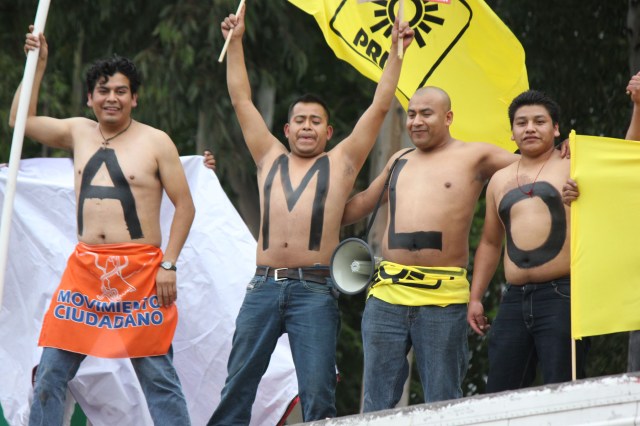
Left-wing parties were legalized in time for the 1988 presidential elections, but were frustrated by obvious electoral fraud to the point that a sector of the left proposed direct action. However, Cuauhtémoc Cárdenas, among others, understood the imbalance between the two sides and opted for gradual change, which is inevitable when the ballot box is the primary strategy. The result was “alternancia,” the political transition that split the Institutional Revolutionary Party (PRI) and undermined its regime.
In 1993 and 1994, the Ejército Zapatista de Liberación Nacional (Zapatista National Liberation Army, EZLN) prepared two declarations from the Lacandon Jungle. In the first, from December of 1993, they proclaimed war and announced their advance towards the “capital of the country to defeat the army”. When combat began, the intellectual and social left – and large international sectors – took to the streets to demand that the government cease hostilities and that the insurgents adopt peaceful means. They responded with a ceasefire and supported the addition of “free and democratic elections” to the EZLN’s Segunda Declaración.
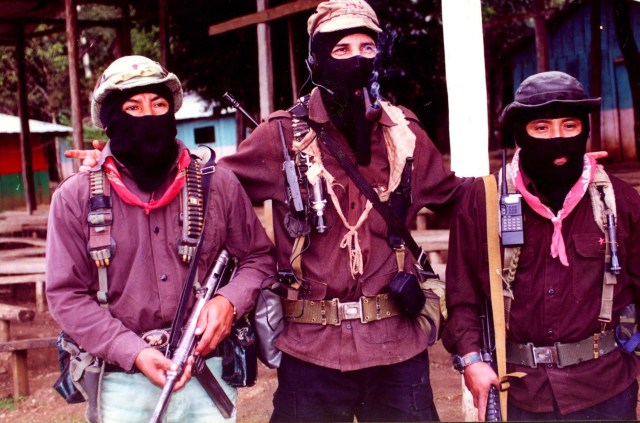
The 1996 electoral reform emerged from that crucial moment, which later made the defeat of the governing party (the PRI) possible in 2000. Vicente Fox and the PAN (the National Action Party), betrayed their principles and succumbed, along with the PRD (the Party of the Democratic Revolution), to the PRI-like culture of budget looting and giving government jobs to family and friends. The leaders of the three major parties were drowning in corruption and/or inefficiency; the State got weaker and the de facto powers, including organized crime, became stronger.
Andrés Manuel López Obrador began preparing his first assault on the presidency in 2000, when he became the Mayor of the capital. In those six years, he left a mark through his honesty and his reasonably effective, non-radical management. In 2006 he led in polls proceeding the presidential election, but lost due to strategic errors, personality flaws, and electoral fraud so evident and crude that there were entire sectors that advocated for direct action. The current president-elect persevered on Cárdenas’ path and opted for peaceful protest. We witnessed the outcome this year.
López Obrador promises us a “peaceful but radical” transformation. In his last campaign act he specified, “We have not put in all this effort for mere superficial, cosmetic changes.” This task is monumental because of the strength of the four horsemen of our apocalypse: violence, corruption, inequality, and the United States of Donald Trump have strong networks of power. The resistances will be enormous, and the results uncertain.
There will be battles in which, being optimistic – and the time is ready for that – we will be victorious and we will be able to forge a better future. That this is even possible is largely due to the Mexican left that resisted aggression, marginalization, ridicule, and contempt. Equally commendable was López Obrador’s refusal to treat the budget as his own personal assets. In the background, I insist, has been allegiance to peaceful practices. We are, therefore, before an unprecedented opportunity. For the first time in our thousand-year history, we will have the opportunity to change the system without violence. It was difficult, but we made it.
This article originally appeared in Spanish in the July 4, 2018 edition of Reforma and was translated to English by CLAS staff with the author’s permission.

SERGIO AGUAYO is a Professor at the Colegio de México and a Visiting Scientist at the Harvard School of Public Health. He contributes weekly to Reforma, as well as to other newspapers and television shows. He recently published the eBook, “’68: The Students, the President and the CIA.”

Leave a Reply