
By Shane Fallon
As a 2016 recipient of the Tinker Summer Research Grant from the Center for Latin American Studies, as well as the recipient of UC Berkeley’s Center for Global Public Health Reporting Fellowship, my summer research project took me south of the hemisphere to Peru. My photojournalism project in the coastal, urban city of Trujillo captured how dietary changes have created a public health crisis by contributing to the rise of noncommunicable diseases such as obesity and Type II diabetes. A meta-analysis conducted by the World Health Organization showed that 58.2% of adults over 18 years of age in Peru are overweight or obese; that is well over half of the population.1 No one is immune from obesity and for various reasons, and women and children are at greatest risk.2 Thus, this is a public health issue that requires urgent attention, action, and programs with accountability.
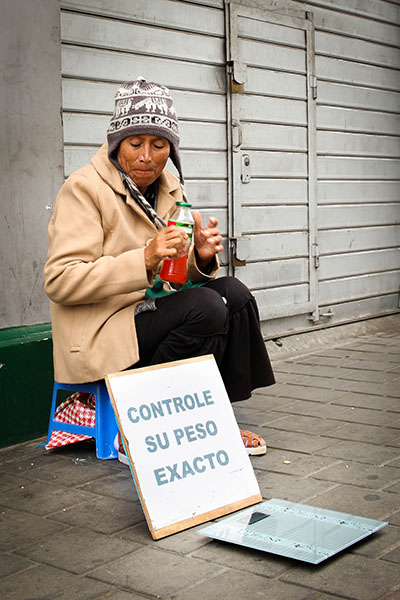
As is the case with nearly all cities around the world, the population of Trujillo is growing. Many of Trujillo’s new residents have migrated from more rural parts of Peru, such as the highlands of Huaraz. Upon moving to the urban core, people tend to shift away from an agrarian lifestyle, which consists of doing hard manual labor on a daily basis, to a more sedentary lifestyle. While caloric output radically decreases, caloric input remains high. Oftentimes, caloric intake is even higher in urban settings due to ample access to processed foods and fast food. Fast food chains have yet to infiltrate Huaraz, but they claim prominent real estate on Trujillo’s Plaza de Armas (the city center). Residents in Trujillo are bombarded with an overwhelming excess of food. Food vendors are stacked in a line along the street and offer up sweet treats such as mazamorra morada (Peruvian purple corn pudding) or variations of fried dough. The food is seductive and inexpensive.

My adventure to the city and province of Huaraz began upon repeatedly hearing that Trujillo’s most at risk populations for noncommunicable diseases, such as obesity and diabetes, are indigenous groups who have moved into the urban core. I find this hypothesis plausible since socioeconomic status is the most potent predictor for the risk of noncommunicable diseases.3 Even though Peru is considered an upper-middle income country, many regions, such as Huaraz, have large communities of indigenous populations that live well below the national poverty line.4 Consequently, many people are moving to urban cities such as Trujillo in search of better economic opportunities.
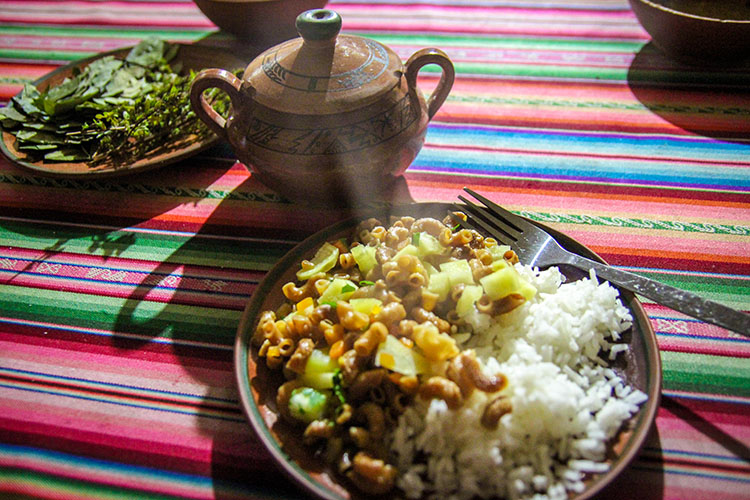
Huaraz is the capital of the Ancash region and home to the snow and glacier-capped Cordilleras mountain range. Presently, the people of Huaraz are in the middle stages of Peru’s nutrition transition, meaning that they are facing a double burden of malnutrition.5 The nutrition transition refers to changes in diet and physical activity patterns that are changing body composition at a population level. The double burden refers to high rates of both undernourished and over-nourished (overweight and obese) people – both of which are forms of malnutrition. Though the prevalence of noncommunicable diseases is generally higher in upper income countries, the rate is growing much more quickly in lower and middle income countries such as Peru.5
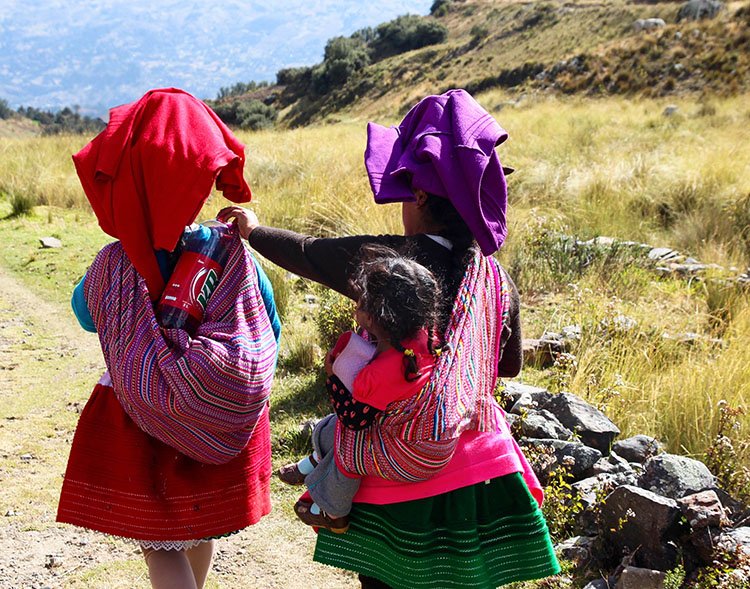
Coming to Peru has given me a new perspective on the meaning of diversity. Driving through Huaraz, villages just a 30 minutes combi (public van ride) apart from each other celebrate different cuisines, garb, and dialects. Furthermore, the contrast between city life in Trujillo and rural life in Huaraz gives insight into the complexity of creating a national strategy to address salient public health issues in Peru. My observations suggest that a singular national policy to address obesity in Peru would be an ineffective use of resources. Instead, nutrition interventions that are individually tailored to these diverse groups of people are more likely to have an impressionable impact. Thus, the next obstacle is designing a regional policy to create healthier communities within Trujillo’s morphing urban center.
Sources:
- “WHO | World Health Organization.” WHO | World Health Organization. World Health Organization, 2015. Web. 10 Feb. 2016.
- “Obesity and Overweight.” WHO. World Health Organization, 2016. Web. 10 Feb. 2016.
- Claire Conway. “Poor Health: When Poverty Becomes Disease.” UC San Francisco, 06 Jan. 2016. Web. 25 June 2016.
- “Peru Data.” World Bank, 2016. Web. 25 June 2016.
- Chaparro, M. Pia, and Leobardo Estrada. “Mapping the Nutrition Transition in Peru: Evidence for Decentralized Nutrition Policies.” Rev Panam Salud Publica Revista Panamericana De Salud Pública 32.3 (2012): 241-44. Rev Panam Salud Publica, 2012. Web. 25 June 2016.
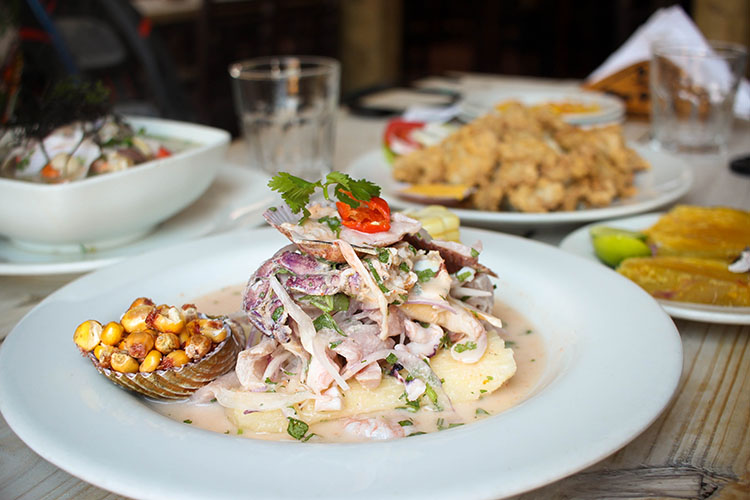
Ceviche is a refreshing departure from much of the fried food of Peru. The fish is eaten raw but preserved in a robust bath of acidic lime juice, salt, ricotto (a type of Peruvian chili pepper) and garlic. The vendors at the markets in Trujillo will cut the fish into the bite sized pieces desired, making the final preparation process less than ten minutes. Ceviche can be eaten just minutes after all of the ingredients are added together. However, the longer the ingredients mingle, the more juice the fish will absorb. On our plate of ceviche, we added the cooked choclo (big boiled corn kernals), yucca, and seaweed. (Photo by Shane Fallon.)

Shane Fallon is a graduate student in the School of Public Health at UC Berkeley. Shane received a 2016 Tinker Summer Research Grant, awarded by the Center for Latin American Studies.
To read more about Shane’s travel and research visit her blog at http://www.sfeatsinsf.com/journal-entries/.

Leave a Reply